Long Island History: From Indigenous Roots to Suburban Expansion
Long Island's journey from a glacial landscape to a bustling metropolitan hub is a story of shifting empires, cultural collisions, and rapid industrialization. Once the domain of nomadic hunter-gatherers and the Lenape people, the region evolved through Dutch and English colonial rivalry into a strategic stronghold during the American Revolution, eventually becoming a global symbol of the 20th-century suburban dream.
Early History and Indigenous Foundations
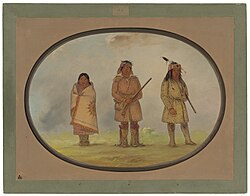
The region's human history began as the Wisconsin glaciation of the last Ice Age receded. Early Paleo-Indians, nomadic hunter-gatherers using stone tools, settled into the emerging ecosystems to hunt large game and gather natural resources. By the time Europeans arrived, the land was inhabited by the Lenape (an Algonquian-speaking people). While Giovanni da Verrazzano recorded an encounter with the Lenape in 1524 upon entering New York Bay, the full extent of his interaction with Long Island residents remains unclear.
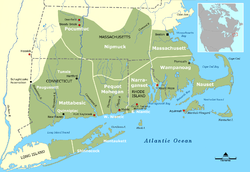
In the early 17th century, European exploration intensified. Henry Hudson explored the harbor in 1609, and by 1615, Adriaen Block became the first European to identify that both Manhattan and Long Island were islands.
The Colonial Era: Dutch and English Rivalries
The Dutch West India Company established a presence in 1621, focusing on the lucrative fur trade. Central to this economy was wampum—traditional shell beads crafted by Long Island Native Americans. The Dutch operated a triangular trade: they purchased wampum from Long Island, traded it for furs with inland tribes, and shipped those furs to Europe. This economic interdependence maintained a fragile peace for several decades.
Land Disputes and Settlement
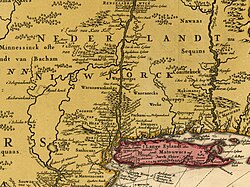
Between 1636 and 1648, the island became a contested zone between the Dutch (who occupied the west) and the English (who settled the east). These settlers purchased land from sachems (Indigenous chiefs), but the transactions were fraught with cultural misunderstanding. Europeans viewed these deals as permanent, exclusive ownership, whereas the Algonquian peoples viewed them as temporary and communal arrangements.
The English established several key settlements in the mid-17th century, including Southold (1640), Southampton (1640), and Hempstead (1644). Meanwhile, the Dutch founded six towns in present-day Brooklyn starting in 1645: Brooklyn, Gravesend, Flatlands, Flatbush, New Utrecht, and Bushwick.
The Shift to English Rule
By 1664, the English seized the Dutch colony of New Netherland. The Duke of York claimed the region, eventually organizing it into the Province of New York. By 1683, the administrative divisions were formalized into the three counties that still exist today: Kings, Queens, and Suffolk.
The 18th Century: Revolution and Conflict
The 18th century saw the increasing marginalization of Indigenous populations, who were pushed off their ancestral lands. Simultaneously, the region became a center for enslaved labor; by the 1730s, Long Island had more enslaved people than any other rural or urban area in the northern colonies.
During the American Revolutionary War, Long Island became a critical strategic point. In the Battle of Long Island, British forces defeated George Washington's troops, forcing a narrow evacuation from Brooklyn Heights. The island remained a British stronghold until 1783, dividing local families between Patriot and Loyalist causes.
19th Century: Infrastructure and Urbanization
For much of the 1800s, Long Island remained primarily agricultural. This changed with the introduction of the Long Island Rail Road (LIRR), which began service in 1836 and reached the east end by 1844. The LIRR transformed the island by enabling commuting to Manhattan, sparking residential growth around rail hubs.
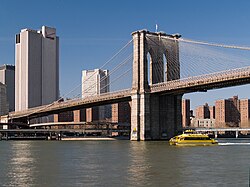
A pivotal moment occurred in 1883 with the completion of the Brooklyn Bridge, ending the island's total reliance on maritime travel to the mainland. In 1898, Kings County and parts of Queens consolidated into the City of Greater New York, while the remaining eastern portion of Queens split off in 1899 to form Nassau County.
20th Century: Aviation and the Suburban Boom
The 20th century redefined Long Island as a center of technology and residential expansion. In 1927, Charles Lindbergh departed from Roosevelt Field for his historic solo flight to Europe. The region later became a military aircraft production powerhouse during World War II, with companies like Grumman and Fairchild Aircraft contributing to both the war effort and the subsequent Space Age.
Parallel to the aviation boom, the landscape shifted from farms to suburbs. Robert Moses engineered an extensive network of parkways and state parks, facilitating automobile travel. Following World War II, the G.I. Bill incentivized veterans to move to new developments. Levittown became the blueprint for mass-produced suburban housing, leading to a population explosion in Nassau and western Suffolk counties.

As the island grew, its skyline evolved. By 2021, The Brooklyn Tower became the tallest building on Long Island, reaching a height of 1,073 feet.

Key Facts
- First European Identification: Adriaen Block determined Manhattan and Long Island were islands in 1615.
- Economic Driver: The Dutch utilized a triangular trade involving wampum produced by Long Island Native Americans.
- Revolutionary War: The Battle of Long Island was a major British victory that left the island a stronghold until 1783.
- Transport Milestone: The Brooklyn Bridge (1883) provided the first permanent land link to the rest of the U.S.
- Aviation Hub: Long Island hosted historic flights by Charles Lindbergh and Wiley Post.
- Suburbanization: Levittown pioneered large-scale, simplified housing construction for WWII veterans.
| Era | Primary Influence | Key Development |
|---|---|---|
| Pre-Colonial | Paleo-Indians / Lenape | Nomadic hunting and wampum production |
| 17th Century | Dutch & English | Establishment of first towns and colonial rivalry |
| 18th Century | British & Patriots | Battle of Long Island and Revolutionary War |
| 19th Century | Industrialists | LIRR expansion and Brooklyn Bridge completion |
| 20th Century | Developers / Military | Aviation industry and the rise of Levittown |
Frequently Asked Questions
What was wampum and why was it important?
Wampum were commemorative stringed shell beads made by Long Island Native Americans. They held significant cultural value and were used as currency by Dutch colonists to trade for furs with inland tribes.
Who were the first European settlers on Long Island?
The first European settlements were established by English colonists. The first settlement on the geographic island was Southold, founded on October 21, 1640, by Rev. John Youngs and settlers from New Haven, Connecticut.
How did the Brooklyn Bridge change Long Island?
Completed in 1883, the Brooklyn Bridge provided the first land-based connection between Long Island and the rest of the United States, as previous travel required boats or ships. This facilitated the growth of residential suburbs.
What role did Long Island play in aviation history?
Long Island was an early center of aviation, serving as the takeoff point for Charles Lindbergh's 1927 solo flight to Europe. It also became a major hub for military aircraft production during World War II and the Space Age.
What is the significance of Levittown?
Levittown is noted for simplifying housing construction to produce homes on a massive scale, providing affordable opportunities for white World War II veterans to start families in the post-war boom.