Logging Truck History: The Evolution of Timber Transport
For centuries, the logging industry was dictated by geography. The most accessible trees were those located near waterways, which provided a natural and efficient means of transporting massive logs to mills. However, as these easily accessible supplies dwindled, the industry had to innovate to reach deeper forests, leading to a technological evolution in hauling.
Before the internal combustion engine, loggers relied on teams of oxen or horses to drag timber through the wilderness. These animal teams were eventually superseded by steam-powered donkeys—stationary steam winches used to pull logs—and locomotives. While powerful, these methods were often limited by the need for tracks or specific terrain. The final and most flexible development in this progression was the logging truck.
The Rise of Log Trucking in Washington
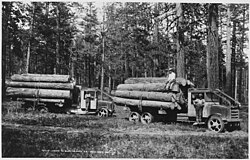
The transition to motorized transport began in earnest in the early 20th century, with a truck utilized for logging in Covington, Washington, as early as 1913. However, the true catalyst for the industry's growth was World War I. The demand for Sitka spruce, a high-strength wood essential for airplane construction, established log trucking as a primary method of transport in Washington state.
To meet wartime needs, the United States Army created the Spruce Production Division. This organization deployed thousands of men to construct roads into western Washington, allowing the harvest of dispersed stands of premium trees that were previously unreachable. Following the war, the market was flooded with surplus military trucks. These vehicles were affordable and attractive to logging companies, particularly smaller operations that lacked the capital to invest in expensive locomotive systems.
Technological Advancements and Infrastructure
The 1920s and 1930s marked a period of rapid refinement for these primitive vehicles. Engineers introduced more powerful engines and significantly improved braking systems to handle the heavy loads and steep terrain of the Pacific Northwest. One of the most critical changes occurred at the ground level: the narrow, treadless tires made of solid rubber or steel were replaced by wider pneumatic tires (air-filled tires) featuring treads for better traction.
Parallel to vehicle improvements, the infrastructure of the forest changed. The early reliance on plank roads—wooden paths laid over mud—gave way to graded dirt roads. By the mid-1930s, these combined advancements in machinery and roadwork allowed trucks to haul as much timber out of the Pacific Northwest as the railroads did.
The cycle of military innovation continued during World War II. The war drove further improvements in truck design, and once again, the sale of surplus military vehicles after the conflict provided logging companies with modernized fleets.
Key Facts
- Early Adoption: Log trucking was used in Covington, Washington, by 1913.
- Wartime Influence: World War I demand for Sitka spruce for aircraft drove the expansion of logging roads.
- Military Role: The Spruce Production Division built the infrastructure necessary to access dispersed timber stands.
- Tire Evolution: Industry shifted from solid rubber/steel treadless tires to wider pneumatic treaded tires.
- Market Shift: By the mid-1930s, trucks matched railroads in timber hauling volume in the Pacific Northwest.
| Era/Method | Primary Transport Tool | Key Characteristic |
|---|---|---|
| Early Logging | Waterways | Limited to trees near water |
| Early Land Hauling | Oxen and Horses | Animal-powered dragging |
| Industrial Transition | Steam Donkeys & Locomotives | High power, high cost, track-dependent |
| Early Motorized | Surplus Military Trucks | Affordable for small outfits; solid tires |
| Modernized Era | Advanced Logging Trucks | Pneumatic tires and graded dirt roads |
Frequently Asked Questions
Why was Sitka spruce so important during World War I?
Sitka spruce was highly valued for its strength and properties, making it a critical material for the construction of airplanes during the war.
What was the Spruce Production Division?
It was a United States Army division tasked with building roads into western Washington to harvest the best dispersed stands of spruce trees for the war effort.
How did tire technology change for logging trucks?
Trucks moved from using narrow, treadless tires made of solid rubber or steel to wider pneumatic tires with treads, which provided better grip and durability.
When did trucks become as efficient as railroads for hauling timber?
By the mid-1930s, logging trucks were hauling as much timber out of the Pacific Northwest as the railroad systems.
How did World War II affect the logging industry?
World War II led to improved truck designs, which were later adopted by logging companies through the purchase of surplus military vehicles after the war ended.