John Deere: A Legacy of Agricultural and Industrial Innovation
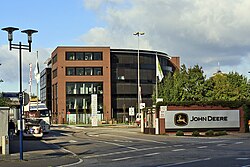
From its humble beginnings in the 19th century to its current status as a global powerhouse, John Deere (officially Deere & Company) has shaped the way the world produces food and builds infrastructure. Headquartered in Moline, Illinois, the company has evolved from a specialized plow manufacturer into a diversified leader in agricultural, construction, and forestry equipment.
Today, John Deere is a public company traded on the NYSE under the symbol DE and is a prominent component of both the S&P 100 and S&P 500 indices. Under the leadership of Chairman, CEO, and President John C. May, the company continues to integrate advanced technology into heavy machinery to meet the demands of modern global industry.
Key Facts
- Global Reach: Serves customers worldwide with major operations in North America, Latin America, Europe, Asia, and Africa.
- Financial Strength: Reported revenue of US$ 45.7 billion and net income of US$ 5.03 billion for 2025.
- Workforce: Employs approximately 73,100 people globally as of 2025.
- Diverse Portfolio: Produces everything from compact utility tractors and combine harvesters to excavators and feller bunchers.
- Asset Base: Holds total assets valued at US$ 106 billion.
Evolution of the Brand
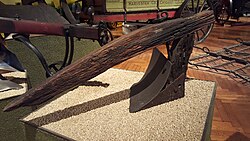
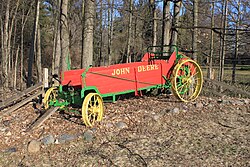
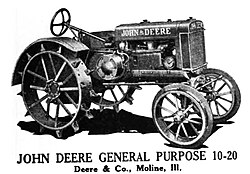
The company's history is marked by a steady expansion of its product line and brand identity. In the 19th century, the focus was primarily on agricultural implements, such as the iconic steel plow. As the 20th century progressed, the company transitioned into motorized power, introducing legendary tractors and harvesting machinery.
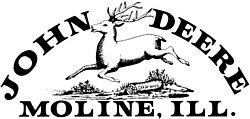
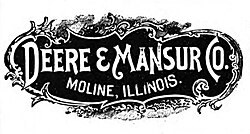
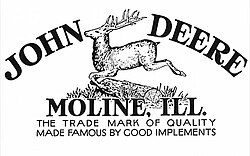
The visual identity of the company also evolved to reflect its growth, with various logos used between 1876 and 1936 to signal its changing market position and expanding capabilities.
Expansion into Global Markets
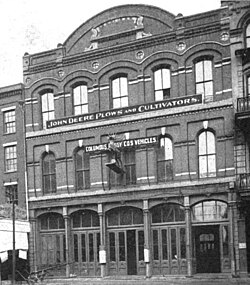
By the early 20th century, John Deere had established a significant presence beyond its Illinois roots, including the opening of the New Orleans House in 1903 to better serve the American South.
Product Portfolio and Specializations
John Deere operates across three primary equipment divisions, ensuring that they provide specialized tools for various land-management needs.
Agricultural Equipment
The core of the business remains Production & Precision Agriculture. This includes a vast array of machinery designed to maximize crop yield and efficiency:
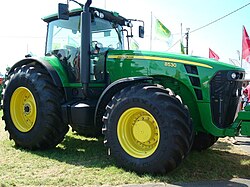
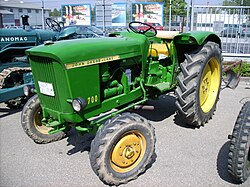
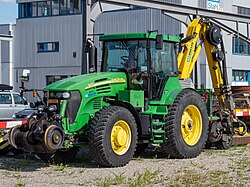
- Tractors: Ranging from compact utility models to the massive 9R/9RT series.
- Harvesting: Combine harvesters, forage harvesters, and sugarcane harvesters.
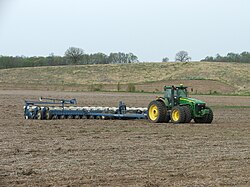
- Planting and Care: Seed drills, field sprayers, and fertilizer spreaders.
Construction and Forestry
Beyond the farm, the company produces heavy-duty machinery for infrastructure and land clearing. This division focuses on durability and power, offering:
- Earthmoving: Excavators, loaders, graders, and backhoes.
- Forestry: Feller bunchers (machines that cut and bunch trees), forwarders, and log loaders.
Turf and Small Agriculture
For residential and commercial landscaping, the company provides specialized turf care equipment, including commercial mowers, golf course equipment, and Gator utility vehicles.
Global Manufacturing and Infrastructure
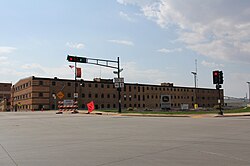
To maintain its worldwide supply chain, John Deere operates an extensive network of factories. In the United States, key sites include the Harvester Works in East Moline, the Davenport Works for loaders and graders, and the Horicon Works for turf care.
Internationally, the company maintains a strong footprint with factories in Mannheim, Germany; Granadero Baigorria, Argentina; and multiple sites in India, Brazil, and France.
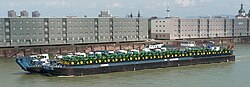
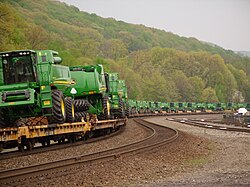
The company also manages a complex logistics network to transport its massive machinery via rail and sea to reach international markets.
Financial Performance and Market Share
John Deere's financial health is diversified across its different business segments and geographic regions. The majority of its revenue is generated from the United States, though Latin America and Western Europe represent significant portions of its global income.
| Business Segment | Revenue (Billion US$) | Market Share (%) |
|---|---|---|
| Production & Precision Agriculture | 26.8 | 43.7% |
| Construction and Forestry | 14.8 | 24.2% |
| Small Agriculture & Turf | 14.0 | 22.8% |
| Financial Services | 4.7 | 7.7% |
| Other | 1.0 | 1.6% |
The company also provides Financial Services through John Deere Financial, helping customers manage the significant investment required for heavy machinery.
Corporate Presence and Brand Engagement
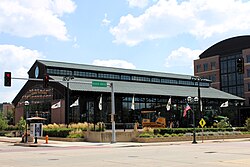
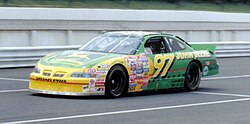
The John Deere Pavilion in Moline, Illinois, serves as a hub for the company's heritage and innovation. Beyond manufacturing, the brand maintains high visibility through strategic sponsorships, including presence in NASCAR.
Frequently Asked Questions
What are the primary products manufactured by John Deere?
John Deere produces a wide range of machinery, including agricultural tractors, combine harvesters, seed drills, excavators, loaders, feller bunchers, and commercial mowing equipment.
Where is John Deere headquartered?
The company's world headquarters are located at One John Deere Place in Moline, Illinois.
Does John Deere operate outside of the United States?
Yes, John Deere has a massive global presence with factories and equipment divisions in countries including Germany, Brazil, Argentina, India, France, and Finland.
What is the role of John Deere Financial?
John Deere Financial provides credit and financing services to help customers purchase the company's agricultural, construction, and forestry equipment.
Who is the current leader of the company?
As of 2020, John C. May serves as the Chairman, CEO, and President of Deere & Company.