Loanwords: How Languages Borrow and Adapt Vocabulary
Language is rarely a static entity; it is a living, breathing system that evolves through contact with other cultures. One of the most common ways this happens is through loanwords—words adopted from one language (the donor language) into another (the recipient or target language). While linguists use the term "borrowing," it is a metaphor: unlike a financial loan, the donor language loses nothing, and there is no expectation that the word will ever be returned.
From the coffee in our café to the children in a kindergarten, loanwords are woven into the fabric of our daily speech, often so deeply that we forget they originated elsewhere.

Key Facts
- Loanwords are adopted in their original form or an approximation of it, whereas calques are direct translations of a word or phrase.
- Cognates differ from loanwords because they share a common ancestral origin rather than being borrowed.
- A Wanderwort is a word that spreads across many distant languages, such as "tea."
- Technical and academic loanwords usually enter a language through writing, while colloquial terms spread via word-of-mouth.
- Some loanwords undergo semantic shifts, where the meaning changes significantly in the new language.
Distinguishing Loanwords from Similar Linguistic Phenomena
To understand loanwords, it is essential to distinguish them from other types of linguistic transfers. While a loanword is an adoption of the sound and form of a word, a calque (or loan translation) is a word-for-word translation of a foreign concept into existing native words. For example, the word "loanword" itself is a calque of the German Lehnwort, while the word "calque" is a loanword from the French word for "tracing" or "imitation."
Furthermore, loanwords should not be confused with cognates. Cognates are words in different languages that look similar because they descended from the same parent language, not because one was borrowed from the other.
Adoptions and Adaptations
When entire multi-word phrases are borrowed, such as the French déjà vu, they are referred to as adoptions, adaptations, or lexical borrowings.
Linguistic Classification and Theory
Linguists have developed various frameworks to classify how words are integrated. Classical theoretical works by Werner Betz, Einar Haugen, and Uriel Weinreich form the basis of this study. Haugen, for instance, distinguished between three primary groups:
- Loanwords: Morphemic importation without substitution.
- Loanblends: Both morphemic substitution and importation.
- Loanshifts: Morphemic substitution without importation.
Additionally, Suzanne Kemmer defines "foreign words" as those that most speakers recognize as being from another language, such as the German Schadenfreude or the Latin mutatis mutandis.
Global Examples of Lexical Borrowing
The English Language
English is a prolific borrower. While most of its affixes (like -ing or -ly) are native to Old English, some are borrowed. The suffix -ize (or -ise), for example, entered English via Latin from the Greek -izein.
The Ottoman Empire and Turkey
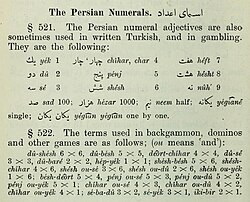
For over 600 years, Ottoman Turkish served as the administrative language of the empire, blending Turkish with heavy Persian and Arabic influence. These terms spread into languages like Bosnian, Serbian, and Greek. Following the fall of the empire, the Republic of Turkey implemented extensive language reforms to replace these borrowed terms with native Turkic roots.
Dutch Influence in Indonesia and Russia
Colonial and professional ties often drive borrowing. In Indonesia, roughly 20% of the vocabulary can be traced back to Dutch, including everyday words like buncis (beans) and administrative terms like kantor (office). Similarly, Czar Peter the Great's interest in shipbuilding brought Dutch naval terms into Russian, such as matrós (sailor) from the Dutch matroos.
The Romance Languages
Languages such as Italian, Spanish, and French rely heavily on Latin. In many cases, learned borrowings from Latin—often introduced by clergy and scholars during the Middle Ages—outnumber inherited terms in academic contexts. Romanian underwent a similar "re-Latinization" in the 18th and 19th centuries to modernize its vocabulary.
Cultural Shifts and "False Friends"
Sometimes, a loanword takes a "logical leap," changing its meaning entirely and becoming a false friend. A striking example is the English word "Viking," which in Japanese (baikingu) means "buffet." This occurred because the first buffet-style restaurant in Japan, inspired by the Nordic smörgåsbord, was named the "Viking" by the Imperial Hotel in 1958.
| Term | Definition | Example |
|---|---|---|
| Loanword | Word adopted in original form | Café (French) |
| Calque | Word-for-word translation | Loanword (from German Lehnwort) |
| Wanderwort | Word spread across remote languages | Tea (Hokkien origin) |
| Cognate | Words sharing an ancestral root | Related words in Romance languages |
Frequently Asked Questions
What is the difference between a loanword and a calque?
A loanword is adopted directly from the donor language (e.g., bazaar from Persian), whereas a calque is a translation of the word's meaning into the recipient language's own words.
How does a Wanderwort differ from a standard loanword?
A Wanderwort is a specific type of loanword that has been borrowed across a vast range of geographically and linguistically remote languages, often making its original source difficult to pinpoint.
Are cognates considered loanwords?
No. Cognates are similar because they share a common ancestor (etymological origin), while loanwords are similar because one language specifically borrowed the term from another.
Why do some loanwords change meaning?
Meaning shifts often occur due to specific cultural contexts or "logical leaps." For instance, a brand name or a specific establishment (like the Viking restaurant in Japan) can redefine a word for an entire population.
How do technical loanwords usually enter a language?
Unlike colloquial loanwords, which typically spread through spoken conversation, technical or academic loanwords are usually first introduced through written scholarly, scientific, or literary texts.