Little Holland House and the Legacy of the Fox Family
The history of the Holland House estate in Kensington is a tapestry of political influence, artistic patronage, and philanthropic endeavor. Central to this narrative is the residence known as Little Holland House and the prominent Fox family, whose connections to the Whig establishment and the British monarchy shaped the social landscape of the area for over a century.
The Era of Hon. Caroline Fox
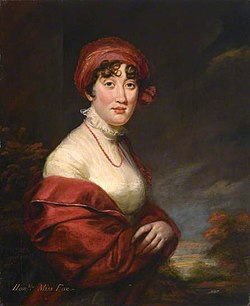
From before 1802 until her death in 1845, the property was occupied by Hon. Caroline Fox. The only daughter of Stephen Fox, 2nd Baron Holland, and Lady Mary FitzPatrick, Caroline was a member of a powerful political dynasty. She was the sister of Henry Vassall-Fox, 3rd Baron Holland, and the niece of the renowned Whig statesman Charles James Fox, who transformed Holland House into a hub for prominent politicians.
Caroline, who remained unmarried throughout her life, referred to her home as Paradisino. Her tenure was marked by a commitment to social improvement; in 1842, she established a charity school dedicated to the education of children from the labouring and manufacturing classes of Kensington.
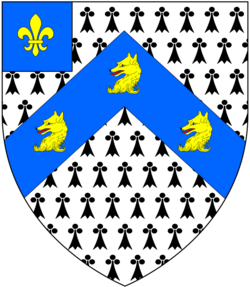
The Evolution of Fox Primary School
The charity school founded by Caroline Fox underwent several relocations as the neighborhood developed:
- Original Site: Located on the west side of today's Holland Park, near Little Holland House.
- Second Site: In 1876, the London School Board took over the institution and moved it to Silver Street (now the northern end of Kensington Church Street).
- Current Site: The school moved a final time in 1937 to its present location on Kensington Place, where it continues as Fox Primary School.
Following the school's departure from its original site in 1877, the land was auctioned for £2,650. This plot eventually became "The Studios," a group of six two-storey residences at Nos. 20–30 Holland Park Road.
Charles Richard Fox and Addison Road
Parallel to the history of Paradisino was another residence also termed "Little Holland House," completed in 1827 at Number 1 Addison Road. This home was occupied by Charles Richard Fox—the illegitimate son of the 3rd Baron Holland and Lady Webster—and his wife, Lady Mary Fox, who was the illegitimate daughter of King William IV.
It is believed that Charles Richard Fox purchased the freehold from his father to encourage other high-society figures to move into the new development. While most of the house was demolished after his death in 1873, a portion survives today as the club-house for the Holland Park Tennis Club.
The Prinsep Family and the Artistic Salon
In 1850, the property returned to a period of artistic vibrancy when Henry Thoby Prinsep, a director of the East India Company, secured a 21-year lease from Henry Fox, 4th Baron Holland. This arrangement was facilitated by the painter George Frederic Watts, a mutual friend of the Hollands and Prinseps.
For over two decades, the house served as a cultural center. George Frederic Watts, along with Sara Monckton Prinsep and her sisters (including the famed photographer Julia Margaret Cameron), hosted a celebrated Sunday afternoon salon, blending art, intellect, and social networking.
From Little Holland House to New Little Holland House
When the lease expired in 1871, the building was demolished. However, the artistic connection persisted. Thoby Prinsep leased a large plot on Melbury Road from the 5th Earl of Ilchester, granting a portion of it to Watts. On this land, Watts commissioned Frederick Cockerell to build New Little Holland House.
Watts resided there from 1876 until 1904. Despite attempts by the London County Council to preserve the building, it was demolished in 1964 and replaced by Kingfisher House, a block of flats designed by Austin Blomfield.
Key Facts
- Hon. Caroline Fox founded a charity school in 1842 for the poorer classes of Kensington.
- Charles James Fox made Holland House a famous meeting place for Whig politicians.
- The Studios (Nos. 20–30 Holland Park Road) were built on the site of the original charity school.
- George Frederic Watts lived in New Little Holland House from 1876 until 1904.
- Number 1 Addison Road partially survives as the Holland Park Tennis Club.
Summary of Key Properties
| Property Name | Primary Occupant(s) | Key Significance | Current Status |
|---|---|---|---|
| Paradisino | Hon. Caroline Fox | Site of original charity school | Now "The Studios" |
| Little Holland House (Addison Rd) | Charles Richard Fox | High-society development | Partially survives as Tennis Club |
| New Little Holland House | George Frederic Watts | Artistic salon and residence | Demolished (now Kingfisher House) |
Frequently Asked Questions
Who was Hon. Caroline Fox?
Hon. Caroline Fox (1767–1845) was the only daughter of the 2nd Baron Holland and a member of the influential Fox family. She is remembered for her residence "Paradisino" and for establishing a charity school for the underprivileged children of Kensington.
What happened to the charity school founded by Caroline Fox?
The school moved twice: first to Silver Street in 1876 and finally to Kensington Place in 1937, where it is known today as Fox Primary School.
Who were the residents of the artistic salon in the 1850s?
The salon was centered around the Prinsep family, specifically Henry Thoby Prinsep and Sara Monckton Prinsep, along with the painter George Frederic Watts and photographer Julia Margaret Cameron.
What is the relationship between the Fox family and the Whig party?
The family was deeply embedded in Whig politics, most notably through Charles James Fox, who used Holland House as a primary gathering place for prominent Whig politicians.
What remains of the house at Number 1 Addison Road?
While most of the house was demolished after the death of Charles Richard Fox in 1873, a part of the structure still exists as the club-house for the Holland Park Tennis Club.