Litre: A Comprehensive Guide to the Metric Unit of Volume
The litre (spelled liter in American English) is one of the most recognizable units of volume in the world. Whether you are measuring ingredients for a recipe, purchasing fuel, or checking the capacity of a beverage container, the litre serves as a fundamental building block of the metric system. While it is widely used in daily life, its scientific definition and relationship to other units like the kilogram involve fascinating historical and physical nuances.
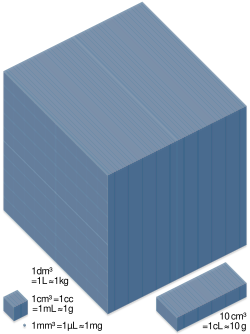
At its most basic level, one litre is equivalent to the volume of a cubic decimetre (dm³). This means a cube that measures 10 cm × 10 cm × 10 cm holds exactly one litre. In terms of larger metric scales, one litre is equal to 1,000 cubic centimetres (cm³) or 0.001 cubic metres (m³).
Key Facts
- Definition: One litre is equal to one cubic decimetre (1 dm³).
- Water Relationship: One litre of liquid water has a mass of approximately one kilogram.
- Symbols: Commonly represented by the uppercase L or lowercase l.
- Subdivisions: 1 litre contains 1,000 millilitres (mL).
- Metric Scale: 1,000 litres make up one cubic metre (m³).
The Science of Volume and Mass
There is a long-standing connection between the litre and the kilogram. Historically, the kilogram was defined in 1795 as the mass of one cubic decimetre of water at the temperature of melting ice (0 °C). Because of this, one litre of water has a mass of almost exactly one kilogram.
However, this relationship is not perfectly exact due to the way physical constants are defined. The density of water changes based on temperature, pressure, purity, and isotopic uniformity. For instance, water reaches its maximum density at 3.984 °C. Modern measurements of Vienna Standard Mean Ocean Water show a density of approximately 0.999 975 kg/L at this temperature under standard atmospheric pressure.
Historical Evolution of the Definition
The definition of the litre has shifted over time. From 1901 to 1964, it was defined by the volume occupied by one kilogram of pure water at its maximum density. During this period, a slight discrepancy was discovered between the mass of the International Prototype of the Kilogram and the volume of a litre. In 1964, the definition was reverted to its current form, tying the litre directly to the metre as a cubic decimetre.
Common Symbols and Notation
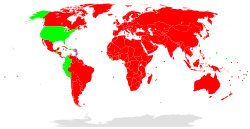
The symbol for the litre has been a subject of international discussion. While the lowercase l was the original SI symbol, it often causes confusion with the numeral 1 in many typefaces. To prevent errors, the uppercase L was adopted as an alternative in 1979.
Usage often varies by region:
- United States, Canada, and Australia: The uppercase L is widely used and recommended by NIST.
- Europe and the UK: The lowercase l is more common, though whole litres are often written out in full.
- Japan and South Korea: The script symbol ℓ is frequently encountered.
Conversions and Practical Usage
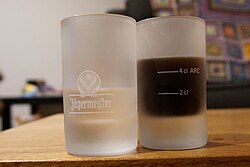
In everyday life, the litre is often subdivided using SI prefixes. In many European countries, centilitres (cL) are used for small bottles and drinking glasses, while hectolitres (hL) are used for large-scale beverage production and fishing quotas. In contrast, countries like Canada and Australia typically stick to litres and millilitres for consumer goods.
Metric and Non-Metric Comparison
| Unit Type | Unit Name | Approximate Value in Litres |
|---|---|---|
| Metric | Millilitre (mL) | 0.001 L |
| Metric | Decilitre (dL) | 0.1 L |
| US Customary | US Gallon | ≈ 3.785 L |
| US Customary | US Quart | ≈ 0.946 L |
| Imperial | Imperial Gallon | ≈ 4.546 L |
| Imperial | Imperial Pint | ≈ 0.568 L |
Frequently Asked Questions
Is a litre the same as a cubic decimetre?
Yes, one litre is exactly equal to one cubic decimetre (1 dm³), which is the volume of a cube with sides of 10 centimetres.
Why is the symbol sometimes 'L' and sometimes 'l'?
The lowercase 'l' was the original symbol, but the uppercase 'L' was introduced to avoid confusion with the number '1'. Different regions and standards (like NIST in the US) may prefer one over the other.
How many millilitres are in a litre?
There are exactly 1,000 millilitres in one litre.
Does the mass of a litre of water always equal one kilogram?
Almost exactly, but not perfectly. The mass depends on the water's temperature, pressure, and purity. It is closest to one kilogram when the water is at its maximum density (3.984 °C).
How does a litre compare to a US quart?
A litre is slightly larger than a US liquid quart, specifically about 5.7% larger.