Lithic Reduction: The Science and Art of Stone Tool Manufacture
In the study of archaeology, specifically regarding the Stone Age, lithic reduction is the systematic process of shaping raw stone or rock into functional tools and weapons. By strategically removing portions of the material, ancient humans transformed natural geological finds into precise instruments. This process is so distinct that many archaeological industries are identified almost exclusively by the analysis of their tool styles and the chaîne opératoire—the sequential chain of operations used during production.
The process typically begins with the selection of a tool stone, which may be a naturally detached piece, a boulder quarried from solid rock, or even debitage (flakes left over from a previous operation). This starting piece is known as the lithic core or objective piece. Unlike ground stone tools, which are created through grinding, flaked stone tools are produced through knapping—the controlled fracturing of the material.
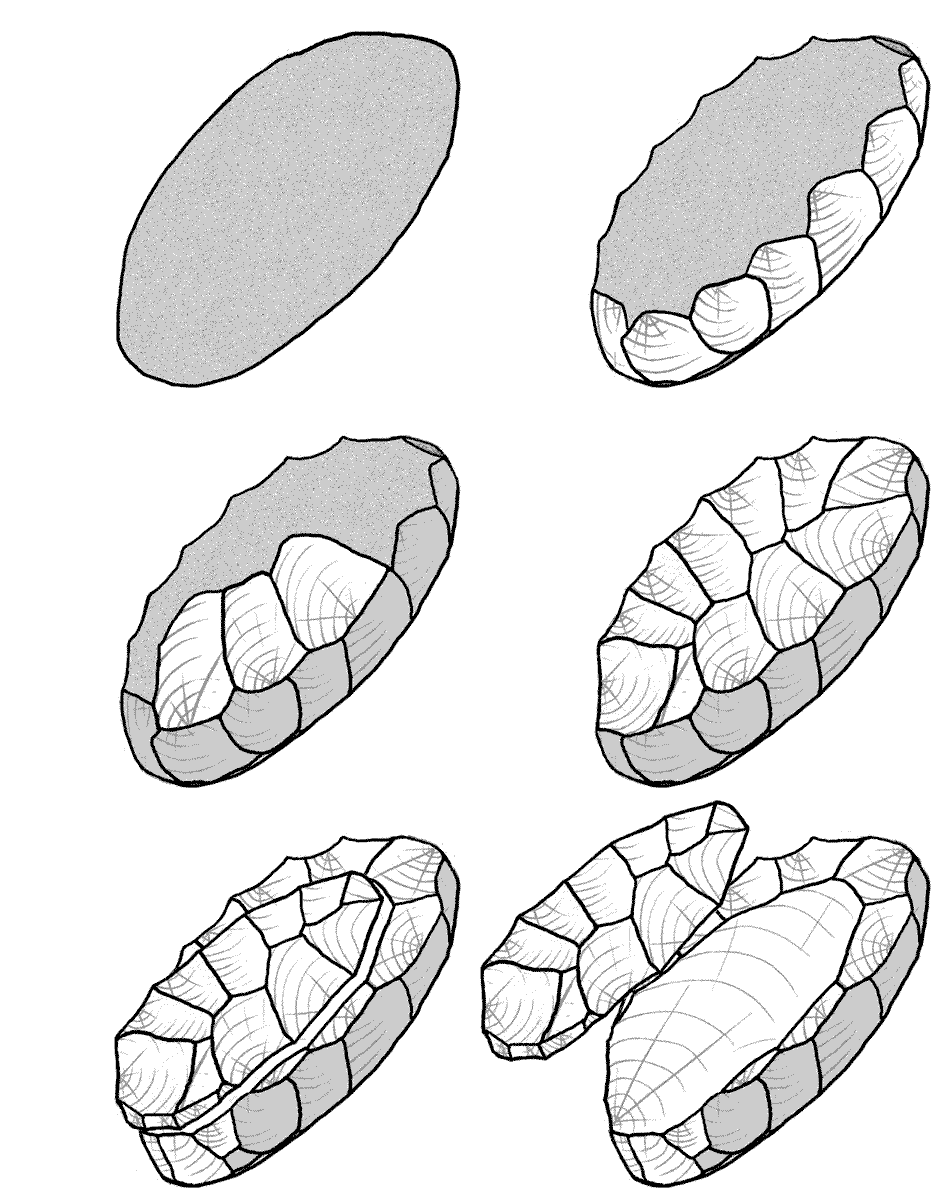
Key Facts
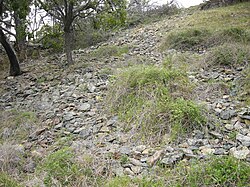
- Materials: Cryptocrystalline stones like flint, obsidian, and chert are preferred due to their predictable fracture patterns.
- Conchoidal Fracture: The primary mechanism of knapping, where force creates a Hertzian cone, resulting in a sharp-edged flake.
- Tool Types: Tools can be unifacial (worked on one side) or bifacial (worked on both sides).
- Blades: Specifically defined as flakes that are at least twice as long as they are wide.
- Timeline: Hard-hammer percussion evidence dates back over 2 million years, while pressure flaking has been traced back to 73,000 BCE.
The Physics of Knapping
Not all stones are suitable for tool making. Knappers utilize amorphous or cryptocrystalline materials such as obsidian, flint, chert, and chalcedony, as well as fine-grained stones like quartzite and rhyolite. Because these materials lack natural planes of separation, they exhibit conchoidal fractures when struck.
When a percussor hits the stone, force propagates as a Hertzian cone. This results in the separation of a lithic flake (a partial cone). Because this process is predictable, a skilled knapper can control the direction of the force to shape the core into a specific tool.
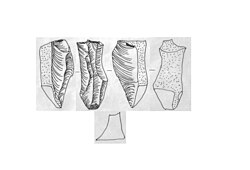
Reduction Techniques
Thermal Treatment
Experimental archaeology shows that heating stones can make them more malleable and easier to flake, often allowing for the production of larger flakes. In some cultures, such as Native Americans in the California Channel Islands, heating chert not only aided the chipping process but also imparted a distinct luster to the finished tool.
Percussion Reduction
Percussion involves removing flakes through impact. This is categorized into several distinct methods:
- Hand-held Core: The core is held in one hand and struck with a hammerstone (hard stone) or a billet made of bone, antler, or wood (soft hammer).
- Bipolar Percussion: The stone is placed on a stationary anvil and struck from above. This often creates a double bulb of percussion or crushing at both ends.
- Projectile Percussion: The objective stone is thrown against an anvil. This method offers very little control and produces significant shatter.
- Indirect Percussion: A punch is placed on the core and struck by a hammer. This allows for extreme precision and the application of high force to very small areas.
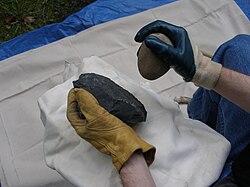
Hard vs. Soft Hammer Percussion
Hard-hammer percussion uses materials like quartzite to remove large, broad flakes. This is often the first step in a reduction sequence and produces the classic bulb of percussion and compression rings. In contrast, soft-hammer percussion uses wood, bone, or antler. These materials deform around the stone's edge, preventing shattering and allowing for thinner, longer flakes. This "peeling" action is known as a bending fracture.
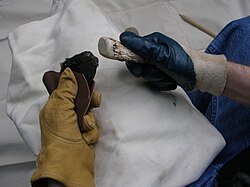
Pressure Flaking
Pressure flaking is a refinement technique where small flakes are pressed off the edge using a sharp instrument (such as an antler tine or copper punch) rather than struck. This provides the highest level of control, allowing for the creation of sharp edges and notches for hafting the tool to a handle. Evidence from Blombos Cave in South Africa indicates this technique was used as early as 73,000 BCE.
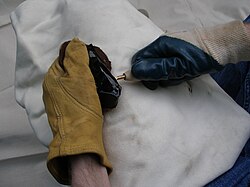
From Blanks to Preforms
The journey from raw stone to tool follows a specific progression. It begins with a blank—a piece of stone of suitable size and shape, which may be a natural cobble or a piece of debitage. Once the knapper begins to roughly shape the blank into the intended final form, it becomes a preform. A preform is larger and thicker than the final tool and lacks the final trimming and refinement.
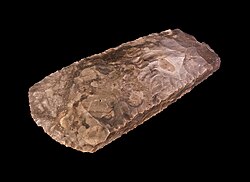
Measuring Reduction
Archaeologists use a reduction index to determine how much of the original stone mass was lost during manufacture. The geometric index of reduction compares the maximum blank thickness (T) to the height of the retouched scar (t). A higher ratio indicates a greater loss of weight. Modern advancements, including a 2025 Original Scraper Mass Calculator using random forest machine learning, now allow researchers to estimate the original mass of a scraper with an average error of only 3.2 grams.
Below is a summary of the primary lithic reduction methods:
| Technique | Tool Used | Primary Result | Typical Use Case |
|---|---|---|---|
| Hard-Hammer | Stone cobble/quartzite | Large, broad flakes | Initial roughing out |
| Soft-Hammer | Wood, bone, or antler | Thin, long flakes | Refining and shaping |
| Indirect Percussion | Punch and hammer | Small, precise flakes | Detailed work |
| Pressure Flaking | Antler tine or copper tool | Tiny, controlled flakes | Edge sharpening and notching |
| Bipolar | Anvil and striker | Double-bulb flakes | Processing small/hard cores |
Frequently Asked Questions
What is the difference between a blank and a preform?
A blank is a raw piece of stone of suitable size and shape that has not yet been worked. A preform is a blank that has been roughly shaped to resemble the final tool but still requires final trimming and refinement.
Why are certain stones like obsidian preferred for knapping?
These stones are cryptocrystalline or amorphous, meaning they lack natural planes of separation. This allows them to exhibit conchoidal fractures, which are predictable and allow the knapper to control exactly where the stone breaks.
How does soft-hammer percussion differ from hard-hammer percussion?
Hard-hammer percussion uses hard stone to remove large chunks of material. Soft-hammer percussion uses softer materials (like bone) to "peel" thinner flakes from the stone, which is more efficient for conserving material and creating finer edges.
What is the significance of the Blombos Cave discovery?
The discovery in Blombos Cave pushed the known timeline of pressure flaking back to 73,000 BCE, proving that early humans possessed advanced tool-shaping skills 55,000 years earlier than previously believed.
What is a Hertzian cone in the context of lithic reduction?
A Hertzian cone is the shape of the force propagation that occurs when a stone is struck. The resulting separation of material from the core usually takes the form of a partial cone, which is what we identify as a lithic flake.