Libertarian Party
The Libertarian Party (LP) is a prominent third party in the United States dedicated to the philosophy of libertarianism. Founded on the principle of maximizing individual liberty and minimizing government coercion, the party advocates for a drastic reduction in the size and scope of the state. Known by its slogan, "The Party of Principle," the LP seeks to provide a political alternative to the traditional two-party system by championing personal responsibility and free-market economics.
The party's ideological spectrum is broad, encompassing various factions. While primarily associated with right-libertarianism and cultural liberalism, it includes diverse schools of thought such as minarchism (the belief in a "night-watchman state" limited to protecting citizens from aggression), anarcho-capitalism (the advocacy for the elimination of the state in favor of private property and free markets), and classical liberalism. Other factions include Nozickianism, paleolibertarianism, and left-libertarianism.
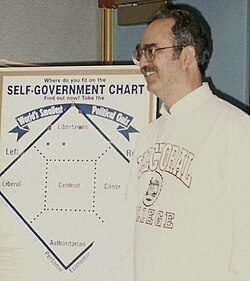
Key Facts
- Founded: December 11, 1971, by David Nolan.
- Governing Body: Libertarian National Committee, currently chaired by Evan McMahon.
- Membership: 9,348 dues-paying and life members as of October 31, 2025.
- Core Ideology: Libertarianism, focusing on individual liberty and limited government.
- Official Color: Gold.
- International Affiliation: International Alliance of Libertarian Parties.
History and Evolution
Established over 50 years ago, the Libertarian Party was created to translate the theoretical framework of libertarianism into a viable political force. Since its inception, the party has grown from a small group of activists into a national organization with state chapters across the U.S. and the District of Columbia.
Over the decades, the party has experienced internal debates regarding its direction, specifically the tension between radicalism (strict adherence to ideological purity) and pragmatism (a more flexible approach to achieve incremental gains). Recent years have seen significant internal shifts, including the influence of the Mises Caucus and the Free State Project.
Electoral Performance and Influence
While the Libertarian Party has not yet secured seats in the U.S. Senate or House of Representatives, it has maintained a consistent presence in presidential elections and local offices. The party's influence is often measured by its ability to shift national conversations toward civil liberties and fiscal restraint.
Presidential Candidates
The party has run candidates in every presidential election since 1972. Its most significant electoral surge occurred in 2016, when nominee Gary Johnson and running-mate Bill Weld received over 4.4 million votes, securing 3.28% of the national vote.
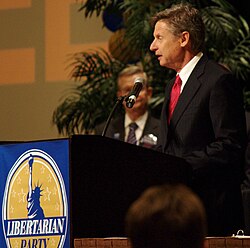
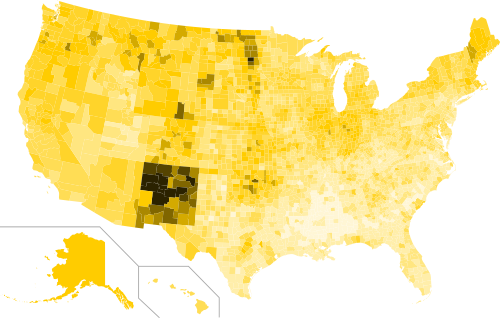
Other notable candidates include Ron Paul, who ran in 1988, and Jo Jorgensen, who ran in 2020. The party's performance varies by state, with some candidates achieving significant percentages in specific regions.
Legislative and Local Success
The LP has seen success at the state and local levels. As of September 2025, there are 148 other elected officials affiliated with the party. Notable achievements include winning seats in state legislatures, such as in Wyoming, where candidates like Marshall Burt and Bethany Baldes have seen success.
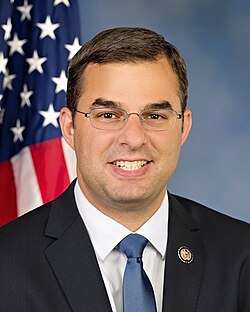
The party has also attracted defectors from other political parties. For example, Representative Justin Amash, the first Libertarian member of Congress, switched his affiliation to the LP in April 2020.
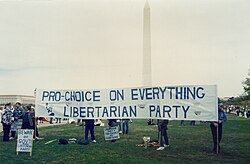
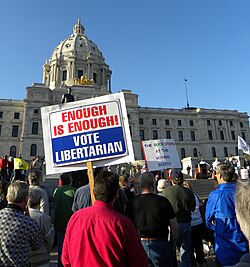
Public demonstrations, such as those during the 2010 Tea Party tax day, highlight the party's commitment to fiscal transparency and opposition to government spending.
Party Platform and Positions
The Libertarian platform is built on the non-aggression principle, which asserts that the initiation of physical force against others is illegitimate. This philosophy informs their positions across various sectors:
- Economic Policy: Advocacy for free markets, the elimination of most taxes, and the reduction of government spending.
- Civil Liberties: Strong support for freedom of speech, the Second Amendment (right to bear arms), and the Fourth Amendment (protection against unreasonable searches).
- Social Issues: Support for LGBT rights, the decriminalization of prostitution and pornography, and a pro-choice stance on abortion.
- Foreign Policy: A generally non-interventionist approach to international relations.
| Year | Nominee | National Votes | % of National Vote | Place |
|---|---|---|---|---|
| 1972 | John Hospers | 3,674 | 0.00% | 11th |
| 1980 | Ed Clark | 921,128 | 1.06% | 4th |
| 1988 | Ron Paul | 431,750 | 0.47% | 3rd |
| 2012 | Gary Johnson | 1,275,971 | 0.99% | 3rd |
| 2016 | Gary Johnson | 4,489,341 | 3.28% | 3rd |
| 2020 | Jo Jorgensen | 1,865,535 | 1.18% | 3rd |
| 2024 | Chase Oliver | 650,126 | 0.42% | 5th |
Frequently Asked Questions
Who founded the Libertarian Party?
The Libertarian Party was founded on December 11, 1971, by David Nolan.
What is the main goal of the Libertarian Party?
The party aims to maximize individual liberty and minimize government intervention in both the economic and personal lives of citizens.
Has the Libertarian Party ever won a seat in the U.S. Congress?
While the party has not won a seat in a general election for the U.S. Senate or House, it has had members join through party switches, such as Justin Amash.
What is the difference between minarchism and anarcho-capitalism?
Minarchism advocates for a minimal state limited to essential functions like police and courts, whereas anarcho-capitalism seeks to replace all government functions with private, market-based alternatives.
What was the party's best presidential performance?
The party's strongest performance was in 2016, when Gary Johnson received 4,489,341 votes, approximately 3.28% of the national total.