Libertad Lamarque: The Eternal Voice of the Golden Age of Cinema
Known affectionately as "La Novia de América" (The Girlfriend of America), Libertad Lamarque was a powerhouse of talent whose voice and screen presence defined an era. As a dual citizen of Argentina and Mexico, she bridged two of the most vibrant cinematic cultures in the world, leaving behind a legacy of 65 films, six telenovelas, and over 800 recorded songs.
From her early days as a child performer in Rosario to her status as a cultural legend in Mexico City, Lamarque's career spanned seven decades. Her versatility as a light soprano allowed her to master the passionate rhythms of tango and the dramatic demands of the silver screen, making her one of the most iconic stars of the Golden Age of cinema.
Key Facts
- Full Name: Libertad Lamarque Bouza.
- Titles: Known as "La Novia de América" and the "Queen of Tango."
- Cinematic Reach: Appeared in 65 films (45 in Mexico, 21 in Argentina, and 1 in Spain).
- Musical Legacy: Recorded more than 800 songs across various genres, primarily tango.
- Major Honors: Recipient of the Golden Ariel Award (2000) and the Konex Platinum Award.
- Lifespan: 1908–2000.
Early Life and the Rise of a Tango Queen
Libertad Lamarque was born on November 24, 1908, in Rosario, Santa Fe, Argentina. Her father, Gaudencio Lamarque, was an anarchist of French descent, and her mother, Josefa Bouza, was of Spanish origin. Her name, Libertad (meaning "Liberty"), was chosen by her father while he was imprisoned and seeking his release.
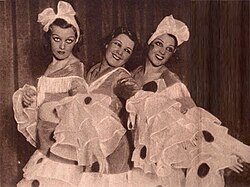
Lamarque's artistic journey began at age seven when she won a stage competition. By 1923, she landed her first professional role in the show Madre Tierra. Seeking greater opportunities, her family moved to Buenos Aires, where she secured a contract with the National Theatre in 1926. This period marked the start of her rapid ascent, as she debuted in La muchacha de Montmartre and began recording for Victor Records, releasing her first album, Gaucho Sol, in September 1926.
Her mastery of the tango—a passionate dance and music style from the Río de la Plata region—led her to win first prize at the Teatro Colón in 1930, earning her the prestigious title of "Queen of Tango."
Breaking Ground in Sound Cinema
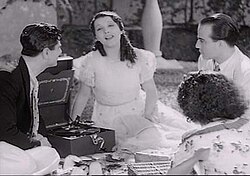
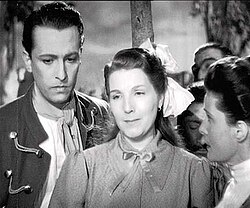
Lamarque was a pioneer in the technical evolution of film. In 1932, she starred in ¡Tango!, the first Argentine film with sound, making her the first singer to be recorded for a sound motion picture in her home country. Throughout the 1930s and 40s, she became a staple of Argentine cinema with hits like Ayúdame a vivir (1936) and La cabalgata del circo (1945).
The Transition to Mexico and International Fame
In 1946, Lamarque relocated to Mexico, a move that expanded her fame across the entire continent. While legends suggest she was blacklisted by Argentina's First Lady, Eva Perón, historians Marysa Navarro and Nicholas Frasier argue that the move was likely professional, as the Mexican film industry was in a stronger state during the 1940s and 50s.
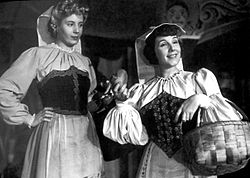
In Mexico, Lamarque collaborated with the legendary filmmaker Luis Buñuel in Gran Casino. Although that specific film was not a commercial success, she soon found critical acclaim in roles such as those in Otra primavera (1949) and La loca (1951), earning multiple Ariel Award nominations for Best Actress.
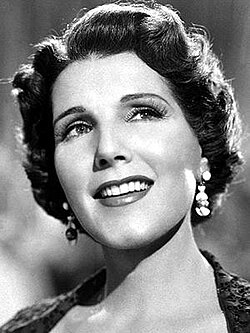
Her international appeal was further cemented by a triumphant tour of Cuba, where the press first dubbed her "America's Sweetheart," and a sold-out performance at New York's Carnegie Hall in 1947.
Later Career: Theatre and Telenovelas
As her film career slowed in the 1960s, Lamarque returned to her roots in music and theatre. She introduced the Spanish version of Hello Dolly to Latin American audiences in 1967 and continued to perform in musical revues well into the 1980s.
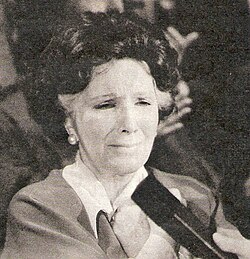
In her later years, she transitioned seamlessly into telenovelas (serialized television dramas). She starred in productions such as Soledad (1980) and La Usurpadora (1998). Even at the age of 91, she continued to work, playing the Mother Superior in Carita de Ángel.
Personal Life and Legacy
Lamarque's personal life was marked by both resilience and tragedy. Her first marriage to Emilio Romero ended in a difficult separation, during which she faced a personal crisis and a kidnapping of her daughter, Mirtha. She later found stability with her second husband, Alfredo Malerba, with whom she remained married for nearly 50 years until his death.
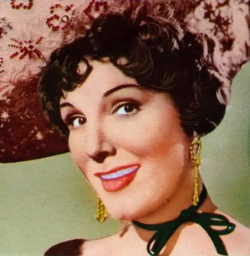
Libertad Lamarque passed away on December 12, 2000, in Mexico City at the age of 92 due to pneumonia. She left behind a legacy of artistic excellence, recognized by the city of Buenos Aires as an "Illustrious Citizen" and a "Cultural Legend."
| Category | Details |
|---|---|
| Total Films | 65 (Argentina, Mexico, Spain) |
| Musical Output | 800+ Songs |
| Vocal Range | Light Soprano (C4 to A5) |
| Key Awards | Golden Ariel (2000), Konex Platinum (1985) |
| Notable Telenovelas | La Usurpadora, Carita de Ángel, Soledad |
Frequently Asked Questions
Why was Libertad Lamarque called "La Novia de América"?
She earned the title "America's Sweetheart" (or "The Girlfriend of America") due to her immense popularity and adoration across Latin America, particularly following a highly successful tour of Cuba.
Did Eva Perón actually blacklist Libertad Lamarque?
While popular legend claims that First Lady Eva Perón blacklisted her, some historians argue this is unlikely, noting that Lamarque continued to travel freely between Argentina and Mexico during that time.
What was Lamarque's contribution to Argentine cinema?
Beyond her numerous roles, she was a pioneer of sound in film, starring in ¡Tango! (1932), the first Argentine sound film, and becoming the first singer recorded for a sound movie in the country.
What were her most significant musical achievements?
Lamarque was crowned the "Queen of Tango" after winning first prize at the Teatro Colón in 1930 and recorded over 800 songs throughout her career.
In which countries did she film her movies?
The majority of her work was produced in Mexico (45 films) and Argentina (21 films), with one additional film produced in Spain.