LGBTQ Rights and Social Acceptance in France's Overseas Territories
Same-sex marriage is legal across all of France's overseas departments and territories. While the legal framework provides equal rights, the social reality varies significantly across these diverse regions. In many overseas territories, acceptance of gay and queer identities is lower than in metropolitan France, often due to the influential role of religion and a strong emphasis on family and tribal honor.
Cultural perceptions sometimes frame gay identity as a "foreign" concept or something practiced primarily by white populations. This gap in understanding has occasionally led to public demonstrations, violence, or hatred. However, the 2013 law legalizing same-sex marriage has sparked critical discussions on previously taboo topics, increasing the visibility of LGBTQ individuals across these regions.
Key Facts
- Legal Status: Same-sex marriage is legal in all French overseas departments and territories.
- Public Opinion: A 2014 study found only 20% of overseas residents viewed homosexuality as a sexuality like any other, compared to 77% in metropolitan France.
- Political Divide: Among 27 overseas deputies, 11 voted for same-sex marriage, 11 voted against, 1 abstained, and 3 were absent.
- Cultural Identities: Traditional third-gender roles exist in French Polynesia (māhū) and Wallis and Futuna (fakafafine).
- Regional Havens: Réunion and New Caledonia are generally noted for higher levels of LGBTQ acceptance.
The French Caribbean
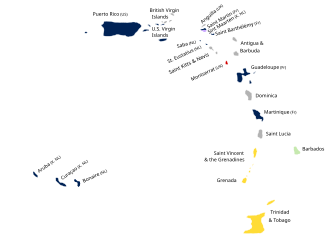
In the Caribbean territories—Guadeloupe, Martinique, Saint Martin, and Saint Barthélemy—the social climate is a mix of traditional values and modern tourism. While the first same-sex marriages in Saint Martin caused public protests, the region also hosts a vibrant LGBTQ scene. Saint Barthélemy, in particular, is known for a more relaxed social atmosphere due to its status as an international celebrity destination.
Support networks have grown with the emergence of organizations such as Let's go (An Nou Allé), AIDES Territoire Martinique, KAP Caraïbe, Tjenbé Rèd Prévention, and SAFE SXM. A milestone for the region occurred in June 2017, when the first "Caribbean Gay Pride" was held in Le Carbet, Martinique, attracting several thousand attendees.
Indian Ocean Territories: Réunion and Mayotte
The experience of LGBTQ people in the Indian Ocean varies drastically between Réunion and Mayotte. Réunion is widely regarded as a "gay-friendly haven in Africa." The local tourism authorities even launched a "gay-welcoming" charter for businesses in 2007, and the island celebrated its first pride parade in October 2012. Popular gay beaches are located in Saint-Leu and L'Étang-Salé.
Conversely, Mayotte is overwhelmingly Muslim with a strong Arab-Bantu culture, making homosexuality a taboo subject. This often leads to family rejection and discrimination, prompting many LGBTQ residents to migrate to Réunion or metropolitan France. Interestingly, Mayotte performed its first same-sex marriage in September 2013, marking the first such event in a majority-Muslim jurisdiction. The island also has a tradition of sarambavis—men who adopt female dress and behaviors—though the term is now sometimes used as an insult.
Pacific Territories and New Caledonia
In New Caledonia, LGBTQ individuals are generally well-accepted, particularly in the South Province. A 2008 survey indicated that 65% of boys and 77% of girls viewed homosexuals as people like everyone else. However, acceptance is lower among the Kanak people. In 2006, a proposed "family code" on Lifou Island that sought to ban homosexuality and introduce severe punishments was rejected.
French Polynesia and Wallis and Futuna possess unique cultural perspectives on gender. In French Polynesia, the māhū are individuals raised as girls to perform domestic and communal roles, recognized as a third gender. This differs from the rae rae, a term for modern transsexuals who undergo medical transitions. Similarly, Wallis and Futuna recognizes the fakafafine. While French Polynesia is socially conservative, the founding of the organization Cousins Cousines in 2009 has helped increase tolerance.
South America and North Atlantic
In French Guiana, the gay scene is more limited. While there is a growing sense of acceptance, homosexuality remains taboo among Amerindian and Bushinengue populations, where family and tribal honor are paramount and non-conformity can lead to ostracization.
Saint Pierre and Miquelon has a very small population, resulting in a limited gay scene, though homosexuality is generally accepted without much controversy. In Wallis and Futuna, homosexuality is typically treated with indifference unless it conflicts with family interests; the territory's first same-sex marriage took place in 2016.
| Region/Territory | General Social Climate | Notable Cultural/Legal Fact |
|---|---|---|
| Réunion | Very Welcoming | First pride parade in 2012; gay-welcoming tourism charter. |
| Mayotte | Conservative/Taboo | First same-sex marriage in a majority-Muslim jurisdiction (2013). |
| French Polynesia | Conservative but Evolving | Traditional recognition of the māhū (third gender). |
| New Caledonia | Generally Accepted | High acceptance among youth; lower among Kanak populations. |
| French Caribbean | Mixed | First Caribbean Gay Pride held in Martinique (2017). |
| French Guiana | Limited/Mixed | Strong pressure to conform within Amerindian and Bushinengue cultures. |
Frequently Asked Questions
Is same-sex marriage legal in all French overseas territories?
Yes, same-sex marriage is legal in all of France's overseas departments and territories following the 2013 law.
What is the difference between māhū and rae rae in French Polynesia?
Māhū refers to a traditional, culturally recognized third-gender identity involving specific communal roles, whereas rae rae refers to modern transgender individuals who undergo medical gender reassignment.
Which French overseas territory is considered the most gay-friendly?
Réunion is frequently described as a "gay-friendly haven in Africa," and New Caledonia also reports high levels of social acceptance, particularly in its South Province.
How did overseas deputies vote on same-sex marriage?
The vote was evenly split among those who cast a ballot: 11 deputies voted in favor, 11 voted against, 1 abstained, and 3 were not present.
What are the social challenges for LGBTQ people in Mayotte?
Due to a strong Arab-Bantu culture and the influence of Islam, homosexuality is often a taboo topic, leading to reports of harassment, discrimination, and family rejection.