Letitia Elizabeth Landon: The Life and Legacy of the 'Female Byron'
Letitia Elizabeth Landon (1802–1838), widely known by her initials L.E.L., was a powerhouse of English poetry and fiction during the transition from the Romantic to the Victorian era. A prolific writer whose influence stretched from the salons of London to the literary circles of the United States, she bridged the gap between the emotional intensity of the Post-Romantic style and the structured psychological depth of the Victorian monologue.
Her work left an indelible mark on some of the most celebrated names in English literature, including Elizabeth Barrett Browning, Robert Browning, Alfred Tennyson, and Christina Rossetti. Even Edgar Allan Poe recognized her innate genius, cementing her status as a global literary figure of her time.
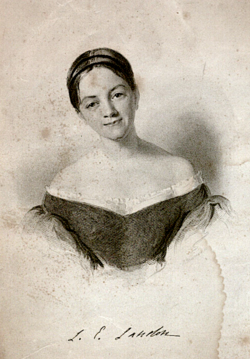
Key Facts
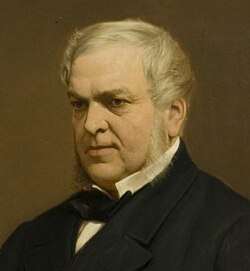
- Literary Identity: Most famous for publishing under the initials L.E.L., which became a symbol of mystery and curiosity.
- Major Works: Known for The Improvisatrice and The Troubadour, as well as novels like Romance and Reality.
- Artistic Fusion: Pioneered "poetical illustrations," writing poetry specifically to accompany engraved artworks in annual gift books.
- Global Reach: Highly popular in the United States and regarded as the "female Byron."
- Tragic End: Died at age 36 in Cape Coast Castle, Ashanti Empire (modern-day Ghana).
Early Life and Family Struggles
Born on August 14, 1802, in Chelsea, Middlesex, Landon's early life was marked by both close familial bonds and early tragedy. She shared a deep connection with her younger brother, Whittington Henry, whose university education at Worcester College, Oxford, was funded largely by Letitia's own earnings as a writer. Despite her support, Whittington later damaged her reputation by spreading false rumors regarding her personal life.
The loss of her younger sister, Elizabeth Jane, who died in 1819 at the age of 13, is believed to have profoundly influenced Landon's poetry, particularly the themes of loss and memory found in works such as "The Forgotten One."
![Painting by Henry James Richter, depicting a scene from Sir Walter Scott's The Antiquary (1816), executed between 1816 and 1832. A handwritten poem, The Love Letter, by Letitia Elizabeth Landon, is on a wooden slide at the bottom of the painting.[45][46]](/images/43/5b/435b77e775e36d69e773cc5a9e08ebe75e984518145acfa6255d07cf34c4756e.jpg)
The Rise of L.E.L.: A Literary Career
Landon's professional journey began in 1820 when she was just 18. After her family moved back to London due to an agricultural depression, she caught the attention of William Jerdan, editor of The Literary Gazette. Jerdan recognized her "original and extraordinary" ideas and encouraged her to publish.
From Anonymity to Celebrity
Her first poem appeared in the Gazette under the single initial "L." By 1821, she published The Fate of Adelaide under her full name, but it was her subsequent use of the initials L.E.L. that sparked a public obsession. This signature became a brand of "magical interest," allowing her to maintain a degree of mystery while her fame grew.
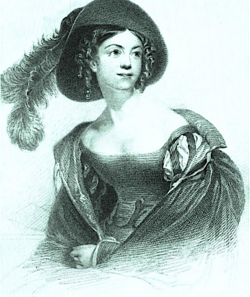
Innovation in Art and Poetry
Landon was an innovator in the intersection of visual art and literature. She created a series of poems based on Medallion Wafers (decorative letter seals) and a "Poetical Catalogue of Pictures." This evolved into her highly valued work for annual gift books, such as Fisher's Drawing Room Scrap Books, where she wrote poetry that breathed "new life" into engravings.
By 1826, she was hailed as the "female Byron," a title reflecting her dramatic style and the public's fascination with her persona. Despite facing societal backlash for being a professional female writer and enduring scandalous rumors, she continued to publish successful volumes, including The Golden Violet (1827) and The Venetian Bracelet (1829).
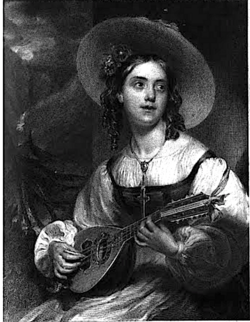
Expansion into Prose and Religious Works
Landon did not limit herself to poetry. In 1831, she published her first novel, Romance and Reality, followed by Francesca Carrara in 1834. She also explored spiritual themes in The Easter Gift (1832) and experimented with Byronic identity in Heath's Book of Beauty (1833).
Marriage and the Journey to Africa
Landon's later life was dominated by her marriage to George Maclean. The union was fraught with difficulty and controversy. In July 1838, the couple sailed for Cape Coast in the Ashanti Empire, where Maclean held a government position.
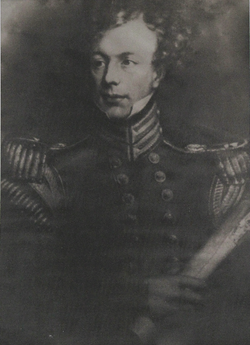
Even in the challenging environment of West Africa, Landon remained dedicated to her craft. She worked on The Female Portrait Gallery and completed the first volume of a new novel, Lady Anne Granard, or Keeping Up Appearances.
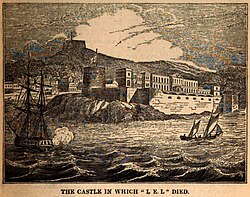
A Mysterious Death
On October 15, 1838, Letitia Elizabeth Landon was found dead at Cape Coast Castle, holding a bottle of dilute prussic acid. The circumstances of her death remain a subject of historical debate.
The Medical Perspective
Some evidence suggests Landon suffered from Stokes–Adams syndrome, a condition characterized by fainting fits and spasms. Dilute prussic acid was a standard remedy for such symptoms at the time. The attending surgeon, William Cobbald, noted that her pupils were dilated, which often indicates a seizure, suggesting she may have suffered a fatal convulsion.
The Theory of Foul Play
Conversely, contemporaries like Samuel Carter Hall argued that Landon was murdered. Hall claimed that Maclean's common-law wife—a woman of royal descent in the region—may have poisoned Landon to remove her as a rival. Hall pointed to the fact that the poison was not part of the medicine chest Landon brought from England as evidence of foul play.
Landon was buried in the courtyard of Cape Coast Castle during a torrential rainstorm, a service shrouded in secrecy.
Summary of L.E.L.'s Life and Work
| Category | Details |
|---|---|
| Born | August 14, 1802 (Chelsea, England) |
| Died | October 15, 1838 (Cape Coast Castle, Ghana) |
| Primary Style | Post-Romantic / Early Victorian |
| Key Literary Contributions | Metrical romance, poetical illustrations, novels |
| Notable Influence | Elizabeth Barrett Browning, Robert Browning, Edgar Allan Poe |
| Pseudonyms | L.E.L., Iole |
Frequently Asked Questions
Why did Letitia Landon publish as L.E.L.?
Using her initials created an air of mystery and curiosity among the public, which helped her build a celebrity persona and protect her privacy during a time when professional female writers were often judged harshly.
What is a "poetical illustration"?
This was an innovative format where Landon wrote poetry specifically designed to accompany and interpret an engraving or painting, effectively giving a narrative voice to visual art.
How did she influence the Victorian poets?
Landon developed the metrical romance and moved toward the "Victorian monologue," a style that focused on internal psychological states, which heavily influenced poets like Alfred Tennyson and the Brownings.
Was Letitia Landon actually murdered?
There is no definitive proof. While some historians and contemporaries, such as Samuel Carter Hall, believe she was poisoned by a rival, medical evidence suggests she may have died from a fatal convulsion related to a heart condition (Stokes–Adams syndrome).
What was her relationship with George Maclean?
Their marriage is generally viewed by historians as unhappy and destructive. Maclean was described by some as incapable of appreciating her, and the move to Africa is often seen as the final catalyst for her decline.