Lemurs: The Diverse Primates of Madagascar
Lemurs are a unique group of primates found primarily in Madagascar. Belonging to the suborder Strepsirrhini (primates with a wet nose) and the infraorder Lemuriformes, these animals have evolved in relative isolation, leading to a remarkable array of species with varied sizes, diets, and behaviors. From the tiny mouse lemur to the massive extinct giants that once rivaled gorillas, lemurs represent a fascinating branch of primate evolution.
Key Facts

- Diversity: There are approximately 100 living species of lemurs.
- Size Range: Living species range from the 30g Madame Berthe's mouse lemur to the 7–9kg indri and diademed sifaka.
- Unique Anatomy: Most possess a rhinarium (wet nose) and a specialized dental structure known as a toothcomb.
- Habitat: They are endemic to Madagascar, though they face severe threats from habitat loss.
- Extinct Giants: Some prehistoric species, such as Archaeoindris fontoynonti, weighed between 160 and 200 kg.
Anatomy and Physiology
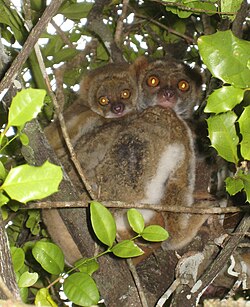
Lemurs exhibit a wide range of physical adaptations. One of their most defining characteristics is the rhinarium, a moist area around the nostrils that enhances their sense of smell, paired with a snout that is generally longer than those of anthropoid primates.
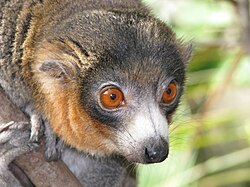
Vision and Senses
Lemurs have a distinct visual field compared to anthropoid primates. While they have a narrower binocular field (114–130°), their combined field of vision, including the periphery, is quite broad, ranging from 250° to 280°. Some nocturnal species, such as the aye-aye, possess a tapetum lucidum—a reflective layer of tissue behind the retina that causes eyeshine and improves night vision.
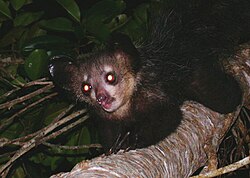
Dentition and the Toothcomb
Lemur teeth are heterodont, meaning they have different shapes for different functions. A key feature for many is the strepsirrhine toothcomb, where the lower incisors and canines are crowded together to form a comb-like structure used for grooming and feeding.
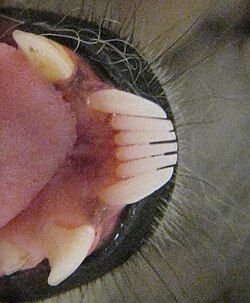
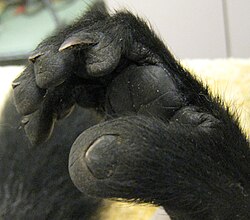
Specialized grooming is further aided by the "toilet-claw," a grooming nail found on the second toe of the foot.
Behavior and Ecology
Diet and Activity
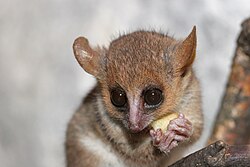
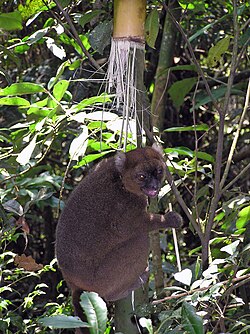
Dietary habits vary wildly across the lemur families. Mouse lemurs are omnivorous, eating fruit and insects, while the greater bamboo lemur is a specialist, with bamboo making up to 95% of its diet.
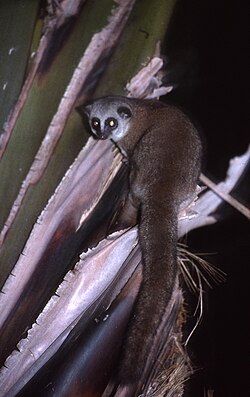
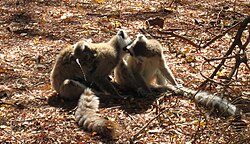
Activity patterns also differ. While some are diurnal, others are nocturnal, such as the woolly lemur. Social structures range from solitary foragers who sleep in groups, like dwarf lemurs, to highly social groups that engage in frequent social grooming to maintain bonds.
Locomotion and Communication
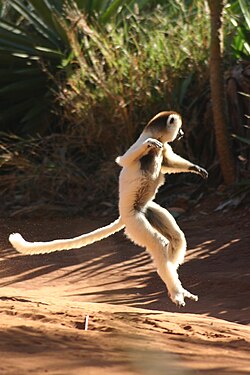
Movement is highly adapted to the environment. Sifakas are masters of vertical clinging and leaping; because of this specialization, they must hop sideways when moving across the ground.
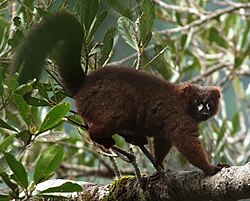
Communication is achieved through a mix of complex vocalizations—such as the wailing "song" of the indri—and scent-marking. Many lemurs rub scent glands on their bodies against branches to signal their presence or territory.
Classification and Diversity
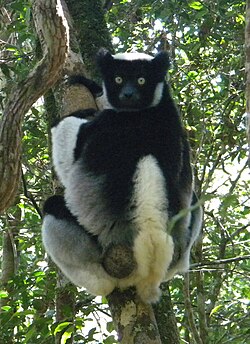
The taxonomic classification of lemurs is complex, with various families including the Cheirogaleidae, Lemuridae, and the extinct Megaladapidae. The indri, known locally as babakoto ("Ancestor of Man"), is one of the most iconic living representatives.
The diversity of the group is highlighted by the discovery of new species, such as the Sahamalaza sportive lemur, which was identified as a distinct species in 2006.
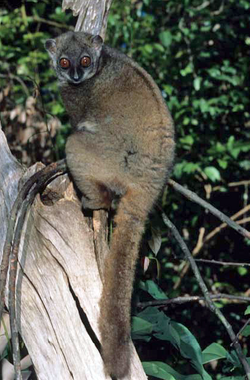
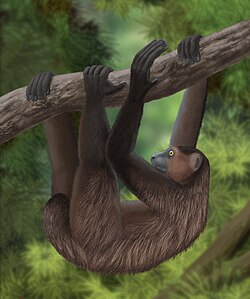
Historically, Madagascar was home to massive lemurs. The sloth lemurs, for example, became extinct less than two thousand years ago.
| Family | Permanent Dental Formula |
|---|---|
| Cheirogaleidae, Lemuridae | 2.1.3.3 / 2.1.3.3 × 2 = 36 |
| Lepilemuridae | 0.1.3.3 / 2.1.3.3 × 2 = 32 |
| Archaeolemuridae (Extinct) | 2.1.3.3 / 1.1.3.3 × 2 = 34 |
| Megaladapidae (Extinct) | 0.1.3.3 / 2.1.3.3 × 2 = 32 |
| Indriidae, Palaeopropithecidae | 2.1.2.3 / 2.0.2.3 × 2 = 30 |
| Daubentoniidae | 1.0.1.3 / 1.0.0.3 × 2 = 18 |
Conservation and Threats
Lemurs are among the most endangered mammals in the world. Their survival is threatened by habitat destruction, specifically the replacement of forests with rice paddies in central Madagascar and the illegal logging of rosewood in national parks like Marojejy.

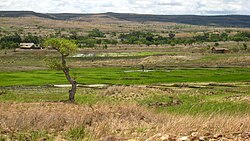
Research efforts, such as those started by Alison Jolly in 1962 at the Berenty Private Reserve, continue to provide vital data for conservation strategies.

Frequently Asked Questions
What is a toothcomb?
A toothcomb is a specialized dental structure found in lemurs where the lower incisors and canines are elongated and tilted forward to assist in grooming and feeding.
How large were the extinct lemurs?
Some extinct species were enormous; for instance, Archaeoindris fontoynonti weighed between 160 and 200 kg, making it comparable in size to a gorilla.
Why do sifakas hop sideways?
Sifakas are physically adapted for vertical clinging and leaping. Because their limbs are specialized for this movement, they cannot walk normally on the ground and must hop sideways instead.
What is the tapetum lucidum?
The tapetum lucidum is a reflective layer of tissue located behind the retina in the eyes of nocturnal lemurs, such as the aye-aye, which increases light sensitivity and causes their eyes to shine.
What are the primary threats to lemurs today?
The primary threats include habitat loss due to the expansion of rice paddies and the illegal logging of precious woods, such as rosewood, from their natural forest environments.