Lelang Commandery: The Han Dynasty Outpost in the Korean Peninsula
The Lelang Commandery stands as one of the most significant and debated administrative entities in ancient East Asian history. Established by the Han dynasty following the defeat of the Wiman dynasty in 108 BCE, this commandery served as a major Chinese administrative and cultural hub in the northern Korean peninsula for over four centuries. Its legacy continues to influence historical discourse, archaeological study, and the cultural identity of the region.
Key Facts
- Established: 108 BCE by Emperor Wu of the Han dynasty.
- Dissolved: 313 CE following conquest by Goguryeo.
- Primary Location: Centered near modern-day Pyongyang.
- Administrative Role: One of the Four Commanderies of Han.
- Cultural Impact: Significant influence on the development of subsequent Korean polities like Goguryeo, Paekche, and Silla.
The Foundation of Han Rule
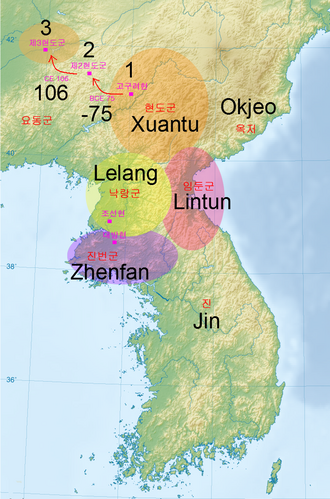
In 108 BCE, Emperor Wu of the Han dynasty conquered the territory of Old Chosŏn under King Ugŏ. To manage this new frontier, the Han established the Four Commanderies of Han: Lelang, Lintun, Xuantu, and Zhenfan. These units extended Chinese rule as far south as the Han River in present-day South Korea.
According to the Book of Han, the Lelang Commandery was part of Youzhou and was a massive administrative undertaking. At its peak, it consisted of 25 prefectures, 62,812 households, and a population of approximately 406,748. The capital, known as the prefecture of Joseon, was located at modern Pyongyang. The modern district of Rakrang in central P'yŏngyang actually derives its name from this ancient commandery.
Administrative Evolution and Consolidation
The structure of the commandery shifted over time due to political changes and resource availability. Following the death of Emperor Wu, the commanderies of Zhenfan and Lintun were abolished, and their prefectures were incorporated into Lelang, creating what is sometimes referred to as "Greater Lelang Commandery." To manage this vast territory, specialized roles such as the Defender of the Southern Section and the Defender of the Eastern Section were established.
During the transition to the Eastern Han dynasty, internal rebellions—such as that led by Wang Tiao in 30 CE—required military intervention to reassert authority. Later, during the late 1st and 2nd centuries, a shortage of human resources led to the abolishment of several eastern prefectures, leaving administration to local natives.
Shifting Powers: From Cao Wei to the Jin Dynasty
The political landscape of the commandery was frequently reshaped by the rise and fall of Chinese dynasties. In 236 CE, under the order of Emperor Ming of Cao Wei, Sima Yi annexed Lelang and the surrounding commanderies. However, unlike previous eras, the Wei court implemented policies that encouraged Chinese settlers to return to central China, significantly reducing the Chinese population in the region.
By the time the Jin dynasty inherited the territory, Lelang was geographically isolated and plagued by civil wars within China. This isolation meant the Jin could no longer effectively dispatch officials. Consequently, local leaders like Zhang Tong and Wang Zun eventually broke away from Jin authority, seeking ties with the Xianbei warlord Murong Hui.
The Rise of Goguryeo and the End of Han Rule
The era of Chinese administration in the northern Korean peninsula came to a definitive end in 313 CE when the kingdom of Goguryeo, under King Micheon, annexed the Lelang territory. This conquest marked a turning point for the region, as the collapse of the commanderies allowed native Korean polities—including Paekche, Kaya, and Silla—to grow and develop rapidly.
Goguryeo did not merely destroy the existing system; it absorbed much of Lelang's infrastructure, economy, and culture. To manage the region, Goguryeo appointed its own officials, some of whom, like Dong Shou, maintained the previous administrative structures. By 427 CE, Goguryeo moved its capital to Pyongyang to more effectively administer these territories.
The Prominent Wang Clan
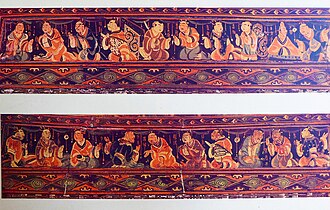
Archaeological evidence and historical texts highlight the influence of the Wang clan within Lelang. Descended from families originally from Shandong, the Wangs became part of the local elite through cooperation with Han bureaucrats. Their presence is immortalized in numerous artifacts, including lacquerware, gold objects, and seals found in wealthy tombs.
Inscriptions bearing the name "Wang" represent some of the earliest instances of Hanja (Chinese characters) found in Korea. Excavations of intact tombs, such as those of Wang Xu and Wang Guang, have provided invaluable insights into the high status and bureaucratic roles held by this family during the commandery's existence.
Historical Debates and Revisionism
The exact location and nature of the Lelang Commandery remain subjects of intense academic debate. While the majority of international scholars and historical records place the commandery near Pyongyang, some academic communities in North and South Korea have proposed revisionist theories.
These theories suggest that Lelang may have been located further northwest, perhaps on the Liaodong Peninsula, rather than on the Korean peninsula. Proponents of this view argue that the Han commanderies were situated outside the peninsula to de-emphasize Chinese influence on early Korean history. However, these views are generally not recognized by academic circles in the United States, China, or Japan, who rely on the established archaeological evidence found in the Pyongyang region.
Summary of Historical Eras
| Period/Dynasty | Key Event/Status | Approximate Dates |
|---|---|---|
| Han Dynasty | Establishment after defeating Wiman Chosŏn | 108 BCE – 220 CE |
| Cao Wei | Annexation by Sima Yi; population decline | 236 CE – onwards |
| Jin Dynasty | Geographical isolation and loss of central control | Late 3rd Century – Early 4th Century |
| Goguryeo | Annexation by King Micheon | 313 CE |
Frequently Asked Questions
Where was the capital of Lelang Commandery located?
The capital was located at the prefecture of Joseon, which corresponds to modern-day Pyongyang.
How long did the Lelang Commandery exist?
The commandery existed for over 400 years, from its establishment in 108 BCE until its conquest by Goguryeo in 313 CE.
What was the impact of Lelang on Korean history?
Lelang had a significant cultural impact, influencing the development of the native Korean polities that emerged after its fall, such as Goguryeo, Paekche, and Silla.
Why is there a debate about the location of Lelang?
The debate stems from differing historical interpretations. While most international scholars place it in the Pyongyang area based on archaeology, some North and South Korean scholars suggest it was located in the Liaodong region to emphasize Korean independence from Chinese influence.
Who were the Wang clan?
The Wang clan was a prominent and wealthy family in Lelang that held significant bureaucratic and social influence, as evidenced by numerous Hanja inscriptions on artifacts found in their tombs.