Legendary Creatures: From Classical Monsters to Medieval Allegory
A legendary creature is a supernatural entity described in folklore, myths, and legends. While these beings may appear in historical accounts predating the modern era, they have never been scientifically proven to exist. These creatures range from the terrifying monsters of ancient epic poems to the symbolic animals used to convey moral lessons in religious art.
Throughout history, the concept of the mythical beast has served various purposes. In the classical era, they often acted as obstacles for heroes to overcome, while in the Middle Ages, they became complex tools for allegory—the use of symbols to represent abstract ideas or moral truths.
![Several legendary creatures[further explanation needed] from Bilderbuch für Kinder (lit. 'picture book for children') between 1790 and 1822, by Friedrich Justin Bertuch](/images/aa/f4/aaf407b3d14ab6f42a0e5c47ec3ecbc50fd3ace2fa2afd317606fcbbc5d3d389.jpg)
Key Facts
- Legendary creatures are supernatural entities found in folklore but lack scientific evidence of existence.
- In classical mythology, monsters like the Cyclops and Minotaur served to highlight the greatness of heroes.
- Medieval bestiaries prioritized symbolic and religious meaning over biological accuracy.
- The unicorn was frequently used as a Christian metaphor for purity and Christ.
- Dragons were often used in medieval contexts to represent sin or the devil.
The Monsters of the Classical Era
In the heroic tales of antiquity, monstrous creatures were central to the narrative. These beings provided the necessary conflict to demonstrate the strength and courage of legendary protagonists. For instance, in Homer's Odyssey, the hero Odysseus must confront terrifying entities such as the Cyclops, Scylla, and Charybdis.
Other famous encounters include:
- Perseus defeating the Gorgon Medusa.
- Theseus destroying the Minotaur, a creature with the body of a man and the head of a bull.
- Heracles slaying the multi-headed Hydra.
- Aeneas battling the harpies.
Interestingly, many of these creatures crossed cultural boundaries. The centaur (half-human, half-horse), the chimaera, Triton, and the winged horse Pegasus appear in various forms across different traditions, including Indian art. Similarly, the sphinx appears as a winged lion in both Indian art and the traditions of the North American Piasa Bird.
Medieval Bestiaries and Symbolic Art
As history moved into the Middle Ages, the role of animals in art shifted. While real animals were used for decoration in jewelry to add humor or majesty, mythical animals became deeply embedded in Christian symbolism. Medieval bestiaries—books describing various animals—did not focus on biological categorization. Instead, they focused on the moral and religious implications of the creatures.
In this era, artists often abandoned naturalistic depictions in favor of allegorical interpretation. A creature's physical likeness was less important than the spiritual lesson it conveyed. For example, the lamb symbolized Christ, and the dove represented the Holy Spirit.
The Allegory of the Unicorn
The unicorn is one of the most prominent examples of medieval allegory. Described as extraordinarily swift and impossible to catch through traditional means, legend claimed a unicorn could only be captured by leading a virgin to its dwelling. The beast would supposedly leap into her lap and fall asleep, allowing a hunter to seize it.
Symbolically, the unicorn represented innocence and purity, serving as a metaphor for Christ. This connection is even reflected in the King James Bible in Psalm 92:10, which states, "My horn shalt thou exalt like the horn of a unicorn." This phrasing resulted from a translation error where the Hebrew word re'em was translated as "unicorn" rather than "wild ox." The unicorn's small size was often interpreted as a symbol of the humility of Christ.
The Dragon and the Concept of Sin
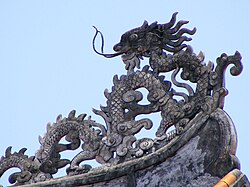
Dragons served a different allegorical purpose, often identified with serpents but with greatly intensified attributes. They were believed to be larger than all other animals and possessed the ability to slay anything they embraced without the need for venom.
In medieval thought, dragons were frequently linked to the devil and used to denote sin. Based on the assumption that heat was present in certain regions, dragons were said to dwell in places such as India and Ethiopia.
Summary of Common Legendary Creatures
| Creature | Era/Context | Primary Symbolic or Narrative Function |
|---|---|---|
| Cyclops / Minotaur | Classical | Obstacles to demonstrate heroic greatness |
| Unicorn | Medieval | Metaphor for Christ, purity, and innocence |
| Dragon | Medieval | Representation of the devil and sin |
| Griffin | Classical/Medieval | Guardian of the dead |
| Basilisk | Medieval | Representation of the devil |
Frequently Asked Questions
What is the difference between a legendary creature and a real animal?
A legendary creature is a supernatural entity described in folklore or myth that has no scientific evidence to support its existence, whereas a real animal is a biological entity documented by science.
Why did medieval artists draw animals inaccurately?
In the Middle Ages, the religious and moral implications of an animal were considered far more significant than its physical likeness. Artists prioritized allegory and symbolic meaning over naturalistic or biological accuracy.
What was the Vegetable Lamb of Tartary?
The Vegetable Lamb of Tartary was a legendary creature based on garbled traveler's tales; it was described as a sheep-like animal that supposedly grew tethered to the earth.
How did the meaning of the unicorn change in biblical translations?
In the King James Bible, the Hebrew word re'em was translated as "unicorn," leading to the creature's association with biblical texts. Later versions corrected this translation to "wild ox."
What role did monsters play in Greek mythology?
In classical Greek tales, monsters like the Hydra or Medusa functioned as challenges for heroes, serving to emphasize the extraordinary nature and greatness of the protagonists who defeated them.