Lebanese Armed Forces
The Lebanese Armed Forces (LAF) serve as the primary military institution of Lebanon, tasked with maintaining national sovereignty and internal security. Operating under the motto "Honor, Sacrifice, Loyalty" (Charaf, Tadhieh, Wafaa), the LAF is an all-volunteer force headquartered in Yarze, east of Beirut. The organization is coordinated by the LAF Commander, a position traditionally held by a Maronite Catholic Christian, and operates under the oversight of the Ministry of Defense.
Key Facts
- Founded: August 1, 1945.
- Active Personnel: Approximately 90,200 total (80,000 Ground Forces, 2,500 Air Force, 1,700 Navy).
- Leadership: General Rodolphe Haykal (Commander of the Armed Forces).
- Budget: $635 million for Fiscal Year 2024.
- Service Model: All-volunteer; conscription was abolished in 2007.
- Global Suppliers: France, Germany, Italy, United States, Russia, and the United Kingdom.
Organizational Structure and Branches
The LAF is divided into several specialized branches to ensure comprehensive national defense. The Lebanese Ground Forces form the bulk of the military, organized into five regional commands (Beirut, Bekaa, Mount Lebanon, North, and South) and 11 brigades, including both heavy mechanized and light infantry units.
Beyond the ground forces, the LAF maintains a Lebanese Air Force and a Lebanese Navy. Specialized capabilities are provided by the Special Forces, which include the Commando Regiment (Maghaweer), the Airborne Regiment (Moujawkal), Marine Commandos, and the counter-terrorism and sabotage unit known as Moukafaha.
The military also maintains a robust educational infrastructure with six military colleges and schools, including the Fouad Shehab Command and Staff College and the Lebanese Army Military Academy. To enhance professional capabilities, Lebanese officers frequently undergo additional training in the United States, Russia, and Europe.
| Category | Details |
|---|---|
| Total Active Personnel | 90,200 |
| Ground Forces | ~80,000 |
| Air Force | 2,500 |
| Naval Force | 1,700 |
| Reserve Personnel | 15,000 |
| Commander of the Armed Forces | General Rodolphe Haykal |
Historical Evolution
Origins and the Mandate Period
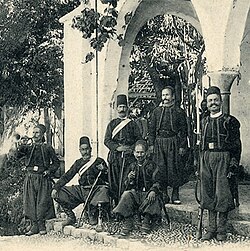
The roots of the modern army date back to 1916 with the French-established "Legion of the Orient." Following the League of Nations mandate in 1920, France formed the Army of the Levant, which evolved into the Troupes Spéciales du Levant. These units were composed of Lebanese, Syrian, Circassian, and Kurdish personnel, though they remained predominantly under French command.
Independence and Formal Establishment
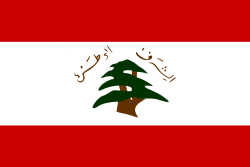
After Lebanon achieved independence in 1943, negotiations with France led to the transfer of military authority. On August 1, 1945, the LAF was officially placed under the full authority of the Lebanese National Government. This date is now celebrated annually as Lebanese Army Day.
Combat History and Modern Operations
The LAF has navigated a complex security landscape, including the Lebanese Civil War (1975–1990) and various border conflicts. In 1991, following the Taif Agreement, the army conducted a three-day offensive to secure Palestinian positions around Sidon, resulting in the surrender of heavy weapons.
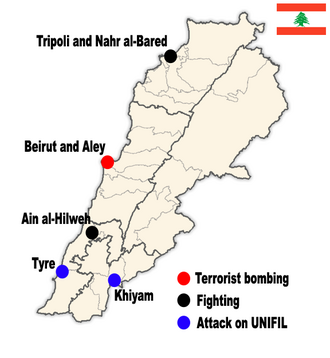
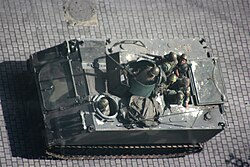
In more recent years, the LAF has played a critical role in counter-terrorism. In 2017, the army collaborated with Hezbollah and Syrian forces to clear ISIS and Hay'at Tahrir al-Sham positions along the Lebanon–Syria border, leading to the surrender of approximately 2,100 militants.
The 2024 Lebanon War and Beyond
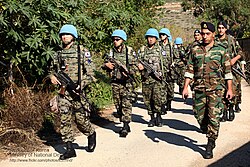
During the 2024 Lebanon War, the LAF initially retreated to approximately five kilometers from the southern border to avoid direct combat with the Israel Defense Forces. However, by January 2025, the army began redeploying to Southern Lebanon—including areas like Ras Naqoura and Tyre—following the withdrawal of Israeli troops. This deployment is coordinated with the United Nations Interim Force in Lebanon (UNIFIL).
Frequently Asked Questions
Is military service compulsory in Lebanon?
No, conscription was abolished in 2007. The Lebanese Armed Forces now operate as an all-volunteer force, with voluntary service available for those aged 18 to 30.
Who leads the Lebanese Armed Forces?
The current Commander of the Armed Forces is General Rodolphe Haykal. The overall leadership structure also includes the President, the Prime Minister, and the Minister of Defense.
What are the primary branches of the LAF?
The LAF consists of the Lebanese Ground Forces, the Lebanese Air Force, the Lebanese Navy, and the Lebanese Republican Guard.
What is the role of UNIFIL in relation to the LAF?
The United Nations Interim Force in Lebanon (UNIFIL) coordinates with the LAF, particularly in Southern Lebanon, to monitor ceasefires and maintain security in accordance with international resolutions, such as Security Council Resolution 1701.
Where is the LAF headquartered?
The headquarters of the Lebanese Armed Forces is located in Yarze, situated to the east of the capital city, Beirut.