Latin American Music: A Journey Through Rhythms and Cultural Fusion
The music of Latin America is a vibrant tapestry woven from centuries of cultural intersection. It is the result of mestizaje—the blending of diverse ethnic and cultural traditions—primarily combining the musical legacies of Spain, Portugal, Indigenous American peoples, and West Africa. From the sophisticated salons of Buenos Aires to the rhythmic streets of San Juan, these sounds reflect the complex history of colonization, migration, and social evolution.
This musical landscape is incredibly diverse, spanning hundreds of subgenres including the world-famous Samba, Bossa Nova, and Bachata, as well as regional styles like the Huayno and Joropo. Whether through the lens of classical influence or the energy of modern urban fusion, Latin American music continues to influence global pop culture.
Key Facts

- Cultural Roots: A fusion of European (Spanish/Portuguese), Indigenous American, and African musical traditions.
- Tango's Rise: Originated in the 19th century in Buenos Aires and Montevideo, eventually becoming the first Latin dance to gain popularity in Europe.
- Salsa's Birth: While based on Cuban rhythms, modern Salsa was forged in the multicultural environment of New York City in the late 1960s.
- Reggaetón's Path: Evolved from Panamanian Reggae en Español and Jamaican dancehall, reaching global prominence via Puerto Rico.
- Political Influence: Genres like Nueva Canción in Chile were deeply tied to social movements before being suppressed during the 1973 coup.
Regional Musical Landscapes

Argentina: The Soul of Tango
Tango is perhaps Argentina's most iconic export. While its exact origins are debated, it emerged from a melting pot of European immigrants, criollos (people of Spanish descent born in the Americas), and African and Indigenous influences. Early tango was associated with the bars and brothels of Buenos Aires, characterized by a predatory and possessive dance style.
Originally played with violin, guitar, and flute, the genre was transformed by the introduction of the bandoneon, a German-developed instrument. Figures like Eduardo Arolas and Vicente Greco helped standardize the sound. Beyond tango, Argentina is home to the chacarera, milonga, and rock nacional, the latter of which sparked the "Argentine Wave" of Rock en español in the 1980s.

Chile and the Andean Influence
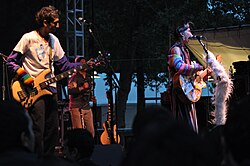
Chilean music is marked by both romanticism and political struggle. Chilean Romantic Cumbia remains a popular staple. However, the 1960s and 70s saw the rise of Nueva Canción, a movement that blended folk music with social commentary. This era ended abruptly with the 1973 coup d'état, which led to the arrest or exile of many prominent musicians.
Central America and the Caribbean
In El Salvador, music often mirrors Colombian cumbia, though it also incorporates Mayan influences along the Guatemala border. The country's history of political chaos occasionally led to the suppression of native sounds, with the government once decreeing the "Xuc" as the national dance in the 1940s.
Haiti offers a distinct rhythmic palette with compas (a modern méringue), rara music, and zouk. Zouk, pioneered by the band Kassav' in the 1980s, is known for its fast tempo and powerful horn sections.
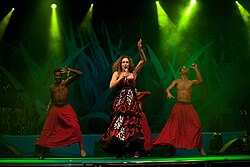
Panamanian music is a direct result of its role as a global trade hub. The mestizaje here was enriched by migrations from the Caribbean, Asia, and Europe, driven by the Spanish colonization, the silver trade, and the construction of the Panama Canal.
Puerto Rico: Urban Fusion and Tradition
Puerto Rico is a powerhouse of musical innovation. It is the epicenter of Reggaetón, which blends Panamanian Reggae en Español and Jamaican dancehall with other Caribbean styles. Another unique fusion is Tropikeo, which mixes R&B, Hip Hop, and Techno with the salsa "montuno" piano style and conga drums.
Traditional forms remain vital, such as the Aguinaldo (Christmas carols sung in lively parades called parrandas) and Plena, a narrative song from coastal regions like Ponce that often chronicles current events.

Venezuela: The Rhythms of Caracas
Venezuelan Merengue, also known as merengue caraqueño, rose to prominence between the 1920s and 1940s. Initially linked to mabiles (drinking and dancing spots), it eventually moved into upper-class dance halls. The genre is noted for its sensual pelvic movements, sometimes compared to the texture of a popular jelly dessert called Rúcano.
Globalized Latin Genres
Salsa and Latin Trap
Salsa is a sophisticated amalgamation of Cuban rhythms, jazz, and rock. While its heart is Cuban, its global identity was forged in New York City during the late 1960s. More recently, Latin Trap emerged around 2015, blending American trap music with the rhythms of reggaetón.

The Latin Ballad
Originating in the 1960s as a descendant of the bolero, the Latin (or romantic) ballad is characterized by its sensitive rhythm and emotional delivery. It has been popularized across Spain and Hispanic America by artists such as Julio Iglesias and Luis Miguel.

Summary of Key Latin American Musical Styles

| Genre | Primary Region/Origin | Key Characteristics |
|---|---|---|
| Tango | Argentina / Uruguay | Bandoneon-led, dramatic, urban origins |
| Salsa | Cuba / New York City | Fusion of Cuban rhythms, jazz, and rock |
| Reggaetón | Panama / Puerto Rico | Dancehall and Reggae en Español fusion |
| Nueva Canción | Chile | Folk-based, socially and politically charged |
| Zouk | Haiti / French Antilles | Fast tempo, percussion-driven, loud horns |
| Merengue Caraqueño | Venezuela | Sensual dance, associated with Caracas carnivals |
Frequently Asked Questions



Where did Tango originate?
Tango emerged in the 19th century in the urban centers of Buenos Aires, Argentina, and Montevideo, Uruguay. It developed from a mixture of European, African, and Indigenous influences, originally flourishing in bars and brothels before gaining international fame.
What is the difference between Salsa and Reggaetón?
Salsa is a fusion of Cuban rhythms, jazz, and rock, characterized by complex instrumentation and a strong piano "montuno." Reggaetón is an urban contemporary genre originating from Jamaican dancehall and Panamanian Reggae en Español, focusing more on a heavy, repetitive beat.
What was the Nueva Canción movement?
Nueva Canción was a musical and political movement in Chile during the 1960s and 70s. It used traditional folk music to convey messages of social justice and political change, though it was heavily suppressed following the 1973 coup d'état.
What is the bandoneon and why is it important?
The bandoneon is a concertina-like instrument developed in Germany. It became the signature sound of Argentine Tango in the late 19th century, providing the genre with its distinct, melancholic emotional depth.
How did the Panama Canal affect Panamanian music?
The construction of the canal, along with the earlier Royal Route of Panama, facilitated massive migrations from the Caribbean, Asia, and Europe. This increased the mestizaje (cultural blending), incorporating diverse global influences into Panama's musical traditions.