Languages of Brazil: A Tapestry of Linguistic Diversity
Brazil is often perceived as a monolingual giant, but beneath the surface of its primary official language lies a complex and vibrant linguistic landscape. While Portuguese is the dominant tongue spoken by 99.5% of the population, the country is home to a vast array of indigenous languages, immigrant dialects, and specialized sign languages that reflect its colonial history and global migration patterns.
From the Amazon rainforest to the southern highlands, the way Brazilians communicate is a testament to the blending of European, African, and Native American cultures.
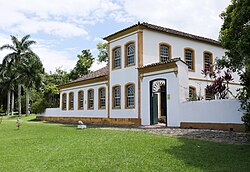
Key Facts
- Official Language: Portuguese is the official language, spoken by nearly the entire population.
- Sign Languages: Brazilian Sign Language (Libras) is widely recognized, alongside specific indigenous sign languages like Ka'apor and Terena.
- Indigenous Diversity: Dozens of language families exist, including Tupían, Macro-Jê, and Arawakan.
- Immigrant Influence: Significant pockets of German, Italian (Talian), Polish, and Japanese are found in southern and southeastern regions.
- Legal Recognition: Many municipalities have co-officialized minority languages to preserve their cultural heritage.
The Dominance of Brazilian Portuguese
Brazilian Portuguese is the vernacular used for government, education, and daily commerce. It evolved from the Portuguese brought by colonizers but has developed distinct phonetic and lexical characteristics that differentiate it from the European variety.

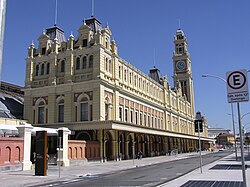
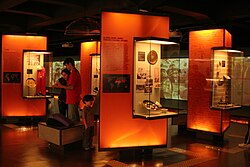
The preservation of the language's history is highlighted in institutions such as the Museum of the Portuguese Language in São Paulo, which celebrates the evolution of the tongue.
Indigenous Languages and Co-officialization
Before European arrival, Brazil was a mosaic of indigenous tongues. Today, these languages are categorized into several major families, such as Tupían, Macro-Jê, Arawakan, and Cariban. To prevent the extinction of these languages, several municipalities have adopted a policy of co-officialization—granting a native language equal legal status to Portuguese within that jurisdiction.
For example, in the state of Amazonas, the municipality of São Gabriel da Cachoeira co-officializes Nheengatu, Tukano, and Baniwa. Other examples include the use of Ticuna in Santo Antônio do Içá and Macushi and Wapishana in Roraima.
Immigrant Languages and Cultural Heritage
Waves of immigration from Europe and Asia have left a lasting linguistic mark, particularly in the South and Southeast. These languages often evolved into unique regional dialects.
European Influence
German and Italian immigrants established colonies where their native tongues persisted for generations. Talian (a Venetian dialect) and Riograndenser Hunsrückisch (a German dialect) are particularly prominent in Rio Grande do Sul and Santa Catarina.
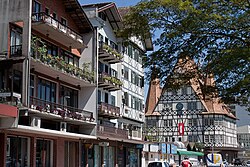
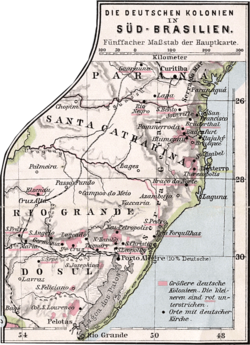
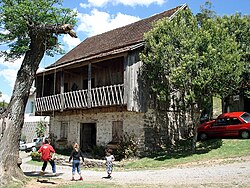
Polish and Ukrainian languages also maintain a presence in Paraná and Santa Catarina, with many towns co-officializing Polish to honor their ancestral roots.
Asian and Other Influences
Brazil hosts the largest concentration of ethnic Japanese people outside of Japan, centered largely in the Liberdade district of São Paulo, where the Japanese language remains a vital cultural link.

Linguistic Heritage and Education
Brazil has implemented policies to classify certain languages as intangible cultural heritage. This ensures that the linguistic identity of a region is protected by law. In some cases, this extends to the classroom; for instance, the teaching of German is mandatory in municipalities like Blumenau and Nova Petrópolis.

| State | Officially Approved Linguistic Heritages |
|---|---|
| Espírito Santo | Pomeranian, German |
| Rio de Janeiro | Yoruba, Bantu, Ewe |
| Rio Grande do Sul | Talian, Riograndenser Hunsrückisch |
| Santa Catarina | Talian, Riograndenser Hunsrückisch |
Brazilian Sign Language (Libras)
Beyond spoken words, Libras (Língua Brasileira de Sinais) is the primary sign language used by the deaf community in Brazil. It is recognized as an official means of communication, with various cities and schools integrating its teaching into their curricula to promote inclusivity.
Frequently Asked Questions
What is the official language of Brazil?
The official language of Brazil is Portuguese, which is spoken by approximately 99.5% of the population.
What is Talian?
Talian is a Venetian dialect brought to Brazil by Italian immigrants, primarily spoken in the southern regions like Rio Grande do Sul.
Are there other official languages in Brazil?
While Portuguese is the national official language, many municipalities have co-officialized indigenous languages (such as Nheengatu or Ticuna) or immigrant languages (such as German or Polish) at the local level.
What is Libras?
Libras is the Brazilian Sign Language, the official sign language used by the deaf community throughout the country.
Which states have the most linguistic diversity from immigrants?
The southern states of Rio Grande do Sul, Santa Catarina, and Paraná, as well as Espírito Santo, have the highest concentrations of immigrant languages like German, Italian, and Polish.