Landrace Varieties: The Genetic Heritage of Agriculture and Livestock
In the modern era of standardized farming, much of what we eat comes from uniform cultivars bred for high-volume production. However, beneath this surface of uniformity lies a vast, ancient reservoir of biological diversity known as landraces. These are the locally adapted, traditional varieties of plants, animals, and fungi that have evolved over millennia through close interaction with specific natural environments and human agricultural practices.
Unlike standardized breeds or commercial cultivars, landraces are shaped by their unique surroundings. They develop through isolation from other populations and continuous adaptation to local climates, soil types, and cultural needs. This makes them essential pillars of global biodiversity.
![Aerial roots of a maize landrace, Sierra Mixe corn, grown in nitrogen-depleted soils in the Sierra Mixe, known for aerial roots with a gel-like biofilm that contributes substantially to the plant's nitrogen supply[1]](/images/94/3a/943a53279b25b0549d083823d41d8a9d2b314da7c4b488288df22f15c0102ed4.png)
Key Facts
- Definition: A landrace is a domesticated variety adapted to a specific local environment and cultural context.
- Genetic Importance: Landraces hold a significant portion of the genetic diversity found in domesticated species.
- Resilience: They often exhibit better resistance to local diseases and adverse environmental conditions than modern cultivars.
- Resource Efficiency: Many landraces require lower fertilizer inputs and are better suited for low-cost, traditional farming systems.
- Diversity: They are characterized by a mixture of phenotypic forms (physical traits) despite appearing relatively uniform.
Understanding Landrace Characteristics
The term landrace originates from the German word Landrasse, literally meaning "country-breed." Historically, the concept has been recognized as a vital genetic resource. Early descriptions of landraces, such as those by U. J. Mansholt in 1909, noted that while they might have lower production capacities than modern cultivars, they possess much more stable characteristics in the face of environmental stress.
A defining feature of a landrace is its adaptability. Because they have evolved alongside human populations, they are often selected not just for yield, but for specific culinary attributes like texture, color, or ease of use. Furthermore, as noted by Hans Kiessling in 1912, landraces often present a mixture of different physical forms, providing a biological safety net that uniform crops lack.
The Importance of Biodiversity and Conservation
As global agriculture shifts toward a heavy reliance on a few highly uniform plant cultivars, there is a growing concern regarding the reduction of biodiversity. Because the majority of the genetic diversity of domesticated species resides within landraces, their loss could mean losing the very traits needed to combat future agricultural challenges.
Conservation efforts generally follow two paths:
- In situ conservation: Preserving landraces within their natural habitats and traditional farming systems.
- Ex situ conservation: Storing genetic material in controlled environments, such as seed banks.
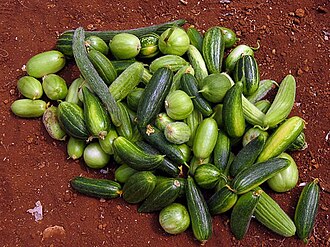
![A basket of landrace melons (Cucumis melo subspecies agrestis, cultivar group Momordica) from northern Mozambique. This landrace incorporates different colours and patterns of the fruit surface and is the only melon cultivar group in northern Mozambique.[citation needed]](/images/c6/41/c6415b374aee3f5f4dacd28d503d70faa922d640a700cc167e236ccb2b3d9e6f.jpg)
Examples of Plant Landraces
Landraces manifest in a staggering array of shapes, colors, and biological functions. In the plant kingdom, they provide the foundation for many of the foods we recognize today.
Maize and Squash
One remarkable example is the Sierra Mixe corn from the Sierra Mixe region. This landrace is tall and features unique aerial roots that secrete a mucus-like biofilm, which supports nitrogen-fixing bacteria, helping the plant thrive in nitrogen-depleted soils.
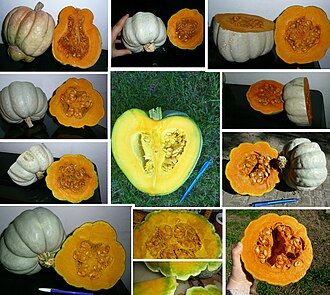
Squash varieties also show immense morphological diversity. The Candy Roaster, developed by the Cherokee people in Southern Appalachia, is a notable landrace. It is highly variable, with over 40 distinct forms in size and shape, yet it consistently features fine-textured orange flesh.
Other Notable Crops
From the multicolored roots of the Carota di Polignano in Italy to the diverse melon cultivars of northern Mozambique, landraces define regional culinary identities. Other examples include:
- Peppers: Such as the Chimayó pepper from New Mexico and the Cacho de cabra from Chile.
- Beans: Including the Caparrona bean from Spain.
- Tomatoes: Such as the San Marzano from Italy.
| Name | Species | Origin | Key Feature |
|---|---|---|---|
| Sierra Mixe corn | Zea mays | Sierra Mixe | Aerial roots support nitrogen-fixing bacteria |
| Carota di Polignano | Daucus carota | Italy | Multicolored roots (yellow to purple) |
| Candy Roaster | Cucurbita maxima | Southern Appalachia | Fine-textured orange flesh; highly variable shape |
| Cacho de cabra | Capsicum annuum | Chile | Popular in the Maule region |
Animal Landraces
The concept of the landrace extends beyond plants to the animal kingdom. Just as plants adapt to soil and climate, animals adapt to the pastoral and agricultural environments of their specific regions.
In livestock, landraces often possess unique survival traits. For instance, Icelandic cattle and Yakutian cattle have adapted to extreme, cold environments. Similarly, various dog landraces, such as the Africanis in Southern Africa or the Saluki from the Fertile Crescent, represent distinct evolutionary paths shaped by their environments and human companionship.
Frequently Asked Questions
How does a landrace differ from a cultivar?
A cultivar is a plant variety that has been specifically bred and selected for uniformity and high production in controlled settings. A landrace, conversely, is a traditional variety that has evolved naturally through adaptation to a local environment and often possesses more genetic variation.
Why are landraces important for future food security?
Landraces contain a vast amount of genetic diversity. This diversity includes traits like disease resistance, drought tolerance, and the ability to grow in poor soils, which may be essential as the climate changes and new agricultural pests emerge.
Can landraces be moved to new environments?
While landraces are highly adapted to their original homes, they are genetically apt to change when moved to a different environment. Their specific traits are often a direct result of the local conditions they have inhabited for generations.
Are landraces still used by modern farmers?
Yes. Many farmers continue to raise landraces because they offer agronomic advantages such as lower fertilizer requirements, better resistance to local diseases, and unique culinary qualities that meet specific market or cultural preferences.
What is the difference between in situ and ex situ conservation?
In situ conservation involves protecting landraces in their natural habitats or within traditional farming systems. Ex situ conservation involves preserving them in artificial environments, such as seed banks or gene banks, to ensure their genetic material is not lost.