Landmarks: From Ancient Navigation to Global Symbols
A landmark is a recognizable natural or artificial feature that stands out from its surrounding environment. Because they are often visible from great distances, landmarks serve as essential tools for navigation and orientation. While they began as practical markers for travelers, in modern usage, the term also encompasses smaller structures that have evolved into local or national symbols.
Key Facts
- Definition: A conspicuous object used for navigation or as a point of reference.
- Types: Classified primarily as natural (e.g., mountains) or human-made (e.g., monuments).
- Specialized Aids: Seamarks and daymarks are structures specifically built to help sailors navigate featureless coasts.
- Urban Use: In geography and urban studies, landmarks act as external reference points for orientation in both familiar and unfamiliar settings.
The Evolution of the Landmark
The word originates from the Old English landmearc (a combination of land and mearc, meaning mark), which originally described a boundary marker used to define the edges of an estate or kingdom. Around 1560, the meaning shifted from a legal boundary to a more general description of any conspicuous object in a landscape.
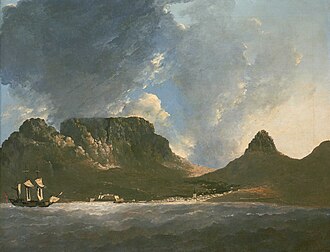
Historically, landmarks were vital for explorers to find their way through unknown territories or return to their starting points. For instance, Table Mountain near Cape Town, South Africa, served as a critical landmark for sailors navigating around the southern tip of Africa during the Age of Exploration.
To further assist maritime travel, ancient civilizations constructed artificial landmarks. The Colossus of Rhodes and the Lighthouse of Alexandria were specifically designed to guide ships safely into port.
Types of Landmarks
Natural Landmarks
Natural landmarks are characteristic geographic features. These often include massive formations such as mountains, plateaus, or canyons. Notable examples include Mount Everest in the Himalayas, Mount Fuji in Japan, Uluru in Australia, Mount Ararat in Turkey, and the Grand Canyon in the United States.

On a smaller scale, trees can serve as local landmarks. Some are specifically named, such as the Centennial Tree, Hanging Oak, or Queen's Oak. In the sport of orienteering and on high-resolution maps, rootstocks (the bases of fallen trees) are used as navigational aids, though typically only the largest are mapped due to the prevalence of fallen timber in forests.
Human-Made Landmarks
In contemporary contexts, human-made landmarks are often prominent buildings or monuments that symbolize a city, region, or nation. These range from ancient wonders to modern architectural feats.
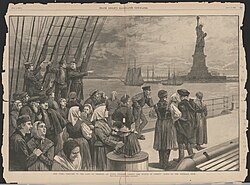
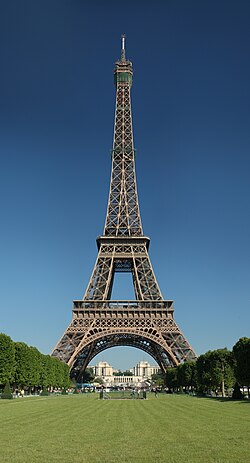
Common examples of human-made landmarks include the Eiffel Tower in Paris, the Statue of Liberty and Empire State Building in New York City, the Great Pyramid in Giza, and the Sydney Opera House in Sydney. Other significant structures include the Colosseum in Rome, the Forbidden City in Beijing, and the Marina Bay Sands in Singapore.
Many functional structures also serve as landmarks. Church spires, mosque minarets, town hall towers, and belfries are often tall enough to be visible from miles away, providing a constant point of reference for those in the area.
Landmarks Summary Table
| Category | Primary Purpose | Examples |
|---|---|---|
| Natural | Geographic orientation and navigation | Mount Fuji, Grand Canyon, Table Mountain |
| Human-Made | Cultural symbolism and urban navigation | Eiffel Tower, Statue of Liberty, Big Ben |
| Maritime (Seamarks) | Coastal navigation for sailors | Lighthouse of Alexandria, Colossus of Rhodes |
| Local/Small Scale | Specific route instructions or orienteering | Named oaks, rootstocks, local churches |
Frequently Asked Questions
What is the difference between a landmark and a boundary marker?
Originally, the term landmark referred specifically to a boundary marker used to identify the limits of a kingdom or estate. Today, a landmark is more broadly defined as any conspicuous object used for navigation or as a symbol.
What are seamarks and daymarks?
Seamarks and daymarks are specialized human-made structures built intentionally to assist sailors in navigating along coasts that lack distinct natural features.
How are landmarks used in urban studies?
In urban studies and geography, landmarks are defined as external points of reference. They help people orient themselves in an environment and are frequently used in verbal directions, such as telling someone to turn at a specific bridge or church.
Can a tree be considered a landmark?
Yes. Large or unique trees, such as the Queen's Oak, can serve as local landmarks. Additionally, the rootstocks of fallen trees are used as navigational markers in orienteering.