L'Équipe: The History and Legacy of France's Premier Sports Daily
In the world of international sports journalism, few publications carry as much weight as L'Équipe. As a nationwide daily newspaper in France, it has become synonymous with the coverage of association football, rugby, motorsport, and cycling. However, the prestige of the modern tabloid is rooted in a tumultuous history of political rivalry, industrial conflict, and the creation of some of the world's most famous sporting events.
Key Facts
- Founded: 1946 (as the successor to L'Auto).
- Owner: Groupe Amaury (Éditions Philippe Amaury).
- Format: Tabloid.
- Language: French.
- Notable Contributions: Launched the Tour de France (via L'Auto) and conceptualized the European Champion Clubs' Cup (now the UEFA Champions League).
- Peak Circulation: Over 1.6 million copies for the 1998 World Cup victory issue.
The Origins: L'Auto and the Battle of the Press
The story of L'Équipe begins with its predecessor, L'Auto. The paper was born out of a political schism at the end of the 19th century. At the time, Le Vélo was the dominant sports publication, but it took a pro-Dreyfusard stance during the Dreyfus affair—a national scandal that deeply polarized French society.
This political alignment alienated conservative business owners and advertisers, including industrialists Adolphe Clément, Édouard Michelin, and the automobile-maker Comte de Dion. In 1900, these figures launched a rival publication called L'Auto-Vélo, edited by the prominent racing cyclist Henri Desgrange.
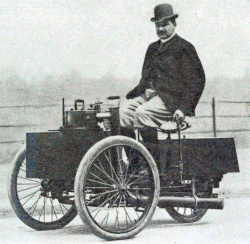
Following a legal dispute in Paris, the court ruled that the name was too similar to its competitor. Consequently, the paper was renamed L'Auto. To further distinguish itself from the green-tinted pages of Le Vélo, L'Auto was printed on distinctive yellow newsprint.
Boosting Circulation through Sporting Innovation
Despite its backing, L'Auto initially struggled with circulation. To combat this, writer Géo Lefèvre proposed a massive cycling race around France. This led to the launch of the Tour de France in 1903. The race was an immediate success, driving circulation from 25,000 to 65,000 shortly after its inception, eventually peaking at a claimed 854,000 copies during the 1933 Tour.
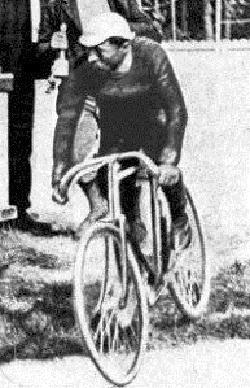
The influence of the paper extended beyond the race itself; in 1919, the maillot jaune (yellow jersey) was introduced for the race leader, specifically to mirror the yellow paper of L'Auto.
The Transition to L'Équipe
The era of L'Auto ended during World War II. After the death of Henri Desgrange in 1940, the paper fell under German control and published pro-Nazi propaganda. Following the liberation of France in 1945, the provisional government dissolved the publication.
Jacques Goddet, the son of L'Auto's first financial director, was permitted to launch a successor paper, L'Équipe, on February 28, 1946. As a condition of its publication, the state mandated that L'Équipe use white paper instead of yellow to sever the visual link to its predecessor. While it began as a tri-weekly publication, it became a daily in 1948.
Expanding the Sporting Horizon
L'Équipe continued the tradition of sporting innovation. One of its journalists, Gabriel Hanot, was the mastermind behind the European Champion Clubs' Cup, the competition that would eventually be rebranded as the UEFA Champions League. Hanot and the paper personally selected the prestigious clubs that participated in the inaugural season.
Corporate Evolution and Modern Era
In 1968, the publication was acquired by Émilien Amaury. After a legal inheritance battle following his death in 1977, his son Philippe Amaury took ownership of the dailies and founded Éditions Philippe Amaury (EPA). The group later passed to Marie-Odile Amaury and their children in 2006.
Over the decades, L'Équipe expanded its reach through various milestones:
- 1980: Launch of a Saturday magazine.
- 1998: Formation of L'Équipe TV.
- 2006: Launch of L'Équipe Féminine and the acquisition of Le Journal du Golf.
- 2007: Launch of L'Équipe Junior.
Circulation Trends
The paper's circulation is heavily influenced by major sporting events. Its highest-selling issue occurred on July 13, 1998, following France's first World Cup victory, selling 1,645,907 copies. By 2020, the daily circulation had settled at 219,032 copies.
| Year/Event | Circulation |
|---|---|
| 1999 | 386,189 |
| 2004 | 369,428 |
| 2010 (Approx. Trend) | Declining from 2008's 298,949 |
| 2020 | 219,032 |
| July 13, 1998 (World Cup Win) | 1,645,907 |
| July 3, 2000 (Euro 2000 Win) | 1,255,633 |
Frequently Asked Questions
Why is the Tour de France leader's jersey yellow?
The yellow jersey (maillot jaune) was introduced in 1919 to reflect the yellow newsprint used by L'Auto, the newspaper that founded the race.
What is the relationship between L'Auto and L'Équipe?
L'Auto was the predecessor to L'Équipe. After L'Auto was dissolved by the French government in 1945 due to pro-Nazi propaganda, L'Équipe was established in 1946 as its successor.
Did L'Équipe help create the UEFA Champions League?
Yes. The competition was originally the European Champion Clubs' Cup, which was the brainchild of L'Équipe journalist Gabriel Hanot.
Who currently owns L'Équipe?
L'Équipe is owned by Groupe Amaury (Éditions Philippe Amaury).
What was the best-selling issue in the paper's history?
The issue published on July 13, 1998, following France's World Cup victory over Brazil, which sold 1,645,907 copies.