Kwakwakaʼwakw Art and Craftsmanship: A Legacy of the Northwest Coast
The artistic traditions of the Kwakwakaʼwakw people are defined by a profound connection to nature, mythology, and social hierarchy. Their craftsmanship is characterized by extensive woodwork and vibrant painting, manifesting in everything from intimate handheld objects to towering monuments. These works are not merely decorative; they serve as vital tools for storytelling, spiritual practice, and the assertion of ancestral lineage.
From the intricate mechanics of transformation masks to the imposing presence of red cedar totem poles, Kwakwakaʼwakw art blends realism with symbolic abstraction to preserve the history and beliefs of their community.
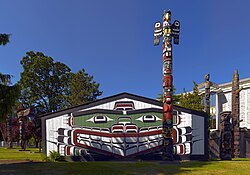
Key Facts
- Primary Materials: Red cedar, mountain goat wool, shredded cedar bark, abalone shell, and copper.
- Artistic Focus: High emphasis on realism and the use of contrasting dark and light colors.
- Social Function: Art is used to display family crests, social rank, and inheritance during ceremonies.
- Unique Innovation: The development of complex transformation masks that reveal a second figure during dance.
The Art of the Mask
Masks are central to Kwakwakaʼwakw culture, acting as the primary medium for dancers to embody mythological beings, animals, and forces of nature. These masks are often adorned with animal fur, feathers, or strips of cedar bark to simulate hair.
Mythological and Character Masks
- Tsonokwa (Dzunukʼwa): Representing the "Wild Woman of the Woods," these masks feature protruding lips, sunken cheeks, and unkempt hair.
- Komokwa: The "Chief of the Sea," characterized by gill slits, scales, and fish-like eyes.
- Bookwus: The "Wild man of the woods," typically painted in dark tones (green, brown, or black) with features resembling a human skull.
- Noohlmahl (Nulamal): The "Fool," depicted as a violent buffoon with a twisted expression and a nose flowing with mucus.
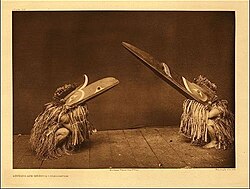
Celestial and Symbolic Masks
Celestial bodies are also represented through specific artistic conventions. Sun masks are generally round with a central hawk-like figure and radiating wooden rays, often painted in red, orange, and white. Moon masks typically depict a young male with raven-like features, appearing as full or crescent shapes.
Additionally, Echo masks symbolize ventriloquism and speech. They utilize interchangeable mouthpieces that can be swapped to represent different beings and voices.
Transformation Masks
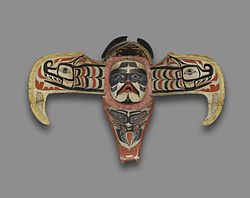
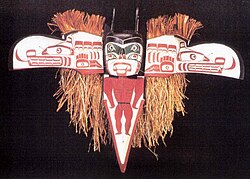
The Kwakwakaʼwakw elevated the transformation mask to its highest form. These complex devices use a system of strings to allow a dancer to "open" the mask mid-performance. This action reveals a second, usually human, face concealed within an animal exterior, symbolizing the dual nature of mythological beings.
Jewelry and Metalwork
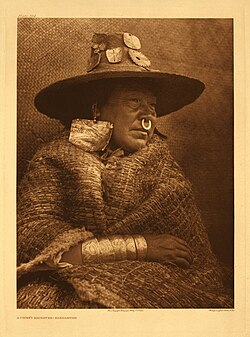
Kwakwakaʼwakw jewelry includes nose rings, lip piercings, bracelets, and necklaces crafted from ivory, stone, wood, and abalone shells. Following contact with Europeans, gold and silver were integrated into their repertoire, often hammered into shapes and inscribed with mythological figures.
A significant symbol of wealth is the copper—beaten copper objects shaped like shields or the letter "T." These items are highly valued and may be broken into pieces during potlatches (ceremonial feasts) as a display of generosity and status.
Textiles and Weaving
Textile production is primarily the domain of women, encompassing clothing, dance aprons, and ceremonial curtains.
Ceremonial and Traditional Garments
- Mawihl: A painted cotton curtain hung at the entrance of dressing rooms during dance ceremonies, often depicting the spirit of the dancing house.
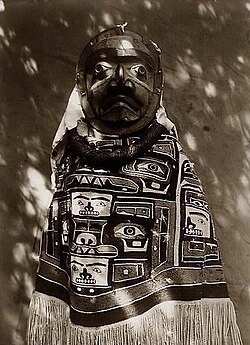
- Chilkat Blankets: Adopted from the Tlingit and Tsimshian peoples, these heavy, ornate blankets are woven from mountain goat wool and shredded cedar bark. A single blanket can take nearly a year to complete.
- Button Blankets: These feature a navy blue base with red Melton wool appliqué and are decorated with mother-of-pearl or abalone buttons forming family crests.
Totem and House Poles
The totem pole is the most grandiose expression of Kwakwakaʼwakw art. Carved from red cedar and reaching heights of 15 to 50 feet, these poles serve as public records of a family's history, social rank, and inherited privileges.
Kwakwakaʼwakw poles are distinguished by their realism and protruding elements, such as jutting beaks and outstretched wings. The figures are arranged hierarchically, with the most prominent figure usually at the bottom.
House poles differ from totem poles in that they provide structural support for the home. They are typically thicker and bolder, depicting ancestors or animals like grizzly bears and sea lions. Some homes also feature a frontal "entrance" pole, which does not support the roof and features a long opening at the base.
Other Crafts and Utensils
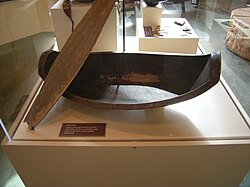
Beyond monumental art, the Kwakwakaʼwakw produced a wide array of functional and ceremonial wooden objects. These include food vessels, rattles, whistles, ceremonial knives, and kerfed boxes.
Summary of Kwakwakaʼwakw Art Forms
| Category | Key Examples | Primary Materials | Purpose/Meaning |
|---|---|---|---|
| Masks | Transformation, Tsonokwa, Echo | Cedar, fur, feathers | Ceremonial dance and storytelling |
| Monuments | Totem poles, House poles | Red cedar | Family lineage and social rank |
| Textiles | Chilkat and Button blankets | Goat wool, cedar bark, wool | Status and ceremonial attire |
| Metalwork | Coppers, inscribed jewelry | Copper, gold, silver | Wealth and prestige |
Frequently Asked Questions
What is a transformation mask?
A transformation mask is a complex wooden carving used in dances. It features a mechanism of strings that allows the dancer to split open an outer animal or mythological exterior to reveal a human face inside, symbolizing a change in state or nature.
What is the significance of "coppers" in Kwakwakaʼwakw culture?
Coppers are beaten copper objects, often shield-shaped, that symbolize immense wealth. They are used as markers of status and are sometimes broken during potlatches to demonstrate the owner's wealth and generosity.
How are Chilkat blankets made?
Chilkat blankets are woven on a loom using a combination of shredded cedar bark and mountain goat wool. The process is highly labor-intensive, often taking nearly a year to complete a single ornate piece.
What is the difference between a totem pole and a house pole?
Totem poles are free-standing monuments that display family crests and history. House poles are structural posts that support the roof of a home, though some "entrance" poles exist that are decorative and non-structural.
Who traditionally created the textiles in Kwakwakaʼwakw society?
Weaving was most often performed by women. In the case of Chilkat blankets, the design was traditionally painted by a man and then woven by a woman.