Kryptopterus vitreolus: The Fascinating Biology of the Glass Catfish
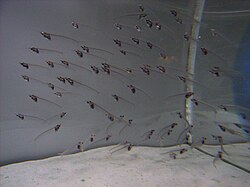
The Kryptopterus vitreolus, widely known as the glass catfish, ghost catfish, or phantom catfish, is one of the most visually striking species in the freshwater aquarium trade. This small, social member of the family Siluridae is celebrated for its nearly transparent body, allowing a glimpse into the inner workings of a living organism.
Endemic to Thailand, these fish inhabit river basins in the Cardamom Mountains and streams south of the Isthmus of Kra that drain into the Gulf of Thailand. While primarily found in these regions, there have been unconfirmed reports of their presence in Penang, Malaysia.
Key Facts
- Scientific Name: Kryptopterus vitreolus
- Common Names: Glass catfish, ghost catfish, phantom catfish
- Origin: Endemic to Thailand
- Conservation Status: Least Concern (IUCN 3.1)
- Distinguishing Feature: Transparent body lacking scales and pigment
- Maximum Length: Up to 8 cm (standard length)
Taxonomy and Identification
The taxonomic history of the glass catfish has been complex. Until 1989, K. vitreolus was misidentified as Kryptopterus bicirrhis, a larger species rarely seen in captivity. Later, it was confused with K. minor. It was not until 2013 that researchers officially resolved the taxonomy, establishing that the specimens common in the aquarium trade are actually K. vitreolus, while the true K. minor is restricted to Borneo.
Physical Characteristics
The glass catfish is a small freshwater fish characterized by two long sensory barbels. While they can reach a standard length of 8 cm (3.1 in), they typically average around 6.5 cm (2.6 in). Their transparency is a result of two biological factors: the total absence of scales and a lack of body pigment.
The skin consists of a "plywood"-like structure of collagen fibrils, which allows light to diffract through the muscles. This unique anatomy can create an iridescent, rainbow effect when light hits the fish at specific angles. Most internal organs are concentrated near the head; in fact, the beating heart is visible under a magnifying glass. Notably, if the fish becomes severely ill or dies, the transparent tissues turn a milky-white color.
Biological and Cultural Significance
Electromagnetic Response
Beyond its appearance, K. vitreolus possesses a unique biological capability: the ability to react to electromagnetic fields. This response is driven by a specific protein encoded by the Electromagnetic Perceptive Gene (EPG).
Thai Folklore
In Thailand, the fish is known as pla kang phra ruang ("Phra Ruang's skeletal fish"). According to legend, the fish originated from King Phra Ruang, a ruler gifted with supernatural speech. The tale says that after the king ate a fish, he threw the bones back into the water and wished for it to live again, resulting in the creation of the transparent glass catfish.
The Glass Catfish in Captivity
Due to their ethereal appearance, K. vitreolus is popular in the aquarium trade. However, most specimens are wild-caught, often from locations such as the Phru To Daeng peat swamp forest in Narathiwat province, Thailand. Because they are not known to be bred in commercial facilities, there are ongoing concerns regarding the sustainability of wild harvesting given their limited natural range.
| Feature | Detail |
|---|---|
| Family | Siluridae |
| Body Type | Transparent (no scales/pigment) |
| Average Length | ~6.5 cm |
| Native Range | Thailand (Gulf of Thailand & Cardamom Mountains) |
| IUCN Status | Least Concern |
Frequently Asked Questions
Why is the glass catfish transparent?
The fish lacks scales and body pigment. Its skin is composed of collagen fibrils in a plywood-like structure that allows light to pass through and diffract, making the body appear clear.
Is the glass catfish the same as Kryptopterus minor?
No. While they were confused for years, it was established in 2013 that K. vitreolus is the species found in the aquarium trade, whereas K. minor is native to Borneo and rarely seen in captivity.
Can you see the organs of a glass catfish?
Yes, because the body is transparent, the organs located near the head are visible. With a magnifying glass, you can even see the heart beating.
Are glass catfish bred in captivity?
Currently, the aquarium trade relies primarily on wild-caught specimens, as they are not known to be bred in commercial facilities.
What happens to their color when they die?
During acute illness or after death, the normally transparent tissues of the glass catfish turn a milky-white color.