Understanding the Guppy: A Complete Guide to Poecilia reticulata
The guppy (*Poecilia reticulata*) is one of the most iconic and widely recognized fish in the world. Whether observed in their natural habitats or swimming in a home aquarium, these small, vibrant fish fascinate biologists and hobbyists alike. Known for their striking colors and rapid reproduction, guppies offer a unique window into the complexities of evolution, sexual selection, and survival.
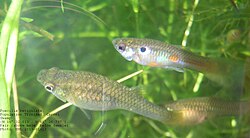
Key Facts
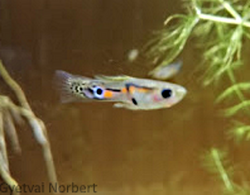
- Scientific Name: Poecilia reticulata
- Conservation Status: Least Concern (IUCN 3.1)
- Sexual Dimorphism: Males are smaller (1.5–4 cm) and colorful; females are larger (3–7 cm) and typically grey.
- Lifespan: Typically around 2 years in the wild.
- Reproduction: Livebearers that can produce between 2 and 200 fry per brood.
- Ideal Water Temperature: 22.2–26.1 °C (72–79 °F) for reproduction.
Biological Profile and Taxonomy
Guppies belong to the family Poeciliidae and the order Cyprinodontiformes. While they are scientifically classified as Poecilia reticulata, they have been known by various synonyms in historical scientific literature, including Lebistes reticulatus and Girardinus guppii.
Physical Characteristics
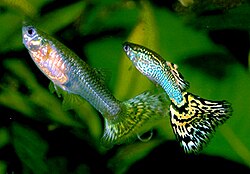
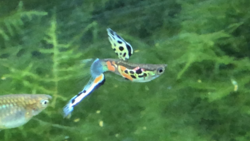
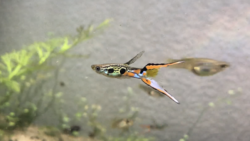
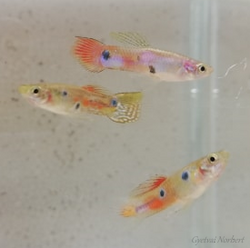
One of the most notable features of the guppy is sexual dimorphism—a biological phenomenon where males and females of the same species exhibit different physical characteristics. In wild populations, females generally possess a plain grey body color. In contrast, males are adorned with a dazzling array of splashes, spots, or stripes.
The expression of these vibrant colors in males is closely linked to thyroid hormone levels. These hormones do more than just dictate color patterns; they also regulate the fish's endocrine function (the system of glands that produce hormones) in response to environmental changes.
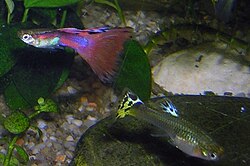
Size Comparison
Size varies significantly between the sexes. Males are generally smaller, ranging from 1.5 to 4 cm (0.6–1.6 in) in length. Females are more robust, typically measuring between 3 and 7 cm (1.2–2.8 in).
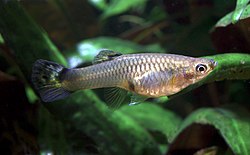
Life Cycle and Reproduction
Guppies are livebearers, meaning they give birth to fully formed, independent young rather than laying eggs. This allows the offspring, known as fry, to begin life with a high level of development and the ability to survive without direct parental care.
Maturity and Spawning
The timeline for maturity differs between the sexes. Male guppies reach maturity very quickly, often in 7 weeks or less. Females take longer, typically producing their first offspring between 10 and 20 weeks of age. A female's reproductive window is quite long, continuing until she is 20 to 34 months old.
In a controlled environment, such as an aquarium, guppies prefer water temperatures between 22.2 and 26.1 °C (72–79 °F) to facilitate successful reproduction. Pregnant females can be identified by an enlarged, darkened gravid spot near the anal vent. In some cases, the eyes of the developing fry can even be seen through the female's translucent skin just before birth.
Brood Characteristics
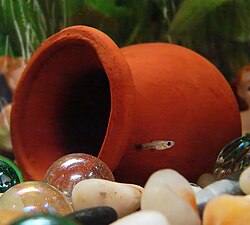
The number of offspring in a single birth is highly variable. While a female can drop anywhere from 2 to 200 fry at once, the most common range is between 30 and 60. The birth process itself is gradual, with offspring being released in sequence over a period of one to six hours.
Ecology and Survival Strategies
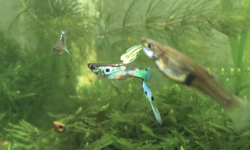
In the wild, guppies face intense evolutionary pressures, particularly from predators. These pressures have shaped their behavior and life history. For example, in environments with high predation, females tend to produce a larger number of smaller offspring to increase the chances of survival.
Anti-Predator Tactics
Guppies have developed several sophisticated methods to avoid being eaten:
- Schooling: Young guppies often swim together in groups to reduce individual risk.
- Predator Inspection: Guppies may observe predators to assess the level of threat.
- Predator Diversion: Some males use their conspicuous coloration as a strategy to divert a predator's attention away from the group.
The Guppy in the Aquarium Hobby
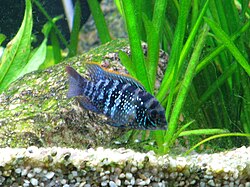
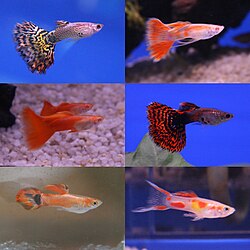
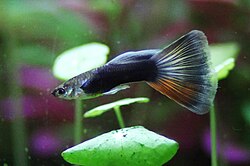
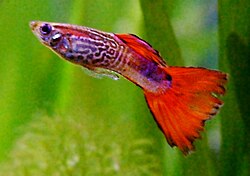
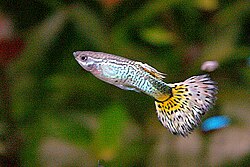
Because of their ease of care and incredible variety, guppies are staples in the aquarium hobby. Through selective breeding, humans have created countless "strains" that differ from wild types in color, tail shape, and size.
Ornamental Varieties
Aquarium enthusiasts categorize guppies into several distinct groups based on their physical traits:
- Large Strains: Includes Veil tails, Triangle tails, Fan tails, and Flag tails.
- Sword Strains: Features Double swords, Upper swords, Lower swords, and Lyre tails.
- Short Strains: Includes Spade, Spear, Round, and Pin tails.

Health and Maintenance
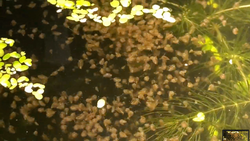
While generally hardy, aquarium guppies can be susceptible to various diseases. Common issues include Ich (a parasitic infection), fin rot, Columnaris, Velvet disease, and swim bladder disease. Maintaining clean water and providing appropriate nutrition, such as Daphnia magna, is essential for their health.
Summary of Guppy Characteristics
| Feature | Male Guppy | Female Guppy |
|---|---|---|
| Average Length | 1.5–4 cm | 3–7 cm |
| Appearance | Colorful (spots, stripes, splashes) | Typically grey/plain |
| Maturity Age | 7 weeks or less | 10–20 weeks |
| Primary Role | Display and mating | Gestation and offspring production |
Frequently Asked Questions
How long do guppies live?
In the wild, the lifespan of a guppy is typically around 2 years, though this can vary significantly depending on environmental factors and predation levels.
How can I tell if a female guppy is pregnant?
You can look for an enlarged and darkened gravid spot near the anal vent. In some translucent females, you may even see the eyes of the fry through the skin just before they are born.
What is the best temperature for guppies?
For optimal health and successful reproduction, guppies prefer water temperatures between 22.2 and 26.1 °C (72–79 °F).
Are guppies easy to breed?
Yes, guppies are known for their rapid reproduction. Females can produce broods ranging from 2 to 200 fry, and they can begin reproducing as early as 10 weeks of age.
Why are male guppies so much more colorful than females?
This is due to sexual dimorphism. The vibrant colors in males are influenced by thyroid hormones and are often a result of evolutionary pressures related to mate choice and sexual selection.