Konungs skuggsjá: The Medieval Norwegian King's Mirror
Around the year 1250, a significant work of Old Norse literature emerged that would serve as both a political treatise and a moral compass. Known as Konungs skuggsjá (Old Norse for "King's mirror"), this didactic text—also referred to in Latin as Speculum regale—was designed to guide the education of a future ruler. Specifically, it was intended for King Magnus Lagabøte, the son of King Håkon Håkonsson.
Written in the form of a dialogue between a father and his son, the text functions as a manual for leadership. Through their conversation, the son seeks advice on a vast array of practical and ethical challenges, ranging from the complexities of international trade to the nuances of chivalry, military strategy, and the delicate balance between church and state.
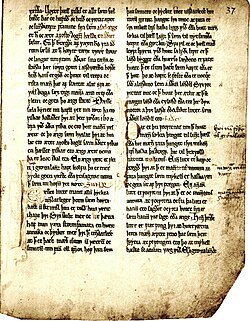
Key Facts
- Origin: Written in Old Norse around 1250.
- Purpose: A didactic "mirror" intended to educate King Magnus Lagabøte.
- Format: A dialogue between a father and son covering politics, morality, and science.
- Primary Manuscript: AM 243 a fol., likely copied in Bergen around 1275.
- Core Themes: Merchant customs, natural marvels, courtly etiquette, and royal justice.
Structure and Content
The work is composed of seventy chapters, organized into a prologue and two primary sections. While the prologue touches upon various social classes, including merchants, clergy, and peasants, the text focuses most heavily on the lives of kingsmen and merchants.
The Natural World and Commerce
The first major section explores the world through the eyes of a merchant. It provides practical advice on seafaring and trade, emphasizing that a merchant must maintain high moral standards because they often operate in foreign or "heathen" lands where their reputation is their primary protection.
Beyond commerce, this section delves into the natural sciences of the medieval era. It describes the sun, the winds, and the various "marvels" of the known world. These accounts include:
- The geography and climate of Norway, Ireland, Iceland, and Greenland.
- Observations of whales and the effects of different climate zones.
- Accounts of strange creatures, such as a "wild man" or woodwose—a human-shaped creature covered in hair with a long mane.
- Supernatural tales, such as an anchor descending from the sky in Ireland.
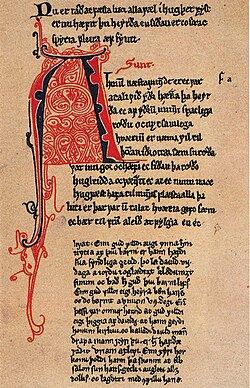
The Royal Court and the Administration of Justice
The second part of the text shifts focus toward the internal workings of the monarchy. It is often divided into two distinct areas of study: the king's court and the king's justice.
In the context of the court, the text outlines the importance of courtesy and the social hierarchy of the hird (the king's inner circle of nobles and officials). It provides specific rules for behavior, such as proper speech in the royal hall and the etiquette required when approaching the king for a position.
The final section addresses the heavy responsibility of the law. It explores the relationship between God's justice and the king's duty to provide both leniency and severity. By referencing biblical figures like David, Saul, and Solomon, the text provides a framework for how a monarch should handle promises, mercy, and capital punishment, while navigating the authority shared between the crown and the church.
Summary of Textual Organization
| Section | Primary Focus | Key Topics Included |
|---|---|---|
| Prologue | Introduction | Purpose of the work and intended audience. |
| Part I | The Merchant & Nature | Trade customs, navigation, and natural marvels. |
| Part II (1) | The King's Court | Court etiquette, the hird, and military matters. |
| Part II (2) | Truth & Justice | Royal responsibilities, law, and church-state relations. |
Legacy and Scholarly Importance
The influence of Konungs skuggsjá extends beyond the Middle Ages. Its wisdom regarding language and knowledge was famously captured on the gravestone of the Danish linguist Rasmus Rask, which quotes the text: "If you wish to become perfect in knowledge, you must learn all the languages, and yet, do not neglect your native tongue or speech."
Modern understanding of the text is largely thanks to the work of scholars like Ludvig Holm-Olsen, whose research into the manuscripts—particularly the 1275 Bergen copy (AM 243 a fol.)—has provided the foundation for contemporary editions and translations.
Frequently Asked Questions
What is "speculum literature"?
Speculum literature, or "mirror" literature, is a genre of didactic writing intended to reflect the ideal qualities of a person—often a ruler—allowing them to see their own potential strengths and weaknesses through a model of perfection.
Who was the intended audience for this book?
The text was specifically written for the education of the future King Magnus Lagabøte, though the prologue suggests it was also intended to serve as a handbook for a wider audience.
What are the "marvels" mentioned in the text?
The "marvels" refer to the medieval descriptions of extraordinary natural phenomena, strange animals, and unusual geographic features found in places like Iceland, Greenland, and Ireland.
How does the text view the relationship between the king and the church?
The text addresses the complex relationship between church and state, discussing the respective authorities of kings and bishops and how a king must balance divine justice with earthly governance.
What is the significance of the hird?
The hird refers to the king's retinue or courtly circle. The text provides detailed instructions on the hierarchy, duties, and social expectations of those serving in the king's household.