Kobayakawa Takakage: The Wise Strategist of the Mōri Clan
In the turbulent era of the Sengoku and Azuchi–Momoyama periods, few figures embodied the blend of military prowess and political intellect as effectively as Kobayakawa Takakage. As the 14th head of the Kobayakawa clan and a vital pillar of the Mōri family, Takakage was more than just a warrior; he was a statesman whose diplomatic acumen often proved as decisive as his sword.
Born into the powerful Mōri lineage, Takakage was destined for leadership. Alongside his brother, Kikkawa Motoharu, he became part of the legendary "Mōri Ryōsen" (the Mōri's Two Rivers), a term used to describe the two brothers who acted as the essential lifelines for the Mōri clan's expansion and stability.
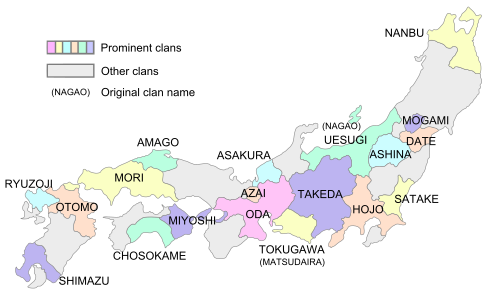
Key Facts
- Role: 14th Head of the Kobayakawa clan and Daimyō (feudal military lord).
- Lineage: Third son of the renowned Mōri Motonari.
- Legacy: Known as one of the "Two Rivers" of the Mōri clan for his military and political support.
- Political Status: Appointed to the Council of Five Elders by Toyotomi Hideyoshi.
- Reputation: Described by the strategist Kuroda Kanbei as "the last wise man in Japan."
Early Life and Rise to Power
Takakage was born in 1533 in Yoshida, Aki Province, to Mōri Motonari and Lady Myōkyū. His path to leadership was shaped by early tragedy. In 1541, the 13th head of the Takehara branch of the Kobayakawa clan, Kobayakawa Okikage, died during an attack on Sato-Kanayama Castle. Because Okikage had no heir, the twelve-year-old Takakage was declared the successor in 1543, taking the name Kobayakawa Takakage.
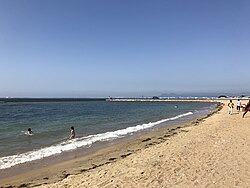
His early military career was defined by the struggle for dominance in western Honshū. At the Battle of Miyajima in 1555, Takakage demonstrated his tactical brilliance by leading naval forces to break the blockade of the Ōuchi clan. By coordinating a naval feint with a synchronized land assault, his forces caught the enemy by surprise, leading to a decisive Mōri victory.
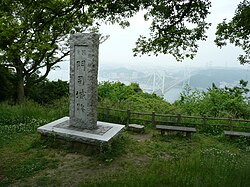
Conflict with the Ōtomo Clan
The struggle for territory often brought Takakage into direct conflict with the Ōtomo clan. One of the most protracted struggles involved the Siege of Moji. In 1561, Takakage led the Mōri navy to recapture the castle, a feat achieved despite the involvement of Portuguese merchants who provided naval bombardment to support the Ōtomo forces.
The rivalry also featured the fierce commander Tachibana Dōsetsu. In battles such as the Battle of Tatarahama (1568) and various skirmishes in Yanagigaura, Takakage faced intense resistance, including heavy archery fire and sophisticated naval tactics.
The Political Architect of the Mōri
As the Mōri clan transitioned through leadership changes—from Motonari to Takamoto, and eventually to the young Mōri Terumoto—Takakage’s role evolved. While his brother Kikkawa Motoharu managed military affairs, Takakage took charge of diplomacy and political administration. He utilized military intelligence to fuel his diplomatic maneuvers, ensuring the clan's survival during periods of intense instability.
Navigating the Rise of Oda Nobunaga
When the powerful Oda Nobunaga began his unification of Japan, Takakage was instrumental in the Third Nobunaga Encirclement Plan. This alliance brought together unlikely partners, including the Ashikaga shogunate and the Mōri, to check Nobunaga's expansion. Takakage also led Mōri naval forces during the First Battle of Kizugawaguchi to thwart an Oda blockade.
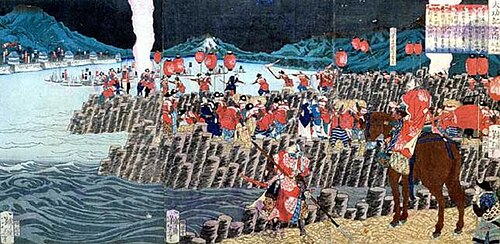
The pressure from Nobunaga's general, Hashiba Hideyoshi (later Toyotomi Hideyoshi), eventually forced the Mōri into difficult positions. During the Siege of Takamatsu in 1582, Takakage played a critical role in deciding the clan's fate. Following the assassination of Nobunaga at Honnō-ji, Takakage advised Mōri Terumoto to accept peace terms from Hideyoshi rather than pursuing a high-risk attack, a decision that preserved the clan's core strength.
Service Under Toyotomi Hideyoshi
Following the era of Nobunaga, Takakage transitioned into a high-ranking official under Toyotomi Hideyoshi. After the Kyūshū Campaign in 1586, Hideyoshi granted him significant territories in Chikuzen, Chikugo, and Hizen provinces, totaling 371,300 koku. Although Takakage initially attempted to decline these lands to avoid overextending the Mōri, his service eventually led to him becoming an independent lord under the Toyotomi administration.
In 1592, Takakage participated in the Japanese invasions of Korea, commanding 10,000 soldiers. He fought in the Battle of Byeokjegwan, where he helped repel Ming dynasty reinforcement forces.

The Council of Five Elders
In a testament to his prestige, Hideyoshi appointed Takakage to the Council of Five Elders in 1595. This elite group, which included Tokugawa Ieyasu, was tasked with overseeing the stability of Japan after Hideyoshi's death. Shortly after this appointment, Takakage retired to Mihara Castle, handing over his estate to his adopted son, Kobayakawa Hideaki.
Death and Legacy
Kobayakawa Takakage died on July 26, 1597, at the age of 63 or 64, at Mihara Castle. His death was mourned by his contemporaries; the famous strategist Kuroda Kanbei famously remarked, "The last wise man in Japan has gone." He was buried at Beisan Temple in Nuta, Numata.
Takakage is remembered not just as a conqueror, but as a man who understood that the survival of a clan required a balance of strength and wisdom. His ability to navigate the shifting loyalties of the Sengoku period ensured that the Kobayakawa and Mōri legacies endured.
Summary of Kobayakawa Takakage
| Category | Details |
|---|---|
| Lifespan | 1533 – July 26, 1597 |
| Clan Affiliation | Kobayakawa (Mōri lineage) |
| Primary Roles | Daimyō, Chūnagon, Council of Five Elders |
| Key Battles | Miyajima, Moji, Tatarahama, Takamatsu, Korean Campaign |
| Political Specialty | Diplomacy and Information Gathering |
Frequently Asked Questions
Who were the "Mōri Ryōsen"?
The "Mōri Ryōsen" (Mōri's Two Rivers) refers to Kobayakawa Takakage and his brother Kikkawa Motoharu. They were known as the two essential pillars that supported the Mōri clan through their military and political efforts.
What was Takakage's role in the Siege of Takamatsu?
During the siege, Takakage acted as a key advisor. When the news of Oda Nobunaga's death arrived, he advised Mōri Terumoto to accept peace terms from Hideyoshi rather than attacking, a strategic move that helped preserve the clan's future.
How did Takakage become the head of the Kobayakawa clan?
He was the third son of Mōri Motonari. In 1543, after the death of the 13th head, Kobayakawa Okikage, who had no heir, the twelve-year-old Takakage was named successor due to his familial connection to Okikage's wife.
What was the Council of Five Elders?
The Council of Five Elders was a group of powerful leaders appointed by Toyotomi Hideyoshi to govern Japan and maintain stability following his death. Takakage was one of the five members, alongside figures like Tokugawa Ieyasu.
Why was Takakage considered a "wise man"?
Takakage was highly regarded for his ability to manage complex political affairs and diplomacy. While his brother handled the direct military combat, Takakage used intelligence and negotiation to expand and protect the clan's interests.