Knights Hospitaller Heraldry and the Evolution of the Maltese Cross
The visual identity of the Knights Hospitaller is one of the most enduring symbols of the medieval era. From the early days of the Order to its establishment in Malta, the heraldry used by the Knights served not only as a mark of identity but as a means of differentiation from other military orders of the time.
The Origins of the Order's Arms
The official arms of the Knights Hospitaller were granted in 1130 by Pope Innocent II. This grant was specifically intended to distinguish the Hospitallers from the Knights Templar, who utilized a reversed color scheme. The primary design featured a white cross on a red field.
Parallel to the official coat of arms, the famous "eight-pointed cross" began to emerge in the 12th century under the leadership of Raymond du Puy. Initially, this symbol appeared as a cross fourchée (a cross with split ends) or a cross ancrée (an anchored cross). It was not until around or after 1500 that this design evolved into the fully articulated Maltese cross recognized today.
Formalization and Naval Use
The transition of the white cross from a specific heraldic device to a general symbol for the Order was solidified in 1259. A papal bull issued by Alexander IV decreed that the white cross design be displayed on the mantling—the decorative cloth hanging from the helmet—of the Knights of Malta.
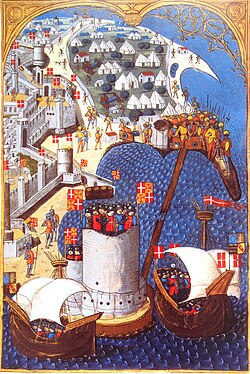
Following the Order's move to Cyprus in 1291, the heraldry extended to the sea. Naval ships under the command of the Knights of St John began flying banners featuring the white cross on a red field, signaling their presence and authority in Mediterranean waters.
Heraldic Variations and Grand Masters
Over the centuries, the Order's heraldry adapted to reflect the rank and role of its members. While the general emblem remained consistent, the coats of arms of the Grand Masters often incorporated personal or regional elements. For example, the arms of Grand Master Philibert de Naillac (r. 1396–1421) were prominently displayed on his tower in the harbor of Rhodes during the early 15th century.
By 1695, a structured system of quartering was used for the Knights of Rhodes. The gules a cross argent (a silver cross on a red field) was shown quartered for the Grand Master, while it appeared in the chief (the top section of the shield) for commanders and ordinary members.
| Period/Date | Key Development | Symbol/Design |
|---|---|---|
| 1130 | Grant by Pope Innocent II | White cross on red field |
| 12th Century | Introduction under Raymond du Puy | Cross fourchée / Cross ancrée |
| 1259 | Papal bull of Alexander IV | White cross on mantling |
| 1291 onwards | Naval adoption in Cyprus | White cross on red field banner |
| c. 1500 | Final evolution of the cross | Fully articulated Maltese cross |
Key Facts
- Papal Origin: The arms were granted in 1130 by Pope Innocent II to differentiate the Order from the Templars.
- The Eight-Pointed Cross: Originally a cross fourchée or ancrée, it evolved into the Maltese cross around 1500.
- Naval Identity: After 1291, the white cross on a red field became the standard banner for the Order's ships.
- Rank Distinction: By the late 17th century, the placement of the cross on the shield indicated whether the bearer was a Grand Master, commander, or ordinary member.
Frequently Asked Questions
Why did the Knights Hospitaller need a specific coat of arms?
The arms were granted by Pope Innocent II in 1130 primarily to provide a visual distinction between the Knights Hospitaller and the Knights Templar, who used reversed colors.
What is the difference between a cross fourchée and a Maltese cross?
A cross fourchée is an earlier version of the eight-pointed cross with split ends. The fully articulated Maltese cross is the refined version of this design that emerged around the year 1500.
When did the white cross become the general symbol of the Order?
The emblem was adopted as a general symbol following a 1259 papal bull by Alexander IV, which mandated its use on the mantling of the Knights.
How was the coat of arms used to denote rank in the 17th century?
In 1695, the gules a cross argent was quartered for the Grand Master, whereas it was placed in the chief for ordinary members and commanders.