Kim Il Sung: The Founder and Architect of North Korea
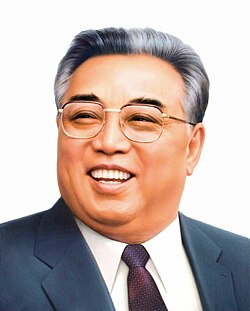
Kim Il Sung (born Kim Song Ju; 15 April 1912 – 8 July 1994) was a central figure in 20th-century Asian politics. As a communist revolutionary, military officer, and politician, he founded the Democratic People's Republic of Korea (DPRK), commonly known as North Korea, in 1948. He led the nation from its inception until his death in 1994, establishing a political system that would be carried on by his son, Kim Jong Il.
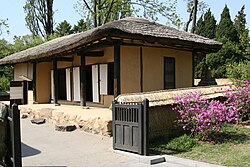
Key Facts
- Born: 15 April 1912, in Heijō, Korea, Empire of Japan.
- Died: 8 July 1994 (aged 82) in Hyangsan, North Pyongan.
- Primary Role: Founder and first leader of North Korea.
- Political Party: Workers' Party of Korea.
- Succession: Succeeded by his son, Kim Jong Il.
- Posthumous Title: Declared Eternal President.
Early Life and Military Service
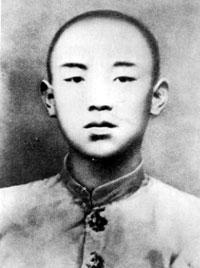
Born Kim Song Ju, his early years were shaped by the turbulent political landscape of the Korean peninsula under Japanese rule. His military career began with service in the Northeast Counter-Japanese United Army between 1936 and 1941.
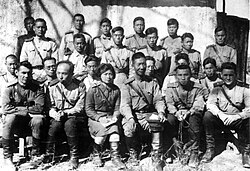
During World War II, Kim served as a Captain in the Red Army, specifically within the 88th Separate Rifle Brigade, an international military unit. This period of service in the Soviet Union was foundational to his later political alignment and military leadership.
The Establishment of North Korea
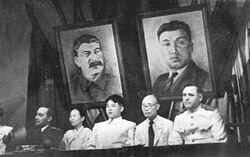
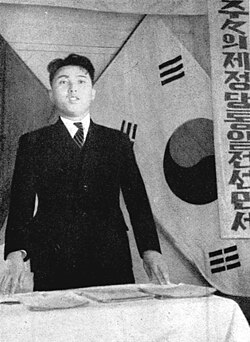
Following the end of World War II, Kim returned to Korea and became a prominent figure in the emerging political structures. In 1945, he was involved with the North Korea Bureau of the Communist Party of Korea, and by 1946, he held leadership roles within the Workers' Party of North Korea.
![Kim (black suit) attending a mass event with members of the Soviet Civil Administration, Pyongyang, October 1945[61]](/images/7a/e0/7ae0e58a73973c7410f44f5c906801858448964b3443e7652957fc6d45b5bc36.jpg)
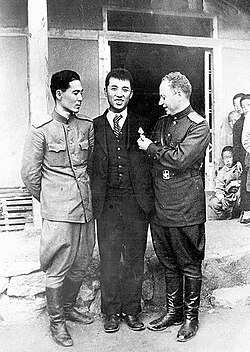
In 1948, the Democratic People's Republic of Korea was officially established, and Kim Il Sung assumed the role of the nation's first Premier. He worked alongside other key political figures, such as Kim Tu-bong, to consolidate the new state's administration.
Leadership and the Korean War
Kim's leadership was defined by the Korean War, during which he served as the Supreme Commander of the Korean People's Army. His tenure saw the intense conflict that reshaped the peninsula, eventually leading to the signing of the Korean Armistice Agreement.
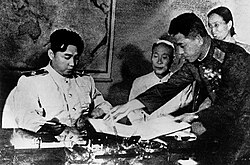
In the post-war era, Kim focused on strengthening his control over North Korean society. He introduced the Monolithic Ideological System and consolidated power through the Workers' Party of Korea, eventually serving as its General Secretary from 1966 until his death.
International Relations and Personal Life
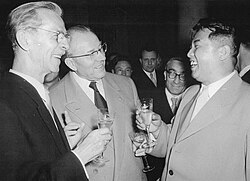
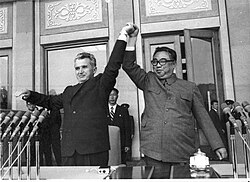
Throughout his rule, Kim engaged in various diplomatic activities, visiting nations such as East Germany and maintaining relationships with leaders like Mao Zedong of China and Nicolae Ceaușescu of Romania.
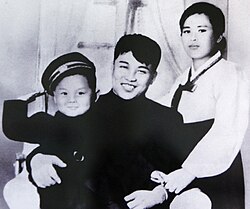
Kim's personal life included two marriages. He married Kim Jong Suk in 1941, with whom he had a son, Kim Jong Il. Following her death in 1949, he married Kim Song-ae in 1952, with whom he had four children. His family lineage became the central pillar of North Korean political power.
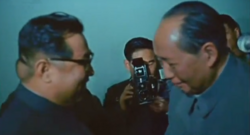
Even in his later years, Kim's health remained a subject of interest, with rare newsreel footage noting physical changes, such as a tumor on the back of his head during a 1970 meeting with Mao Zedong.
Legacy and Death
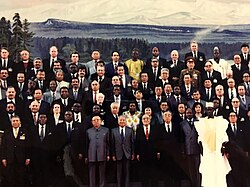
Kim Il Sung died on 8 July 1994 at the age of 82. His death was marked by massive international ceremonies, including his 80th birthday celebrations held years prior. He was laid to rest in the Kumsusan Palace of the Sun.
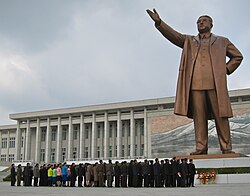
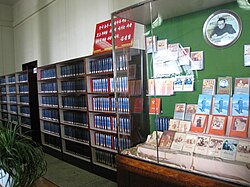
His legacy is preserved through massive monuments, such as the statues on Mansudae Hill, and a vast collection of written works attributed to him.
Summary of Political Offices
| Office | Period of Service | Successor/Status |
|---|---|---|
| Premier of North Korea | 1948–1972 | Succeeded by Kim Il |
| Chairman of the Workers' Party of Korea | 1949–1966 | Succeeded by himself (as General Secretary) |
| General Secretary of the Workers' Party | 1966–1994 | Succeeded by Kim Jong Il |
| President of North Korea | 1972–1994 | Office abolished (Posthumously Eternal President) |
| Supreme Commander (KPA) | 1950–1972 | Office abolished |
Frequently Asked Questions
Who succeeded Kim Il Sung as leader of North Korea?
Kim Il Sung was succeeded by his son, Kim Jong Il.
What was Kim Il Sung's birth name?
His birth name was Kim Song Ju.
In which military unit did Kim Il Sung serve during World War II?
He served in the 88th Separate Rifle Brigade of the Red Army.
What is the significance of the title "Eternal President"?
Kim Il Sung was posthumously declared Eternal President of the Democratic People's Republic of Korea.
Where is Kim Il Sung buried?
He is buried in the Kumsusan Palace of the Sun.