Kiel: Germany's Premier Baltic Port and State Capital
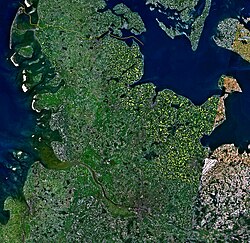
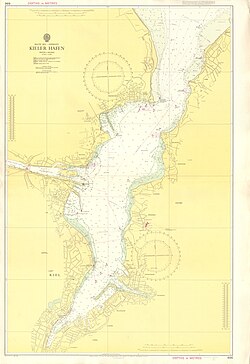
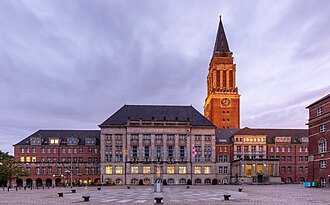
Kiel is the capital and most populous city of the northern German state of Schleswig-Holstein. As Germany's largest city on the Baltic Sea, it serves as a vital maritime hub and administrative center. Situated on the Kieler Förde (an inlet of the Bay of Kiel) at the mouth of the Schwentine River, the city is located approximately 90 kilometers northeast of Hamburg.
The city is globally recognized for the Kiel Canal, the world's busiest artificial waterway. Terminating in the Holtenau district, this canal provides a critical link between the Baltic and the North Sea, with its opposite end located in Brunsbüttel.
Key Facts
- Population: Approximately 252,668 (City) and 643,594 (Metro area) as of late 2024.
- Status: Capital of Schleswig-Holstein and Germany's only state capital located on the sea.
- Geography: Located on the Jutland Peninsula, primarily within the region of Holstein.
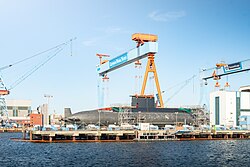
- Economy: Strong focus on shipbuilding, military contracting, and maritime transport.
- Climate: Oceanic climate with mild winters and cool summers.
Historical Evolution
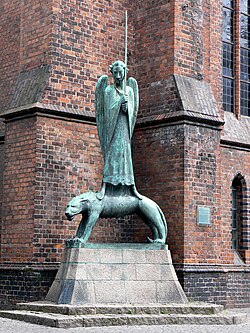
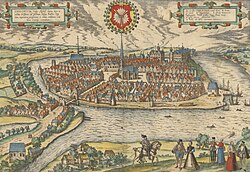
Originally a small settlement, Kiel was granted city rights in 1242. Its strategic location on the Kieler Förde inlet allowed it to grow into a significant trading hub. From 1284 to 1518, Kiel was a member of the Hanseatic League, a powerful commercial and defensive confederation of merchant guilds and market towns, though it was eventually expelled for harboring pirates.
From Danish Rule to Prussian Annexation
Between 1773 and 1864, Kiel was ruled by the King of Denmark in a personal union as the Duke of Holstein. Following the Second Schleswig War in 1864, the city was conquered by an alliance of Austria and Prussia. By 1867, Kiel was formally annexed by the Kingdom of Prussia.
The Rise of a Naval Power
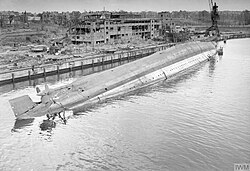
In 1865, King William I established Prussia's Baltic Sea fleet in Kiel, leading to the creation of the Imperial shipyard in 1867. By 1871, the city was designated as one of the Reichskriegshäfen (Imperial War Harbours). This military focus triggered explosive growth; the population surged from 18,770 in 1864 to roughly 200,000 by 1910.
Geography and Climate
Kiel experiences an oceanic climate (Köppen: Cfb), characterized by moderated temperatures due to its coastal position. Winters are relatively warm and summers remain cool, with average temperatures ranging from 2°C in winter to 17°C in summer. Extreme heat is rare, with fewer than three days per year typically exceeding 30°C.
| Metric | Winter (Jan) | Summer (Jul) | Annual Average |
|---|---|---|---|
| Mean Daily Max (°C) | 4.0 | 22.2 | 12.8 |
| Daily Mean (°C) | 2.0 | 17.7 | 9.3 |
| Mean Daily Min (°C) | -0.4 | 13.1 | 5.8 |
| Avg Precipitation (mm) | 66.8 | 83.8 | 754.2 |
City Profile and Demographics
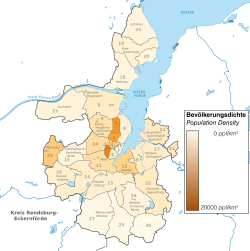
Kiel is divided into 18 districts. While the population peaked in 1973 at 273,000, it has since stabilized around 250,000. The city has evolved from a purely naval center into a vibrant academic hub, attracting students and marine researchers.
Governance and Politics
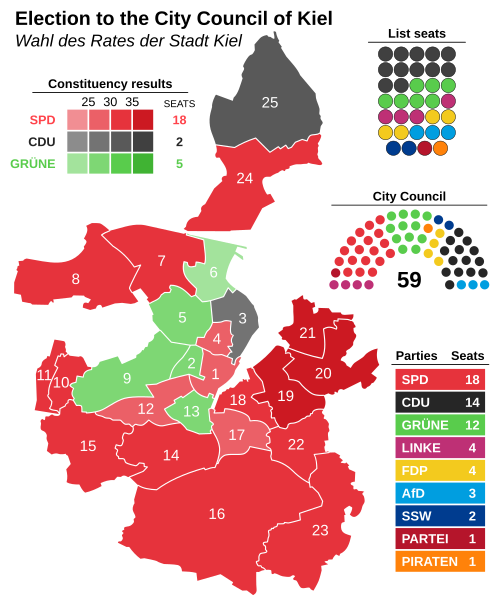
The city is currently governed by a green-red coalition consisting of Alliance 90/The Greens and the Social Democratic Party (SPD), who hold 25 of the 49 seats in the City Council. The current Lord Mayor is Ulf Kämpfer (SPD), whose term ends in 2026.
Economy and Infrastructure
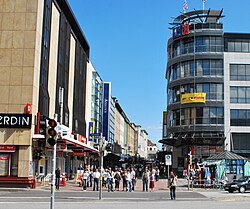
Kiel's economy is heavily influenced by its maritime heritage. In 2005, the city's GDP per person was €35,618, significantly higher than the European Union average. The city hosts major military contractors and industrial giants.
Notable Companies
- Military & Marine: ThyssenKrupp Marine Systems (via Howaldtswerke-Deutsche Werft), Rheinmetall, and Raytheon.
- Industrial: Caterpillar Inc. (via MaK), Voith, and Heidelberger Druckmaschinen.
- Logistics: Schenker AG and HSH Nordbank.
Transport and Connectivity
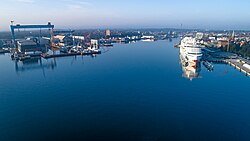
The Port of Kiel is a primary gateway for passenger and cargo shipping to Scandinavia, the Baltic States, and Russia. Regular ferry services connect Kiel to Gothenburg (Sweden), Oslo (Norway), and Klaipėda (Lithuania).
Frequently Asked Questions
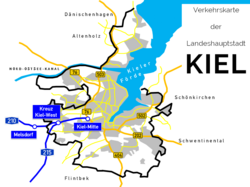
What is the significance of the Kiel Canal?
The Kiel Canal is the world's busiest artificial waterway, connecting the Baltic Sea to the North Sea and allowing ships to avoid the long journey around the Jutland Peninsula.
How has Kiel's population changed over time?
Kiel grew rapidly in the late 19th century due to its role as a naval base, peaking at 273,000 in 1973 before declining and stabilizing at approximately 250,000 today.
What is the climate like in Kiel?
Kiel has an oceanic climate with mild winters and cool summers. It rarely experiences extreme heat, with an average of only 2.8 days per year above 30°C.
Which parties currently govern the city?
The city is governed by a coalition of Alliance 90/The Greens and the Social Democratic Party (SPD).
What are the main economic drivers of the city?
The economy is driven by shipbuilding, maritime logistics, military contracting, and its role as a center for university education and scientific research.