The Lost Gold and Snow of Kiandra: A Journey Through Australia's High Country
High in the Snowy Mountains of New South Wales, perched on a treeless ridge at 1,400 metres above sea level, lies the remains of Kiandra. Once Australia's highest town, this remote settlement in the Kosciuszko National Park holds a dual legacy: it was a bustling hub of the 19th-century gold rush and the unlikely birthplace of Australian skiing.
Today, Kiandra is an abandoned township, but its history is etched into the landscape. From the frantic energy of thousands of miners to the quiet glide of the first snowshoes, the story of Kiandra is a testament to human endurance in a harsh, high-altitude environment.
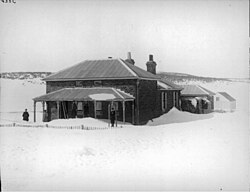
Key Facts
- Location: Snowy Monaro Regional Council, Kosciuszko National Park, NSW.
- Elevation: 1,400 metres (4,600 ft).
- Historical Significance: Major gold mining center and the birthplace of Australian skiing.
- Climate: Cold oceanic climate with an average of 47.5 snowy days per year.
- Current Status: Abandoned township with select heritage-listed buildings.
A Boomtown Born of Gold
The transformation of the area, originally known as Gibson's Plains, began in earnest in November 1859. When mountain cattlemen known as the Pollock brothers discovered gold, a rush ensued. By March 1860, an estimated 10,000 miners and storekeepers had arrived to claim their stake.
At its peak, Kiandra was a thriving community of approximately 15,000 people. The town boasted a diverse economy including 25 stores, 14 pubs, 16 butchers, 13 bakers, and several banks. One of the most notable finds was a 9 kg nugget discovered in the river deposits near New Chum Hill. Significant contributions were also made by Chinese miners, who constructed the Three Mile Dam in 1882 to assist with sluicing (a mining technique using a stream of water to separate gold from gravel).
However, the "easy pickings" were quickly exhausted. By 1861, reports of a "mass exodus" began to surface, and by 1905, the last mining operations had ceased. Total official production reached 48,676 kg of gold.
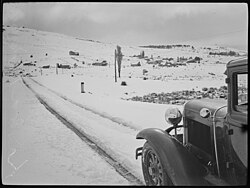
The Birthplace of Australian Skiing
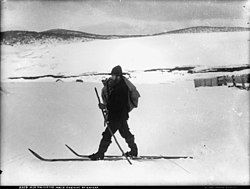
While the gold eventually ran out, a new tradition was being forged in the snow. In 1861, Norwegian miners introduced recreational skiing to the settlement. They manufactured over forty pairs of equipment, including short "skates" (about four feet long with turned-up ends) and longer "snow shoes."
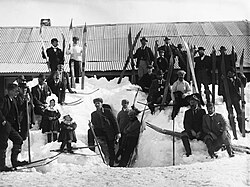
These early enthusiasts formed the Kiandra Snow Shoe Club, which is believed to be the ancestor of the modern-day Kiandra Pioneer Ski Club. The club's influence was significant, hosting what was perhaps the first international ski race carnival in 1908. The town's connection to skiing was even celebrated in literature, with the poet Banjo Paterson serving as a vice president of the club.
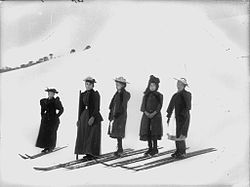
As technology evolved, so did the sport. In 1957, Australia's first T-bar lift (a type of ski lift that pulls skiers up a slope via a moving bar) was installed on Township Hill. While ski operations eventually relocated to the nearby Selwyn Snowfields in 1978, the legacy of Kiandra's slopes lives on in the name of the "Township Triple Chair" at Mt Selwyn.
Heritage, Restoration, and Resilience
The decline of Kiandra saw the last resident depart in 1974. Following this, the NSW National Parks and Wildlife Service (NPWS) demolished most of the township's buildings. This decision remains a point of contention for some locals who wished to see more of the town's human heritage preserved.
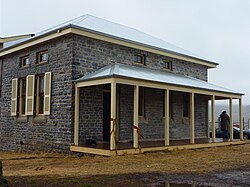
Despite this, significant restoration efforts took place between 2009 and 2020. The historic Kiandra Courthouse, originally built in 1890 to serve as a police station and barracks, was partially restored and opened as an interpretive centre in 2010. Other buildings, such as the Wolgal Lodge fishing cottage, were also restored to provide limited accommodation and demonstrate interest in the site.
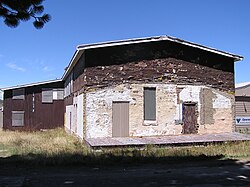
Tragically, the town faced further hardship during the 2019–20 Australian bushfire season. The Dunns Road fire caused severe damage to the courthouse, with heat so intense that the glass and aluminium in the windows melted. The town continues to be a site of archaeological study and historical reflection.
Climate and Environment
Kiandra's high elevation results in a cold oceanic climate. The region experiences short, cool summers and long, snowy winters, averaging 47.5 snowy days annually. The climate is characterized by high winds and significant annual rainfall of approximately 1,561.2 mm.
Historical records show extreme temperature fluctuations. The lowest temperature ever recorded at Kiandra was −20.6 °C (−5 °F) on 2 August 1929, while the highest was 34.7 °C (94.5 °F) during a 1939 heatwave.
| Metric | Value |
|---|---|
| Mean Max Temperature | 12.7 °C (54.9 °F) |
| Mean Min Temperature | 0.9 °C (33.6 °F) |
| Annual Rainfall | 1,561.2 mm (61.46 in) |
| Average Snowy Days | 47.5 days |
Frequently Asked Questions
What does the name "Kiandra" mean?
The name is a corruption of the Aboriginal word 'Gianderra', which translates to "sharp stones for knives".
Was Kiandra once the highest town in Australia?
Yes, for a century, Kiandra held the title of Australia's highest town until the establishment of Cabramurra.
What happened to the Kiandra Courthouse?
Built in 1890, it served as a police station and later as the Kiandra Chalet. It was restored in 2010 to serve as an interpretive centre, though it suffered severe damage during the 2019–20 bushfire season.
Is there still accommodation available in Kiandra?
Limited accommodation has been available through the restoration of buildings like Wolgal Lodge, though availability may vary due to the town's remote nature and past fire damage.
How did skiing start in Kiandra?
Recreational skiing was introduced in 1861 by Norwegian miners who manufactured their own "skates" and "snow shoes" to navigate the heavy winter snow.