Khartoum: The History, Geography, and Evolution of Sudan's Capital
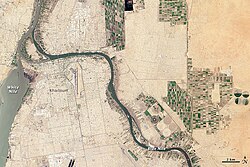
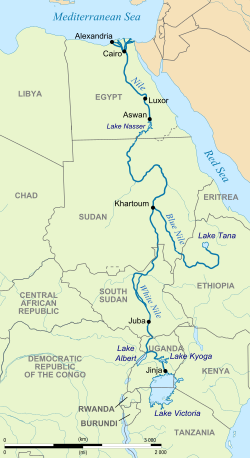
Known as the Triangular Capital, Khartoum serves as the political and economic heart of Sudan. Strategically positioned where the White Nile and Blue Nile converge, the city has evolved from a 19th-century military outpost into a sprawling urban center. Its history is a complex tapestry of colonial ambition, revolutionary struggle, and resilience in the face of modern conflict.
Key Facts
- Founded: 1821 by Isma'il Kamil Pasha.
- Geography: Located at the confluence of the White and Blue Nile rivers.
- Population: Estimated at 1,974,647 for the capital city (2025) and approximately 7,155,000 for the urban area (2023).
- Elevation: 381 meters (1,250 feet).
- Climate: Characterized by high temperatures, with record highs reaching 47.5°C.
Historical Evolution
Founding and Colonial Era
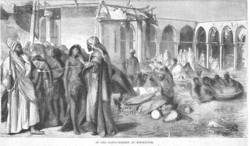
Khartoum was established in 1821 by Isma'il Kamil Pasha, the son of Egypt's ruler Muhammad Ali Pasha, approximately 24 km north of the ancient city of Soba. Initially serving as an outpost for the Egyptian Army, it became the seat of the colonial government in 1823. The city rapidly developed into a regional trade hub, acting as a vital stop on the caravan route between Ethiopia and Egypt, though it also became a focal point for the slave trade.
By 1882, the British Empire assumed control of the Egyptian government. However, the Mahdist War led to the Siege of Khartoum in 1884, resulting in the city's capture by Mahdist forces and the massacre of the Anglo-Egyptian garrison. British forces reoccupied the city in 1898, and it remained the administrative center of Anglo-Egyptian Sudan until 1956.
Modern Era and Conflict
The late 20th century saw Khartoum expand its infrastructure, including the completion of the first oil pipeline to Port Sudan in 1977. The city also became a sanctuary for hundreds of thousands of refugees from Chad, Eritrea, Ethiopia, and Uganda during the 1970s and 1980s, as well as those fleeing the Second Sudanese Civil War and the Darfur conflict.
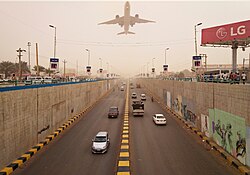
The 21st century has been marked by significant political volatility. In 2019, the city witnessed the Khartoum massacre, where Rapid Support Forces (RSF) violently dispersed peaceful protests. More recently, from 2023 to 2025, the city was a primary battleground in a civil war between the Sudanese Armed Forces and the RSF. This conflict caused widespread destruction to critical infrastructure, including the Khartoum International Airport, before the Sudanese armed forces recaptured the city in March 2025.
Geography and Climate
Khartoum is situated in a relatively flat region at an elevation of 381 to 385 meters. Its position is central to the Nile river system, making it a critical geographic node in Northeast Africa.
The climate is arid and hot. The city experiences extreme summer temperatures, with mean daily maximums often exceeding 40°C from April to June. Precipitation is sparse for most of the year, with the heaviest rainfall typically occurring in November.
| Metric | Lowest (Jan) | Highest (May/Jun) | Annual Average/Record |
|---|---|---|---|
| Mean Daily Max Temp | 31.0°C | 42.1°C | 37.3°C (Yearly Mean) |
| Mean Daily Min Temp | 16.1°C | 28.2°C | 23.4°C (Yearly Mean) |
| Average Precipitation | 0.0 mm | 53.1 mm (Jun) | Peak in Nov (120.4 mm) |
| Sunshine Hours (Daily) | 9.8 hrs | 7.3 hrs | ~9.1 to 10.0 hrs |
Urban Life and Infrastructure
Education and Culture
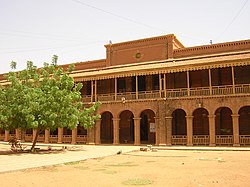
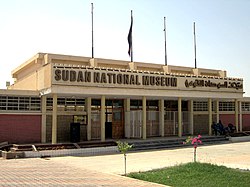
Khartoum is the academic center of Sudan, hosting the country's top educational institutions, most notably the University of Khartoum. The city's cultural landscape is enriched by the National Museum of Sudan and various botanical gardens.
Architecture and Landmarks
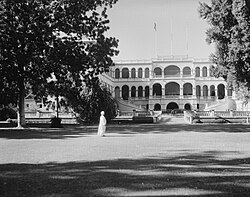
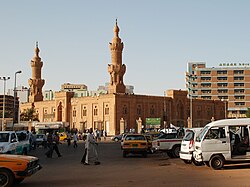
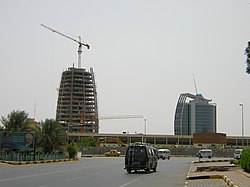
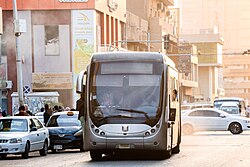
The city's skyline blends colonial history with modern development. Notable landmarks include the Presidential Palace (formerly Government House), the Great Mosque, and the PDOC Headquarters. Transportation within the city relies on a network of public buses and bridges, such as the El Mek Nimr Bridge and the Al Mansheiya Bridge.
Frequently Asked Questions
Why is Khartoum called the Triangular Capital?
The nickname refers to its unique geography at the confluence of the White Nile and the Blue Nile, which creates a triangular landmass where the city is situated.
When was Khartoum founded?
Khartoum was founded in 1821 by Isma'il Kamil Pasha as an outpost for the Egyptian Army.
What is the significance of the Al-Shifa pharmaceutical factory?
The factory was destroyed by U.S. cruise missile attacks on August 20, 1998, following the U.S. embassy bombings, based on accusations involving al-Qaeda. The ruins now serve as a tourist attraction.
How has the recent civil war affected the city?
Between 2023 and 2025, intense combat between the Sudanese Armed Forces and the Rapid Support Forces (RSF) led to widespread destruction of critical sites, including the international airport and the presidential palace, before the city was recaptured by the army in March 2025.
What is the population of the Khartoum urban area?
As of 2023 estimates, the urban population of Khartoum is approximately 7,155,000 people.