Kaiser: The History and Legacy of the German and Austrian Emperors
The term Kaiser is a title of immense historical weight, serving as the German designation for an emperor. While it is often associated with the rulers of the unified German and Austrian empires, its meaning extends beyond a simple political office. In the German language, a Kaiser is essentially any ruler whose rank exceeds that of a king (König). Throughout history, the title has evolved from a symbol of Roman continuity to a mark of national identity and, in some contexts, a subject of geopolitical tension.
Key Facts
- Etymology: Derived from the Roman title "Caesar."
- Austrian Empire: Ruled by the Habsburg dynasty from 1804 to 1918.
- German Empire: Ruled by the Hohenzollern dynasty from 1871 to 1918.
- Cultural Impact: The term persists in German idioms and culinary names, such as Kaiserschmarrn.
- Distinction: Different from the British "Emperor of India" (Kaisar-i-Hind), which stems from Persian roots.
Etymology and Linguistic Influence
The word Kaiser is directly derived from the title of the Roman emperors, Caesar. This lineage is shared with the Slavic title tsar. The original term comes from the personal name of the Julii Caesares, the clan of Gaius Julius Caesar. While some historical anecdotes suggest Caesar used his own name as a title, this is generally considered unlikely by historians.
Beyond politics, the word has permeated German daily life. The term Kaiserwetter (emperor's weather) refers to a cloudless, deep blue sky, a phrase attributed to the sunny weather on the birthday of Emperor Franz Joseph I. Similarly, the word is used to denote the highest quality or "best of its kind" in food and military units, such as the Kaiserschmarrn (a sweetened pancake) and the Kaiserjäger elite military units.
In modern sports, the nickname "Der Kaiser" has been bestowed upon icons like German football legend Franz Beckenbauer and Austrian ski champion Franz Klammer, both referencing the prestige of the Austrian imperial tradition.
The Austrian Empire and the House of Habsburg
The Habsburg family dominated the imperial landscape for centuries. From 1452 to 1806, they held the title of Holy Roman Emperor, viewing their rule as a direct continuation of the Roman Empire. When the Holy Roman Empire was dissolved in 1806, the House of Habsburg retained the imperial title, with the head of the house becoming the Kaiser of Austria starting in 1804.
The Austrian Kaiser was often viewed as an auctoritas—a special kind of authority. The emperor acted as a protector of various religious communities and ethnic minorities within the monarchy, leading to a strong sense of loyalty (kaisertreu) among Jews and Muslims within the empire.
In 1867, the empire transitioned into the dual monarchy of Austria-Hungary. Emperor Franz Joseph I, who reigned from 1848 to 1916, remains a symbol of a "Golden Age" in Central Europe, particularly in regions spanning from northern Italy to southern Poland.
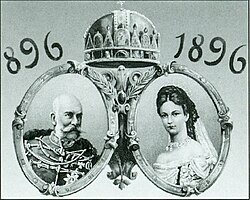
Kaisers of the Austrian Empire (1804–1918)
- Franz I (1804–1835)
- Ferdinand I (1835–1848)
- Franz Joseph I (1848–1916)
- Karl I (1916–1918)
The German Empire and the House of Hohenzollern
The unification of Germany in 1871 created a new imperial entity under the leadership of Prussia. There was significant debate regarding the correct title for the new monarch. While the first emperor preferred Kaiser von Deutschland (Emperor of Germany), Chancellor Otto von Bismarck pushed for Deutscher Kaiser (German Emperor).
This distinction was crucial; "German Emperor" implied the ruler was a German, but it did not claim dominion over all German-speaking lands. This avoided offending the Austrian Kaiser, as Austria remained a German-inhabited territory. The German Empire was led by the Hohenzollern dynasty until the end of World War I.
Kaisers of the German Empire (1871–1918)
- Wilhelm I (1871–1888)
- Friedrich III (1888) - Ruled for only 99 days.
- Wilhelm II (1888–1918) - The final German emperor.
Imperial Summary Table
| Feature | Austrian Empire | German Empire |
|---|---|---|
| Ruling Dynasty | Habsburg | Hohenzollern |
| Period | 1804–1918 | 1871–1918 |
| Key Figure | Franz Joseph I | Wilhelm II |
| Title Nuance | Protector of minorities/religions | Deutscher Kaiser (German Emperor) |
Frequently Asked Questions
What is the difference between a Kaiser and a König?
In German, a König is a king, while a Kaiser is an emperor. The title of Kaiser is used for rulers who are ranked above a king, often ruling over multiple kingdoms or a vast empire.
Where does the word Kaiser come from?
The word is derived from Caesar, the title used by Roman emperors, which originally came from the name of the Julii Caesares clan.
Why did the German Empire use the title "German Emperor" instead of "Emperor of Germany"?
Chancellor Bismarck chose Deutscher Kaiser to avoid claiming authority over all German territories, which would have caused a diplomatic conflict with the Austrian Empire.
Who was the longest-reigning Austrian Kaiser?
Franz Joseph I was the longest-reigning, ruling from 1848 to 1916.
Does the title Kaiser have any negative connotations?
Yes, in English-speaking countries, the term gained negative connotations during World War I, specifically in relation to Wilhelm II and anti-German sentiment of that era.