Judaism in Panama: A History of Resilience and Integration
The history of the Jewish people in Panama is a compelling narrative of survival, adaptation, and eventual triumph. From the clandestine practices of the colonial era to the highest levels of government in the modern republic, the Jewish community has left an indelible mark on the Isthmus. This journey reflects a transition from the shadows of persecution to a position of prominent civic leadership.
The Colonial Period: Faith in Secret
The earliest Jewish presence in Panama dates back to the initial Spanish and Portuguese migrations. During this time, many were anusim (crypto-Jews)—individuals who were forced to convert to Catholicism but continued to practice Judaism in secret. Due to the strict legal restrictions of the Spanish Crown and the Inquisition, open practice of the faith was impossible.
Researcher Elyjah Byrzdett categorizes this era into two distinct phases: the Castilian and the Portuguese periods.
The Castilian Period (1501–1580)
This era was defined by the arrival of crypto-Jews of Castilian origin who were instrumental in the colonization of the region. Byrzdett highlights the Pisa family as a primary example of a converso (a convert from Judaism to Christianity) lineage, using the name as a reference for many ancestral lines of crypto-Jews in the area.
The Portuguese Period (1580–1640)
Following the dynastic union of Portugal and Castile in 1580, Portuguese crypto-Jews arrived with greater organization and resources. They established a secret house of prayer on Calle Calafates, located behind the old Cathedral of Panama la Vieja. However, the Inquisition intensified its efforts to root out "Judaizers."
This period culminated in the "Great Conspiracy" of 1640, which dismantled much of the secret network. One notable case involved Sebastián Rodríguez, whose practice of Judaism was evidenced by the mark of circumcision, as certified by four doctors. Rodríguez and his associates, including Antonio de Ávila and González de Silva, are now commemorated in a dedicated room at the Museum of the Archaeological Center of Panama City.
Union to Colombia and the Revival of Faith
The landscape changed significantly when Panama joined Simón Bolívar's Federation. A new wave of Hebrew migration arrived under policies that promoted religious freedom, revitalizing the Mosaic faith on the Isthmus.
These immigrants served as vital intermediaries and translators for foreigners passing through the region, utilizing their fluency in German, Spanish, French, English, Dutch, and Papiamento. By the mid-19th century, both Sephardic (Judeo-Spanish) and Ashkenazi (Judeo-German) Jews arrived in larger numbers, attracted by the California Gold Rush and the construction of the transoceanic railroad.
The Republican Period and National Impact
The Jewish community played a pivotal role in the birth of the Republic of Panama. During the independence movement of 1903, members of the Kol Shearith Israel Congregation provided critical financial support to the Revolutionary Junta when promised funds from Philippe Jean Bunau-Varilla failed to arrive. This support was essential in ensuring the success of the separatist movement and protecting its leaders.
Throughout the 20th century, Panama continued to welcome diverse Jewish populations:
- World War I: Immigrants from the collapsing Ottoman Empire.
- Post-World War II: Refugees from Europe.
- 1948: Jews fleeing Arab countries during the exodus.
- Recent years: Immigrants from South American nations facing economic instability.
While small communities once existed in cities like Colon, David, Chitre, and Bocas del Toro, most families eventually migrated to Panama City for economic opportunities and education, concentrating the community in the capital.
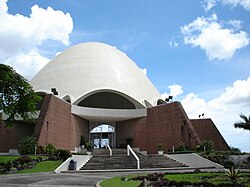
Key Facts
- Population: The current Jewish community consists of approximately 15,000 to 17,000 people.
- Political Influence: Panama is the only country outside of Israel to have had two Jewish presidents in the 20th century.
- Key Institutions: The Kol Shearith Israel synagogue is a central pillar of the community.
- Historical Role: Jewish financiers were crucial to the success of Panama's 1903 independence from Colombia.
| Period | Primary Group | Key Driver/Event |
|---|---|---|
| 1501–1640 | Castilian & Portuguese Crypto-Jews | Spanish/Portuguese Colonization |
| Mid-19th Century | Sephardic & Ashkenazi Jews | Railroad construction & Gold Rush |
| Early 20th Century | Ottoman Empire Jews | World War I / Imperial collapse |
| Post-1945 | European & Arab Jews | World War II & 1948 Exodus |
Political Leadership and Integration
The integration of Jews into Panamanian society is exceptionally deep, with active participation in diplomacy, government, and trade. This is most evident in the presidency of the Republic. Max Delvalle served as vice president and later as president in the 1960s, famously noting that he and the president of Israel were the only two Jewish presidents in the world at the time. His nephew, Eric Arturo Delvalle, later served as president between 1985 and 1988.
Frequently Asked Questions
Who were the crypto-Jews in colonial Panama?
Crypto-Jews, or anusim, were individuals of Jewish descent who publicly converted to Catholicism to avoid persecution by the Spanish Crown and the Inquisition but continued to practice Judaism in secret.
How did the Jewish community help Panama achieve independence?
Members of the Kol Shearith Israel Congregation provided essential financial backing to the Revolutionary Junta in 1903, filling a funding gap that could have otherwise jeopardized the separatist movement.
Which Jewish presidents has Panama had?
Panama has had two Jewish presidents: Max Delvalle in the 1960s and his nephew, Eric Arturo Delvalle, who served from 1985 to 1988.
Where is the Jewish community primarily located today?
While Jewish communities once existed in various towns across the country, the population is now almost entirely concentrated in Panama City.
What are the two main Jewish traditions present in Panama?
The community includes both Sephardic (Judeo-Spanish) and Ashkenazi (Judeo-German) traditions, along with immigrants from the Ottoman Empire and Arab nations.