Joya de Cerén: Archaeological Insights into Maya Community Life
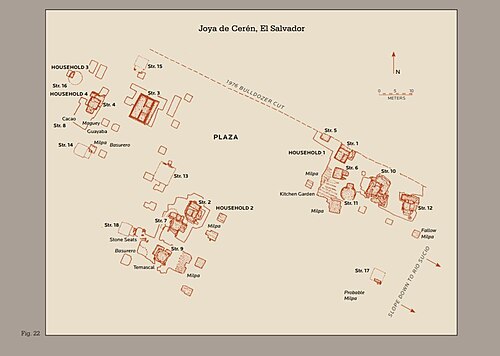
Joya de Cerén offers a rare glimpse into the daily lives of the Classic Maya period. Unlike many archaeological sites that focus on grand palaces or temples, this site preserves the intimate details of a residential community. The settlement is organized into three primary sectors—northeastern, southeastern, and northwestern—each containing a mix of domestic dwellings and specialized structures.
Archaeological surveys have identified 18 structures in total, ten of which have been fully excavated. To understand the function of these buildings, scholars analyze specific markers such as building orientation, platform heights, floor plans, construction techniques, and the presence of altars, caches, or burials to distinguish ceremonial buildings from non-ceremonial ones.
Key Facts
- Total Structures: 18 identified, with 10 excavated.
- Zoning: Divided into northeastern, southeastern, and northwestern areas.
- Agricultural Features: Presence of milpas (traditional Maya crop fields) and kitchen gardens.
- Ceremonial Hubs: Structures 10 and 12 served as centers for rituals and divination.
- Domestic Capacity: Households typically stored approximately 70 vessels for cooking and serving.
The Layout of the Community
The site is characterized by a blend of residential and agricultural spaces. The northwestern area contains Household 1 and Structures 1, 5–6, 10–12, and 17, featuring both milpas and kitchen gardens. The southeastern area houses Household 2 and Structures 2, 7, 9, 13, and 18, which include a temascal (a traditional steam bath), milpas, and a basurero (trash pit).
The northwestern area also encompasses Households 3-4 and Structures 3–4, 8, and 14-16. This sector is notable for its fruit trees, milpas, and an additional basurero, illustrating the self-sufficient nature of the community.
Ceremonial and Ritual Spaces
Structure 10: The Festival Center
Structure 10 is a complex, multi-roomed building with numerous corridors. Archaeologists believe it was used for community festivals. Evidence for this includes decorated vessels and a red painted deer with a twine headdress, both associated with harvest and fertility rituals. The discovery of vessels filled with achiote seeds suggests that a volcanic eruption may have interrupted an active ceremony.
The building's layout was functional: the north corridor was dedicated to food preparation, while the east corridor served as a storage area for various vessels.
Structure 12: The Diviner's Space
Located just 5 meters from Structure 10, Structure 12 was designed to restrict and direct traffic via a doorway and two lattice windows. This building was also tied to religious activities, specifically divination. In the niche of an earthen bench, archaeologists found a "supernatural tool kit" consisting of ceramic figurines, shell fragments, beans, and antlers.
Scholars infer that a diviner performed rituals in the back rooms and communicated through a window in the west room.
Domestic Life and Support Systems
Structure 1, also referred to as Household 1, provides a clear example of the service relationship between domestic and ceremonial spaces. It is believed that the kitchen in Structure 1 was used for the production of masa (corn dough), providing the necessary supplies for ceremonies held in Structures 10 and 12. This is supported by the presence of multiple metates (stone grinding slabs).
To differentiate between ritual and domestic use, researchers analyzed the wear on hearths. Furthermore, the use of phosphorus detection and heavy metal extraction revealed that each household maintained about 70 vessels for cooking and serving, primarily concentrated in the kitchen and midden (waste heap) areas.
| Structure | Primary Function | Key Findings/Features |
|---|---|---|
| Structure 1 | Domestic/Service | Masa production, metates, high vessel count. |
| Structure 10 | Community Festivals | Achiote seeds, deer headdress, fertility rituals. |
| Structure 12 | Divination | Lattice windows, figurines, antlers, shell fragments. |
Frequently Asked Questions
How do archaeologists distinguish ceremonial buildings from domestic ones?
They examine several factors, including the building's orientation, the height of the platforms, floor plans, construction techniques, and the presence of specific items like altars, caches, and burials.
What evidence suggests a ceremony was interrupted at Joya de Cerén?
The discovery of vessels filled with achiote seeds associated with ceremonial objects in Structure 10 suggests that the volcanic eruption occurred during a ritual.
What was the purpose of the "tool kit" found in Structure 12?
The kit, containing antlers, beans, shell fragments, and ceramic figurines, is interpreted as a supernatural tool kit used by a diviner for religious activities.
What was the relationship between Structure 1 and the ceremonial buildings?
Structure 1 likely served a support role, using its kitchen and metates to produce masa for the festivals and rituals taking place in Structures 10 and 12.
How many vessels did a typical household at the site possess?
Based on phosphorus detection and heavy metal extraction, archaeologists found that each household stored approximately 70 vessels for cooking and serving food and drinks.