Josep Maria de Sagarra: The Versatile Voice of Catalan Literature
Josep Maria de Sagarra i de Castellarnau was a towering figure in 20th-century Catalan letters. A prolific writer, translator, and playwright, Sagarra blended his noble heritage with a deep commitment to the Catalan language, producing a body of work that spanned poetry, novels, and drama. Born in Barcelona in 1894, he became one of the most popular literary figures of his era, filling a cultural void left by previous masters of Catalan literature.
Early Life and Academic Foundations
Born into a family of the Catalan nobility, Sagarra was the son of Fernando de Sagarra i de Siscar, a noted historian and sigilógrafo (an expert in the study of seals). His early education took place at a Jesuit high school, followed by law studies at the University of Barcelona. While he initially intended to pursue a career in diplomacy, his passion for the arts quickly took precedence.
Sagarra's literary ascent began early; at just 18 years old, he won a poetry prize at the Floral Games. This success paved the way for a multifaceted career in journalism, where he served as a theatrical critic and a correspondent in Germany, contributing frequently to publications such as La publicidad and Mirador.
A Literary Legacy in Poetry and Theatre
Though he excelled in journalism, Sagarra's heart lay in literature, which he wrote exclusively in Catalan. His poetry was often inspired by ancient legends and the popular chansonnier (a collection of songs or the poets who wrote them), earning him a level of popularity comparable to legendary figures like Verdaguer and Maragall.
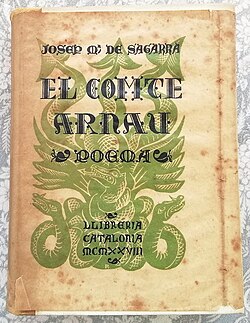
One of his most significant poetic achievements is the long epic poem El comte Arnau, written in heroic verse and published in 1928.
In the realm of theatre, Sagarra was equally influential. His dramatic works ranged from comedies to serious plays, many of which were later adapted for cinema, including El cafè de la Marina and La herida luminosa. The latter earned him the National Prize of Theatre in 1955.
Translations and Academic Honors
Sagarra was not only a creator but also a bridge between cultures. He translated some of the world's most revered literary works into Catalan, including Dante's Divine Comedy and the plays of Shakespeare, Molière, and Gogol.
His contributions to culture were recognized through memberships in several prestigious institutions, including the Institute of Catalan Studies, the Academy of the Good Letters, and the General Council of Authors of Spain. He was also a member of the Board of the Big Cross of Alfonso X the Wise.
Key Facts
- Full Name: Josep Maria de Sagarra i de Castellarnau.
- Lifespan: March 5, 1894 – September 27, 1961.
- Primary Language: Catalan.
- Major Award: National Prize of Theatre (1955) for La Ferida Luminosa.
- Notable Translation: Dante's Divine Comedy.
- Final Resting Place: Montjuïc Cemetery, Barcelona.
Summary of Major Works
| Genre | Notable Titles | Year/Detail |
|---|---|---|
| Poetry | El comte Arnau | 1928 (Heroic verse) |
| Novels | Vida privada | 1932 (Joan Crexells Award) |
| Theatre | La herida luminosa | 1954 (National Prize) |
| Theatre | El cafè de la Marina | 1933 (Adapted to cinema) |
| Translation | Divina Comèdia | 1950 (Dante) |
Frequently Asked Questions
What was Josep Maria de Sagarra's primary language of writing?
Sagarra wrote his literary works, including his poetry and plays, exclusively in Catalan.
Which of his plays won a national award?
He won the National Prize of Theatre in 1955 for his work La Ferida Luminosa.
Did Sagarra translate foreign authors?
Yes, he translated the works of Dante, Shakespeare, Molière, and Gogol into Catalan.
What was his professional background before becoming a full-time writer?
He studied law at the University of Barcelona and worked as a journalist, theatrical critic, and correspondent in Germany.
Were any of his works adapted for the screen?
Yes, both El cafè de la Marina and La herida luminosa were adapted into films.