Jonny Wilkinson: The Legendary Career of Rugby's Greatest Point Scorer
Few names in sporting history evoke as much precision and pressure as Jonny Wilkinson. As a master of the fly-half position—the primary playmaker and tactical kicker in rugby union—Wilkinson became the face of English rugby and a global icon. His career was defined by an obsessive dedication to perfection, a series of heartbreaking injuries, and a historic drop goal that changed the course of rugby history.
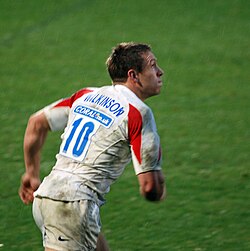
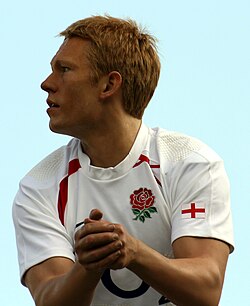
Wilkinson's journey began at the Newcastle School of Rugby, where he competed for a spot alongside international veterans. His rise was meteoric; by March 1998, at just 18 years old, he had entered the full England Test squad, making his debut as a wing against Ireland.
The Early Years and Rise to Prominence (1998–2002)

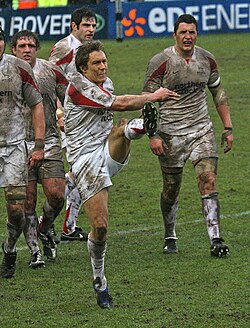
After surviving the grueling "Tour of Hell" in 1998, Wilkinson took over as the primary fly-half and goal kicker for the Newcastle Falcons. His international presence solidified during the 1999 Five Nations Championship and the 1999 Rugby World Cup, where he scored 32 points in a single match against Italy. Despite a disappointing quarter-final exit against South Africa, Wilkinson's trajectory remained upward.
By 2001, he was selected as the first-choice fly-half for the British Lions tour to Australia. While the tour was marked by a controversial intercepted pass and a serious leg injury, Wilkinson showed his resilience by returning for the final test to equal the Lions' best individual scoring total in a Test match with 18 points.
The Pinnacle: 2003 World Cup Glory
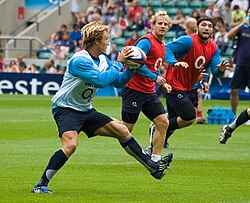
The year 2003 marked the zenith of Wilkinson's career. After leading England to a Six Nations championship and a Grand Slam, he became the youngest member of the squad heading into the Rugby World Cup in Australia. Throughout the tournament, his boot was England's most lethal weapon, scoring 113 points in total.
The climax came in the final against Australia. With the score tied at 17–17 in extra time, Wilkinson struck a legendary drop goal—a kick made by bouncing the ball on the ground before striking it—with only 26 seconds remaining. The 20–17 victory gave England its first-ever Rugby World Cup title and broke the Southern Hemisphere's long-standing dominance.
Post-World Cup Struggles and Injury Battles
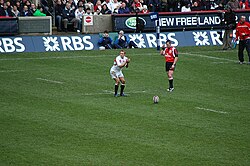
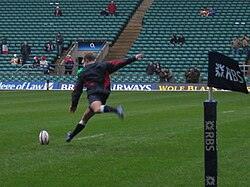
The physical toll of his success became apparent shortly after the final. A broken facet in his shoulder, followed by a haematoma in his arm and repeated medial knee ligament injuries, sidelined him for significant periods between 2004 and 2006. In a staggering 18-month window, he played fewer than 938 minutes of competitive rugby.
The Comeback and Record-Breaking Years (2007–2011)
Wilkinson's return to the international stage in 2007 was nothing short of spectacular. In the opening match of the Six Nations against Scotland, he scored 27 points, setting a new record for the Calcutta Cup. He eventually became the highest individual point scorer in the history of the Five/Six Nations with 421 points.
During the 2007 Rugby World Cup, he once again proved his worth, becoming the tournament's all-time leading point scorer with 231 points. Despite a loss in the final to South Africa, Wilkinson's legacy as a tactical genius was cemented. He later became the first English player to reach 1,000 Test points and holds the world record for the most international drop goals with 36.
The Toulon Era and Final Triumph
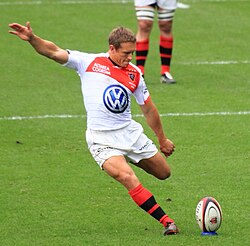
In the twilight of his career, Wilkinson moved to the French club Toulon, where he experienced a second golden age. He led the team to two consecutive Heineken Cup titles in 2013 and 2014. In the 2013 tournament, he was named the ERC European Player of the Year, maintaining a perfect record of 17 from 17 place kicks during the knockout stages.
His final professional match took place on May 31, 2014, in the Top 14 Final against Castres. After leading Toulon to an 18–10 victory, Wilkinson retired from the game to a standing ovation, with supporters from both teams singing "God Save the Queen" in his honor.
Key Facts
- World Cup Hero: Kicked the winning drop goal in the 2003 Rugby World Cup Final.
- Points Record: Became the first English player to score 1,000 Test points.
- Drop Goal King: Holds the world record for international drop goals with 36.
- Club Success: Won two consecutive Heineken Cups (2013, 2014) with Toulon.
- Individual Honors: Named 2003 IRB International Player of the Year and BBC Sports Personality of the Year.
| Category | Achievement / Detail |
|---|---|
| Primary Position | Fly-half |
| Major International Title | Rugby World Cup (2003) |
| World Cup Points | 231 (All-time record at the time) |
| Club Titles (Toulon) | 2x Heineken Cup, 1x Top 14 |
| International Retirement | December 12, 2011 |
Frequently Asked Questions
What is a drop goal and why was it important for Wilkinson?
A drop goal is a method of scoring three points by intentionally dropping the ball and kicking it as it bounces. Wilkinson is the world record holder for international drop goals, most famously using one to win the 2003 World Cup Final.
Which clubs did Jonny Wilkinson play for?
Wilkinson spent the first part of his career with the Newcastle Falcons in England and the latter part of his career with Toulon in France.
How many points did he score in the 2003 World Cup?
Wilkinson was the tournament's leading points scorer in 2003, accumulating a total of 113 points.
What injuries impacted his career the most?
His career was severely disrupted by a succession of injuries, including a broken facet in his shoulder, a lacerated kidney, and multiple tears of the medial knee ligament.
When did he officially retire from rugby?
He retired from Test Rugby in December 2011 and played his final professional club match for Toulon on May 31, 2014.