Heineken Cup Automatic Qualification Rules
Before the 2009–10 season, the Heineken Cup served as the premier competition for European rugby union clubs. To ensure a high standard of competition, the tournament utilized a rigorous automatic qualification system that drew the best teams from the top professional leagues across Europe.
The competition structure began with a pool stage consisting of 24 teams divided into six pools of four. After six rounds of matches, the six pool winners and the two best-performing runners-up advanced to the knockout stages to compete for the title.
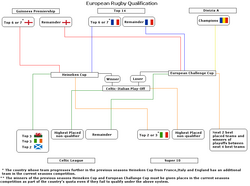
Key Facts
- Total Teams: 24 clubs participated in the pool stages.
- Qualifying Leagues: Celtic League, Guinness Premiership, Super 10 (later Top 12), and Top 14.
- Knockout Format: Eight teams qualified for the knockout rounds.
- Automatic Entry: The European Challenge Cup winner earned an automatic spot.
Allocation of Pool Stage Places
The 24 available spots were distributed based on national performance and league standings. The first 22 places were allocated to specific countries as follows:
- England: 6 teams, determined by performance in the Guinness Premiership and the Anglo-Welsh Cup.
- France: 6 teams, determined by performance in the Top 14 Championship.
- Ireland: 3 teams, determined by performance in the Celtic League.
- Wales: 3 teams, determined by performance in the Celtic League.
- Scotland: 2 teams, based on participation in the Celtic League.
- Italy: 2 teams, determined by performance in the Eccellenza (the top tier of Italian rugby).
The Final Qualification Spots
Beyond the initial 22 allocations, the remaining two spots were decided through specific performance criteria. The 23rd team was awarded to either England, France, or Italy, depending on which country had a team progress the furthest in the previous season's Heineken Cup.
The 24th and final qualifier was decided via the Italo-Celtic play-off, a match specifically designed to determine the last entry into the tournament.
Qualification Summary Table
| Country | Number of Teams | Qualification Criteria |
|---|---|---|
| England | 6 | Guinness Premiership & Anglo-Welsh Cup |
| France | 6 | Top 14 Championship |
| Ireland | 3 | Celtic League |
| Wales | 3 | Celtic League |
| Scotland | 2 | Celtic League Participation |
| Italy | 2 | Eccellenza |
| Variable | 1 | Previous season's furthest progressing team (ENG, FRA, ITA) |
| Variable | 1 | Italo-Celtic play-off |
Frequently Asked Questions
How many teams qualified for the knockout stages?
Eight teams progressed to the knockout stages: the six winners of the pools and the two runners-up with the best overall records.
Which leagues provided teams for the Heineken Cup?
Teams qualified from the Celtic League, Guinness Premiership, Super 10 (now Top 12), and the Top 14.
What happened to the winner of the European Challenge Cup?
The winner of the European Challenge Cup received an automatic place in the Heineken Cup, though this spot was taken from their own country's existing allocation.
How was the 24th team decided?
The final spot was determined by the result of the Italo-Celtic play-off.
How was the 23rd spot allocated?
The 23rd spot was given to the country (England, France, or Italy) that had the team progress the furthest in the Heineken Cup during the previous season.