Jongno: A Journey Through Seoul's Historic Bell Street
Stepping onto Jongno is like walking through the living history of South Korea. As one of the oldest major east-west thoroughfares in Seoul, this iconic trunk road serves as a vital artery connecting the grandeur of Gwanghwamun Plaza to the bustling energy of Dongdaemun. Known literally as "Bell Street," its name is derived from the historic Bosingak belfry, a landmark that has anchored this district for generations.
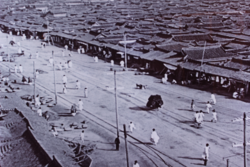
Located in the heart of Downtown Seoul, Jongno is much more than a mere transit route. It is a premier cultural, historical, and financial hub where ancient traditions meet modern urban life. The area is so densely packed with shops, stores, and groceries that in the Korean language, the term "Jongno" is often used colloquially to signify a "Town Square."
Key Facts
- Meaning: The name Jongno translates to "Bell Street."
- Route: It is part of National Route 6.
- Major Landmarks: Includes Bosingak belfry, Jongmyo royal ancestral shrine, and Dongdaemun.
- Connectivity: Serviced by Seoul Subway Lines 1, 3, and 5.
- Cultural Hub: Home to Insadong-gil and major bookstores like Kyobo Book Centre.
Historical and Cultural Landmarks
The length of Jongno is dotted with sites that define the identity of Seoul. Travelers can find the Bigak pavilion at Sejongno and the serene Tapgol Park (also known as Pagoda Park). For those interested in spiritual and royal history, the Jongmyo royal ancestral shrine stands as a testament to Korea's dynastic past.
At the eastern terminus of the road lies Dongdaemun, more formally known as Heunginjimun. As one of the four original gates of old Seoul, it marks a significant historical boundary. Nearby, the massive Dongdaemun Market offers a premier wholesale and retail shopping experience, surrounding the Dongdaemun Stadium and the Dongdaemun History & Culture Park area.
Arts, Culture, and Entertainment
Jongno has long been a center for Korean performing arts and cinema. The Sejong Center for the Performing Arts, a renowned multi-purpose theater, sits near the intersection of Jongno and Sejongno. For film enthusiasts, the area around Jongno 3-ga Station is legendary, housing the oldest cinema in Korea, Dansungsa (established in 1907), alongside the Piccadilly Cinema (1958) and Seoul Cinema (1978).
Modern entertainment also finds a home here. LoL Park, a dedicated esports and recreational facility, is located within the Gran Seoul office building, showcasing the district's evolution into a tech-savvy metropolis.
Shopping and Modern Amenities
Whether you are looking for traditional crafts or modern literature, Jongno delivers. Insadong-gil, accessible from Jongno 3-ga, is a famous street renowned for its traditional galleries, souvenir shops, and local restaurants. For book lovers, the district hosts some of Korea's largest bookstores, including the Kyobo Book Centre, Youngpoong Bookstore, and Bandi & Luni's Bookstore.
For a bird's-eye view of the city, the 33-story Jongno Tower offers a restaurant and bar on its top floor, providing sweeping views of the district and the wider Seoul skyline. If you prefer a stroll through narrow, atmospheric paths, Pimatgol is a well-known alley located just north of the Jongno 1, 2, and 3-ga sections.
| Category | Key Locations / Details |
|---|---|
| Subway Access | Lines 1, 3, and 5 (Gwanghwamun, Jongno 3-ga) |
| Major Gates | Dongdaemun (Heunginjimun) |
| Cultural Sites | Jongmyo Shrine, Bosingak, Tapgol Park |
| Shopping | Dongdaemun Market, Insadong-gil, Kyobo Book Centre |
| Nature/Water | Cheonggyecheon (one block south) |
Frequently Asked Questions
What does the name "Jongno" mean?
Jongno literally translates to "Bell Street," a name inspired by the Bosingak belfry located in the area.
How can I get around the Jongno area?
The area is highly accessible via the Seoul Subway system. Jongno 3-ga Station provides access to Lines 1, 3, and 5, while Gwanghwamun Station serves the western end via Line 5.
Where can I find traditional Korean crafts?
Insadong-gil, which is directly accessible from Jongno 3-ga, is the most famous street for traditional galleries, souvenir shops, and cultural attractions.
Is there a place to see a view of the whole city?
Yes, the top floor of the 33-story Jongno Tower features a restaurant and bar that offers famous views of Jongno and other parts of Seoul.
What is Dongdaemun?
Dongdaemun, or Heunginjimun, is one of the four historic gates of old Seoul and is located at the eastern end of the Jongno thoroughfare.