Johnny "Guitar" Watson: The Flamboyant Pioneer of Funk and Blues
John Watson Jr., known to the world as Johnny "Guitar" Watson, was more than just a musician; he was a master of reinvention. Over a recording career that spanned four decades, Watson evolved from a teenage jump blues prodigy into a funk icon, blending technical brilliance with a larger-than-life stage persona. His influence stretched across genres, impacting everyone from rock legends like Frank Zappa to soul powerhouses like Etta James.
Key Facts
- Active Years: 1952–1996.
- Genres: Rhythm and blues, funk, and soul.
- Signature Style: A flamboyant showman known for playing without a pick and wearing ostentatious clothing.
- Highest Charting Single: "A Real Mother for Ya" (1977).
- Major Influence: Cited as a primary inspiration by Frank Zappa and a model for Etta James's ballad style.
Early Life and Musical Roots
Born in Houston, Texas, on February 3, 1935, Watson was immersed in music from a young age. While his father, John Sr., was a pianist who taught him the instrument, Watson was captivated by the electric guitar. He drew early inspiration from the sounds of T-Bone Walker and Clarence "Gatemouth" Brown. His grandfather, a preacher, also played guitar in church, though he famously warned Watson against playing "devil's music."
At age 15, Watson moved to Los Angeles with his mother. His natural talent quickly earned him wins in local talent shows, leading to work with jump blues bands—a high-energy style of blues—including Amos Milburn and Chuck Higgins's Mellotones. He performed as a vocalist, pianist, and guitarist, establishing himself in the West Coast's African-American juke joints.
The Rise of "Johnny Guitar"
Watson began recording for Federal Records in 1952 under the name Young John Watson. In 1954, after seeing the film Johnny Guitar starring Joan Crawford, he adopted the stage name that would define his career. That same year, he released "Space Guitar," an instrumental track that showcased his innovative and "off-the-wall" approach to the electric guitar.
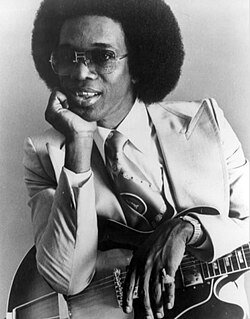
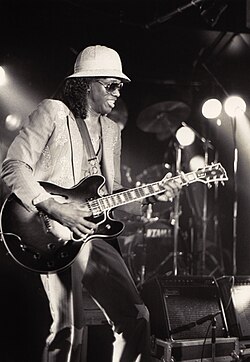
Watson's performance style was as aggressive as it was entertaining. He played without a pick, often "stressifying" his strings so intensely that he had to replace them once or twice during a single show. This swaggering personality was complemented by flashy attire and wild showmanship. In 1957, he released "Gangster of Love" on Keen Records; while not an immediate hit, it would later become his most famous song after being re-recorded in 1978.
Evolution into Funk and Soul
As the popularity of traditional blues waned in the 1960s, Watson pivoted toward the emerging soul and funk scenes. He traded his pompadour for broad-brimmed pimp hats, gold teeth, and oversized sunglasses. This visual transformation mirrored a musical shift toward a fusion of funk and blues.
In the 1970s, Watson achieved significant commercial success. His albums Ain't That a Bitch and A Real Mother for Ya (1977) defined this era. The latter featured his highest-charting single, "A Real Mother for Ya." Critics noted that while he may not have had the technical "chops" of some contemporaries, his music was perfect for the dance floor, characterized by an edgy lyrical style and deep grooves.
Later Years and Lasting Influence
After a brief withdrawal from the spotlight in the 1980s due to personal setbacks, Watson returned with the 1994 album Bow Wow, which earned a Grammy Award nomination. During this period, Watson claimed to have anticipated the birth of rap music, noting that "talking rhyming lyrics to a groove" had long been a staple of club music from Macon to Memphis.
Watson's impact on other artists was profound. Frank Zappa credited Watson's 1956 song "Three Hours Past Midnight" as the inspiration for him to become a guitarist. Steve Miller frequently referenced "Gangster of Love" in his own hits, including "The Joker." Etta James described Watson as her main model, stating that her entire ballad style was derived from imitating him.
Career Summary Table
| Category | Details |
|---|---|
| Primary Instruments | Electric Guitar, Vocals, Piano |
| Key Labels | Federal, King, DJM, Fantasy, Wilma |
| Notable Collaborators | Frank Zappa, Little Richard, Bo Diddley, George Duke |
| Defining Hits | "Gangster of Love", "A Real Mother for Ya", "Superman Lover" |
| Major Honors | Rhythm and Blues Foundation Pioneer Award (1995) |
Death and Legacy
Johnny "Guitar" Watson died of a heart attack on May 17, 1996, while performing on stage at the Ocean Boulevard Blues Cafe in Yokohama, Japan. He collapsed during the first verse of "Superman Lover." He was 61 years old. He is buried at Forest Lawn Memorial Park Cemetery in Glendale, California.
Frequently Asked Questions
What was Johnny "Guitar" Watson's most successful song?
His highest-charting single was "A Real Mother for Ya," released in 1977. However, "Gangster of Love" is widely considered his most famous song.
How did Watson influence Frank Zappa?
Frank Zappa stated that Watson's 1956 recording "Three Hours Past Midnight" inspired him to take up the guitar. Zappa later collaborated with Watson on several albums, including One Size Fits All.
What was unique about Watson's guitar playing style?
Watson played without a pick and used an "attacking" style that put immense stress on his guitar strings, often requiring him to change them multiple times during a single performance.
Did Johnny "Guitar" Watson contribute to the development of rap?
Watson claimed that he and others in the club scenes of Memphis and Macon anticipated rap by delivering rhyming lyrics over a groove, describing his singing as "talking in melody."
Which other famous musicians were influenced by him?
Beyond Frank Zappa, Etta James cited him as her primary model for her ballad style, and Steve Miller incorporated his "Gangster of Love" persona and lyrics into several of his own songs.