John Ross: The Scottish Missionary Who Shaped Korean and Chinese Christianity
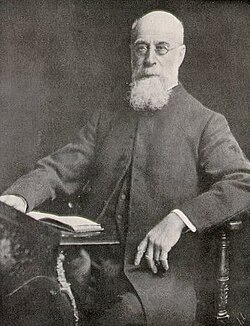
John Ross (1842–1915) was a distinguished Scottish Presbyterian missionary whose work left an indelible mark on the religious and linguistic landscapes of Northeast China and Korea. A native speaker of Scottish Gaelic, Ross combined his theological training with a passion for linguistics, leading to achievements that extended far beyond traditional ministry, including the translation of the first Korean Bible.
Born in Rarichie, Easter Ross, he was educated at Fearn School, the University of Glasgow, and the Theological Hall in Edinburgh. His journey into the Far East began in 1872 when he was dispatched by the Scottish United Presbyterian Mission to Northeast China, a region then known as Manchuria.
Missionary Work in Northeast China
Upon arriving in China, Ross first served in Yingkou before relocating to Mukden, known today as Shenyang. In 1889, he established the Dongguan Church (East Gate Church). Because Christian churches were prohibited from being built within the city walls at the time, Ross situated the church just outside the East Gate. Despite being damaged during the Boxer Rebellion, the church was rebuilt and continues to serve as a Protestant place of worship today.
In addition to his work in Shenyang, Ross expanded his reach by establishing a mission in Fushun, further embedding the Presbyterian faith in the region.
Contributions to the Korean Language and Bible
While stationed in China, Ross encountered Korean traders, which sparked his interest in the Korean language. This encounter led to one of his most significant historical contributions: the translation of the New Testament into Korean. Completed in 1887, this work represented the first Korean version of the Bible.
Beyond translation, Ross is credited with introducing spacing to Korean punctuation, a critical development in the evolution of the written Korean language that improved readability and standardization.
Key Facts
- Full Name: John Ross (Chinese name: 羅約翰).
- Primary Achievement: Translated the first Korean Bible and introduced spacing to Korean punctuation.
- Church Foundation: Established the Dongguan Church in Shenyang in 1889.
- Education: University of Glasgow and Theological Hall, Edinburgh.
- Botanical Honor: The iris species Iris rossii was named in his honor in 1877.
- Literary Works: Authored History of Corea, Ancient and Modern and The Manchus.
Academic and Literary Legacy
Ross was not only a missionary but also a scholar of the regions he served. He authored several influential texts that provided Western audiences with insights into East Asian history and culture. His publications include a primer for learning Korean and detailed histories of the Manchu dynasty and the Korean peninsula.
| Year | Title | Subject |
|---|---|---|
| 1877 | Corean primer | Korean language lessons |
| 1891 | The Manchus, or The reigning dynasty of China | Rise and progress of the Manchu dynasty |
| 1891 | History of Corea, Ancient and Modern | Korean history, customs, and geography |
Personal Life and Final Years
Ross's personal life was marked by both tragedy and resilience. His first wife, Catherine, passed away in Manchuria on March 31, 1873, shortly after the birth of their son. He later remarried Isabella Strapp McFadyen, who lived until 1930.
John Ross returned to his native Scotland in 1910, where he remained active in the Scotland-China Society. He passed away in Edinburgh in 1915 and is buried in Newington Cemetery. Today, a plaque on the seafront at Balintore in Easter Ross commemorates his life and contributions.
Frequently Asked Questions
What was John Ross's most significant contribution to the Korean language?
John Ross is most famous for translating the first Korean version of the New Testament (completed in 1887) and for introducing the use of spacing in Korean punctuation.
Where is the Dongguan Church located?
The Dongguan Church, also known as the East Gate Church, is located in Shenyang (formerly Mukden), Northeast China. It was built outside the city walls because churches were not permitted inside at the time.
Which plant species is named after John Ross?
In 1877, John Gilbert Baker named the iris species Iris rossii in honor of John Ross.
What was the purpose of the "Corean primer"?
The Corean primer, published in 1877, provided lessons in the Korean language on ordinary subjects, using transliteration principles similar to those used in the "Mandarin primer."
When did John Ross return to Scotland?
John Ross returned to Scotland in 1910 and lived in Edinburgh until his death in 1915.