John Parkinson: The Last Great Herbalist and Pioneer of English Botany
In the transition between the medieval tradition of herbalism and the modern science of botany, one figure stands as a monumental bridge: John Parkinson. A man of immense scientific influence and horticultural skill, Parkinson served the highest levels of the English monarchy while documenting the natural world with unprecedented detail. His work helped transform how plants were understood, cultivated, and utilized for medicine in the 17th century.
Key Facts
- Lifespan: Born 1567; died Summer 1650 (aged 82–83).
- Royal Roles: Apothecary to James I and Royal Botanist to Charles I.
- Major Works: Paradisi in Sole, Paradisus Terrestris (1629) and Theatrum Botanicum (1640).
- Scientific Contribution: First to describe 33 native English plants and introduced the great double yellow Spanish daffodil to England.
- Legacy: The Central American genus Parkinsonia is named in his honor.
A Life of Science and Service
Born in 1567, likely in Yorkshire, John Parkinson moved to London at the age of 14 to begin his apprenticeship as an apothecary—a professional skilled in preparing and dispensing medicines. His expertise led him to become a founding member of the Worshipful Society of Apothecaries in December 1617, where he played a vital role in establishing medical standards, including the preparation of the Pharmacopœia Londinensis in 1618.
Parkinson's career reached its zenith through his connections to the royal court. He served as apothecary to King James I and later became the Royal Botanist to King Charles I. Beyond his official titles, he was a highly respected gardener, maintaining a botanical garden at Long Acre in Covent Garden, near what is now Trafalgar Square. His garden served as a hub for exchanging knowledge with prominent botanists across England and Continental Europe.
The Pursuit of New Species
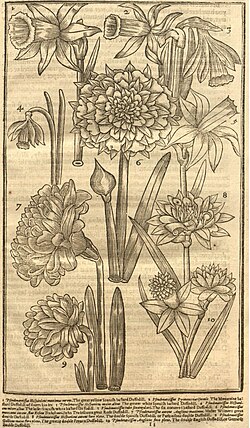
Parkinson was not merely a cataloger of known plants; he was an active seeker of new varieties. In 1607–1608, he financed a plant-hunting expedition led by William Boel to Iberia and North Africa. Through these efforts, he introduced seven new plants to England. Most notably, he was the first gardener in England to successfully grow the great double yellow Spanish daffodil (*Pseudonarcissus aureus Hispanicus flore pleno*), a variety he claimed to have raised himself in his own garden.
Monumental Literary Contributions
Parkinson is best remembered for two seminal texts that defined the botanical landscape of his era. These works combined scientific observation with beautiful artistry, making them essential for both doctors and gardeners.
Paradisi in Sole, Paradisus Terrestris (1629)
Often referred to as his "Speaking Garden," this work is considered one of the earliest important treatises on horticulture published in England. It focuses on the proper cultivation of plants and is celebrated for its delightful, literary style. The book features 108 full-page plates illustrating nearly 800 plants, many of which were original woodcuts by the Swiss artist Christopher Switzer.
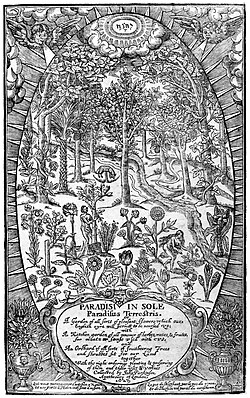
The work was dedicated to Queen Henrietta Maria, whom Parkinson helped introduce to sophisticated horticultural circles. The illustrations provided a vivid "picture" of the English garden at the start of the 17th century.
Theatrum Botanicum (1640)
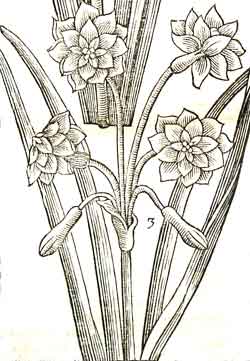
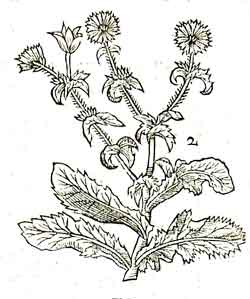
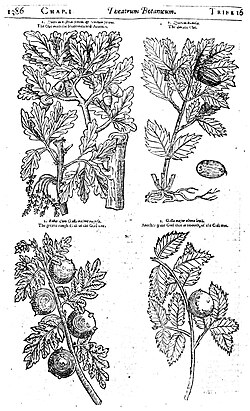
At the age of 73, Parkinson published his most ambitious work, Theatrum Botanicum (The Botanical Theatre). This massive 1,688-page treatise described over 3,800 plants and was the most complete English botanical text of its time. It served as a vital guide for apothecaries for over a century.
A significant scientific achievement of this book was its documentation of 33 native plants that had previously gone unrecorded or unnoticed, such as the Welsh poppy, the Strawberry Tree, and the Lady's Slipper. For this achievement, Charles I conferred upon him the title Botanicus Regis Primarius ("Royal Botanist of the First Rank").
Summary of Major Works
| Feature | Paradisi in Sole (1629) | Theatrum Botanicum (1640) |
|---|---|---|
| Primary Focus | Horticulture and plant cultivation | Comprehensive botanical and medicinal treatise |
| Scale | ~800 plants; 108 plates | ~3,800 plants; 1,688 pages |
| Key Contribution | Detailed descriptions of garden flowers | First description of 33 native English plants |
| Target Audience | Gardeners and enthusiasts | Apothecaries and scientists |
Frequently Asked Questions
What was John Parkinson's relationship with the English monarchy?
Parkinson held significant royal positions, serving as the apothecary to King James I and later as the Royal Botanist to King Charles I. He also played a role in introducing Queen Henrietta Maria to the world of horticulture.
Which famous flower is associated with Parkinson?
He is credited as the first gardener in England to grow the great double yellow Spanish daffodil (*Pseudonarcissus aureus Hispanicus flore pleno*), which he raised in his own garden.
How did Parkinson's religious beliefs affect his work?
As a Roman Catholic during a period of intense religious struggle between Protestants and Catholics, Parkinson often kept a low profile. His piety is reflected in his writing, where he viewed the botanical world as an expression of divine creation.
What is the significance of the genus Parkinsonia?
The Central American genus of leguminous trees Parkinsonia was named in honor of John Parkinson to commemorate his immense contributions to botany.
How did Parkinson's work influence later generations?
His books remained essential guides for over a century. Additionally, his work inspired the children's writer Juliana Horatia Ewing, whose story Mary's Meadow featured children inspired by reading Paradisi in Sole.