Jirisan: South Korea's Majestic Mainland Peak
Standing as a titan in the southern region of South Korea, Jirisan is a mountain of immense geographical and cultural significance. As the tallest mountain on the Korean mainland, it holds a prestigious position in the country's landscape, surpassed only by Jeju Island's Hallasan. Spanning across three provinces—North Jeolla, South Jeolla, and South Gyeongsang—it is home to the largest national park in South Korea.
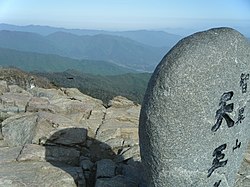
The mountain serves as a vital link in the Korean Peninsula's "spine," located at the southern terminus of the Sobaek and Baekdu-daegan mountain ranges. This complex system of ridges and valleys provides a diverse ecosystem and a profound sense of scale for the more than 280,000 visitors who flock to the park annually, particularly during the summer and autumn seasons.
Key Facts
- Highest Elevation: 1,915 m (6,283 ft) at Cheonwangbong peak.
- Location: Southern South Korea, spanning three provinces.
- Status: Tallest mountain in mainland South Korea.
- Biodiversity: Home to approximately 1,500 plant species and a resident population of ~100 Asian Black Bears.
- Cultural Heritage: Contains seven major Buddhist temples, including the renowned Hwaeomsa.
Geography and Major Peaks
Jirisan National Park is a vast expanse of wilderness. The highest point is Cheonwangbong, located within the South Gyeongsang province. The mountain's topography is defined by its ruggedness and its role as a primary component of the Sobaek mountain range.
Notable Summits
Beyond the main summit, the mountain features several significant peaks, including Samsinbong (also known as Three Spirits Peak). Reaching Samsinbong involves a strenuous hike from the Ssanggye Temple entry point. The route typically winds past Bul-il Falls, covering a total round-trip distance of approximately 18.4 km. While the ascent can be completed in about four hours at a steady pace, the descent is noted for being extremely steep.
| Feature | Details |
|---|---|
| Highest Point | Cheonwangbong (1,915 m) |
| Prominence | 1,696 m |
| Parent Range | Sobaek Mountains |
| Coordinates | 35°20′13″N 127°43′50″E |
| Climbing Style | Hiking |
Culture, History, and Folklore
Jirisan is deeply intertwined with Korean spiritual life. The mountain hosts seven major Buddhist temples, the largest being Hwaeomsa. This temple is a repository of national treasures, particularly stone artworks dating from 600–900 CE. Additionally, the Cheonghak-dong (Azure Crane Village) alpine valley contains the Samseonggung (Three Sages Palace), a site dedicated to one of Korea's foundational myths.
Local folklore adds a layer of mystery to the landscape, particularly in Baemsagol Valley. Legend tells of a temple called Songnimsa that once practiced a ritual involving a monk and an imugi—a legendary serpent that failed to transform into a dragon. The valley's name, which translates to the valley where the imugi died, stems from this ancient tale.
Modern History
The mountain also holds a somber place in modern history. During the Korean War, North Korean troops occupied the region in 1950. Following the arrival of United Nations forces in 1951, North Korean guerrillas continued to operate within the mountains until 1955. This period of conflict is memorialized through the "Anti-Guerrilla Warfare Service Medal" and various cinematic works, such as the film Piagol.
Ecosystem and Biodiversity
The biological richness of Jirisan is nearly unparalleled in South Korea, second only to Mt. Halla. The park supports roughly 1,500 plant species, many of which are endemic (species found nowhere else). This botanical diversity includes several plants named specifically after the mountain.
In a significant conservation success, the Asian Black Bear, which was once nearly extirpated (locally extinct) from South Korea, has been successfully reintroduced to the area. There is currently a resident population of approximately 100 bears living within the park.
Scenic Highlights
Visitors often seek out the "ten scenic views" advertised by the region. These include:
- Sunrise from Cheonwang-bong peak
- Nogodan Sea of Clouds
- Piagol Autumn Leaves
- Royal Azalea Blossoming
- Chilseon Valley
- Buril waterfall
Frequently Asked Questions
What is the best time to visit Jirisan?
Summer and autumn are the most popular seasons for visiting the mountain due to the weather and scenic beauty, such as the autumn leaves in Piagol.
Is hiking Samsinbong difficult?
Yes, it is considered a strenuous day-hike. While the ascent takes about four hours, the descent is extremely steep, and hikers are advised to carry plenty of water as streams are only available beyond the temple grounds.
What makes Jirisan unique in South Korea?
Jirisan is the tallest mountain on the South Korean mainland and boasts the largest national park in the country, featuring immense biodiversity and significant Buddhist heritage.
Are there bears in Jirisan National Park?
Yes, there is a resident population of approximately 100 Asian Black Bears that have been successfully reintroduced to the park.
What is the significance of Hwaeomsa Temple?
Hwaeomsa is the largest and most well-known of the seven major Buddhist temples on Jirisan, housing several national treasures, primarily stone artworks from the 7th to 10th centuries.