Jichinsai: The Traditional Shinto Groundbreaking Ceremony
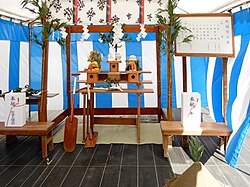
Before the first stone is laid or the first beam is raised in Japan, a sacred tradition often takes place to ensure the harmony of the project and the land. This ritual is known as Jichinsai (also read as tokoshizume no matsuri), a Shinto ceremony performed to request the protection and blessing of the local kami—the spirits or deities of the Shinto faith—when beginning the construction of new buildings. Whether the project is a private home, a corporate office, a factory, or a university, the Jichinsai serves as a spiritual foundation for the structure.
Key Facts
- Purpose: To request protection from local deities before construction begins.
- Scope: Used for various structures, including residential homes, offices, and universities.
- Core Elements: Includes purification, food offerings, and ritual digging.
- Regional Variations: Known as Chinchi-sai at the Ise Grand Shrine.
The Deities of the Land
The focus of the Jichinsai is the invocation of the divine. Traditionally, the ritual invokes the five Ikasuri no kami. However, in modern practice, the ceremony is frequently addressed more generally to the "kami who govern this land," leaving the specific deity unnamed. In other instances, the ubusunagami or ujigami—the great tutelary deities of the specific land or clan—are called upon to oversee the site.
At the Ise Grand Shrine, the terminology and frequency differ. Here, the rite is called Chinchi-sai. Unlike standard Jichinsai, it is performed twice: once at the start of the project and a second time upon completion, known as Ko-chinchisai.
The Ritual Process
The Jichinsai follows a precise sequence of events designed to purify the site and honor the spirits.
Purification and Invocation
The ceremony commences with ritual handwashing, followed by rites of purification. The priest then performs an invocation to call the kami to descend to the site. This is accompanied by shinsen (food offerings) and the recitation of a norito, which is a formal ritual prayer.
Preparing the Earth
Once the spirits are invoked, the physical site is purified through two specific actions performed by a young girl using ritually pure tools:
- Kusakari hajime: The act of cutting grass with a ritually pure sickle.
- Ugachizome: The act of digging a small hole with a ritually pure hoe.
Following these actions, an assistant buries an izumemono in the hole. This object is typically a human figure crafted from wire or an iron object, such as a piece of jewelry or a mirror. While placed during the ceremony, the object is only permanently interred once the entire ritual concludes.
Closing the Rite
The ceremony ends with a bow of thanks. The food and drink offerings are then dispersed, and a final rite is performed to send the kami back to their realm.
Summary of Jichinsai Ritual Elements
| Phase | Action/Term | Description |
|---|---|---|
| Opening | Norito & Shinsen | Ritual prayers and food offerings to invite the kami. |
| Site Clearing | Kusakari hajime | Cutting grass with a pure sickle. |
| Groundbreaking | Ugachizome | Digging a small hole with a pure hoe. |
| Offering | Izumemono | Burying a wire figure or iron object. |
| Closing | Farewell Rite | Sending the kami back and dispersing offerings. |
Frequently Asked Questions
What is the primary purpose of a Jichinsai?
The primary purpose is to request the protection of the local kami (deities) to ensure the safety and success of a new construction project.
Who performs the grass cutting and digging?
These specific tasks, known as kusakari hajime and ugachizome, are performed by a young girl using ritually pure tools.
What is an izumemono?
An izumemono is a ritual object buried in the ground during the ceremony, usually consisting of a wire human figure or an iron item like a mirror or jewelry.
How does the ceremony differ at the Ise Grand Shrine?
At the Ise Grand Shrine, the ritual is called Chinchi-sai and is performed twice: once at the start and once again (as Ko-chinchisai) after the project is completed.
What are shinsen and norito?
Shinsen are the food offerings presented to the deities, and norito are the formal ritual prayers recited during the ceremony.