Imperial Palace
The Imperial Palace (皇居, Kōkyo), literally meaning "Imperial Residence," serves as the primary residence of the Emperor of Japan. Located in the Chiyoda district of Tokyo, this expansive, park-like estate is a blend of modern administrative functions, sacred sanctuaries, and historical remnants. The palace grounds are built upon the site of the former Edo Castle, bridging the gap between Japan's feudal past and its modern constitutional monarchy.
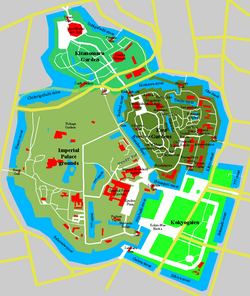
The estate is divided into several key areas, including the Fukiage Palace, where the Emperor resides; the Kyūden, used for official ceremonies; and the East Gardens, which are open to the public. Together with the surrounding Kokyo Gaien National Garden, the total area spans approximately 2.30 kilometers.
Key Facts
- Location: 1-1 Chiyoda, Chiyoda-ku, Tokyo, Japan.
- Historical Site: Built on the foundations of the old Edo Castle.
- Main Residence: The Fukiage Palace is the current home of Emperor Naruhito.
- Ceremonial Hub: The Kyūden hosts state functions and receptions.
- Public Access: The East Gardens are open to the public; other areas require reserved guided tours.
- Total Area: Approximately 2.30 km² including the Kokyo Gaien National Garden.
Historical Evolution
From Edo Castle to the Meiji Era
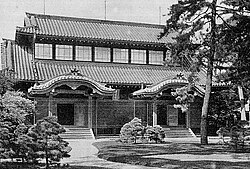
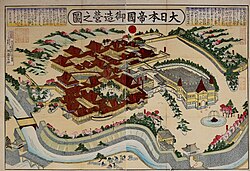
The site was originally Edo Castle, used by the Tokugawa shogunate. In 1869, Emperor Meiji moved into the palace, marking a shift in power. During the Meiji period, many original structures were lost to fire and earthquakes. The architecture of this era was eclectic, featuring traditional Japanese exteriors with European-style interiors, such as parquetry floors and Western furniture, contrasted with traditional tatami mats in residential areas.
War and Reconstruction
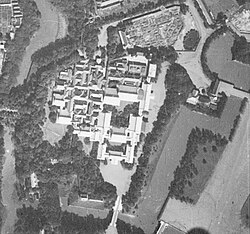
Between 1888 and 1948, the compound was known as the Palace Castle (Kyūjō). Much of the palace was destroyed during Allied firebombing raids in May 1945, with specific missions targeting the palace in July 1945. During the final days of the Pacific War in August 1945, Emperor Hirohito utilized an underground air-raid shelter, known as His Majesty's Library (Obunko Fuzokushitsu), to make the critical decisions leading to Japan's surrender.
The Modern Era
Following the wartime destruction, the area was renamed the Imperial Residence (Kōkyo) in 1948. A new main palace (Kyūden) was constructed between 1964 and 1968, designed by architect Junzō Yoshimura. The eastern portion of the grounds was converted into the East Garden and opened to the public in 1968.
The Modern Palace Complex
The Kyūden (Main Palace)
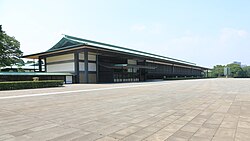
The Kyūden is the center for imperial court functions and state receptions. Completed in 1968, it consists of seven wings totaling 24,175 square meters. Built with steel-framed reinforced concrete, the design maintains traditional Japanese aesthetics with large gabled hipped roofs and domestic materials.
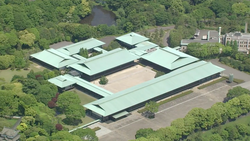
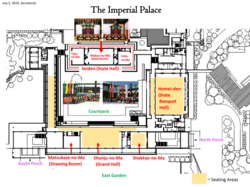
The complex includes several specialized halls:
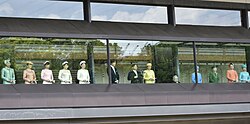
- Chōwaden Reception Hall: The largest structure in the palace, used for major public greetings and events.
- Matsu-no-Ma (Pine Chamber): The throne room where the Emperor receives the Prime Minister and appoints ambassadors or Ministers of State.
- Hōmeiden: The State Banquet Hall.
- Seiden: The State Function Hall.
Fukiage Garden and Residence
The Fukiage Garden serves as the private residential area for the Imperial Family. The current Fukiage Palace, designed by Shōzō Uchii and completed in 1993, is the residence of Emperor Naruhito and Empress Masako. This area also houses the Three Palace Sanctuaries (Kyūchū-sanden), which hold parts of the Imperial Regalia of Japan and serve a religious role in weddings and enthronements.
Gardens and Public Landmarks
The East Gardens
The East Gardens encompass the former Honmaru and Ninomaru areas of Edo Castle. This 210,000 m² area is a "Special Historic Relic" under the Cultural Properties Protection Law. It houses the Museum of the Imperial Collections and the Imperial Tokagakudo Music Hall.
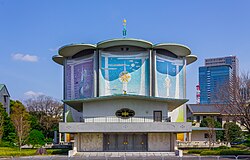
The Tōkagakudō (Peach Blossom Music Hall), completed in 1966, is an octagon-shaped ferro-concrete building decorated with mosaic tiles, built to commemorate the 60th birthday of Empress Kōjun.
Ninomaru Garden and Other Sites
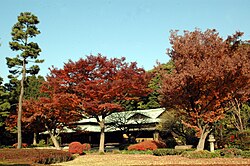
The Ninomaru Garden features 260 symbolic trees representing each prefecture of Japan. Other notable sites include the Suwa no Chaya, a reconstructed Edo-period teahouse, and the Kitanomaru Park to the north, which is home to the Nippon Budokan.
| Section | Primary Purpose | Key Feature |
|---|---|---|
| Kyūden | State functions and receptions | Chōwaden Reception Hall |
| Fukiage Palace | Private residence of the Emperor | Three Palace Sanctuaries |
| East Gardens | Public park and administration | Tōkagakudō Music Hall |
| Kitanomaru Park | Public recreation | Nippon Budokan |
Frequently Asked Questions
Can the general public visit the Imperial Palace?
The East Gardens are open to the public. The main grounds are generally closed, though reserved guided tours are available from Tuesday to Saturday, providing access to the Kyūden Totei Plaza. The public is also permitted entry on January 2 (New Year) and February 23 (Emperor's Birthday).
What is the difference between the Kyūden and the Fukiage Palace?
The Kyūden is the official palace used for state ceremonies, receptions, and government business. The Fukiage Palace is the private residence where the Emperor and Empress live.
What happened to the original Edo Castle?
Many of the original structures were removed during the Meiji period or destroyed by fire and earthquakes. Most of the remaining palace structures were destroyed during Allied bombing raids in 1945 before being rebuilt in a modernist style.
What is the significance of the Matsu-no-Ma?
The Matsu-no-Ma (Pine Chamber) is the throne room. It is the site of critical constitutional functions, including the appointment of the Prime Minister and the Chief Justice.