Jazz and Popular Music Glossary: Essential Terms for Musicians and Audiophiles
Whether you are reading a jazz songbook, analyzing a rock concert review, or diving into album liner notes, you will encounter a specialized vocabulary that describes how music is played, recorded, and amplified. This language blends technical engineering terms with artistic slang, spanning everything from the physics of sound reinforcement to the nuances of improvisational jazz.
From the "wall of sound" in heavy metal to the "squelchy" basslines of acid house, these terms provide the necessary context to understand the tools and techniques that shape modern music. This guide breaks down the essential terminology used by artists, engineers, and critics alike.
Key Facts
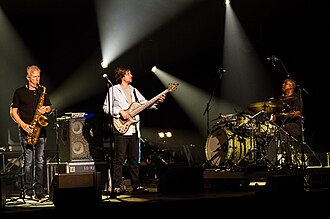
- Sound Reinforcement: Modern performances rely on PA (Public Address) systems to amplify both acoustic and electric instruments.
- Synthesis: Iconic machines like the Roland TB-303 and TR-808 defined the sound of electronic dance music and acid house.
- Recording: The "mixdown" is the critical final stage where multiple recorded tracks are blended into a stereo recording.
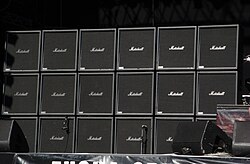
- Gear: Speaker cabinets are categorized by the number and size of their drivers (e.g., 4x12" refers to four 12-inch speakers).
- Technique: Terms like "double-time feel" and "half-time feel" describe rhythmic illusions where the perceived speed changes while the actual tempo remains constant.
Instruments and Specialized Gear
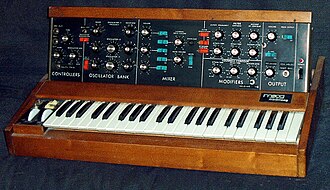
The tools of popular music range from traditional reed instruments to cutting-edge digital synthesizers. The accordion, for instance, is a free-reed instrument using a bellows system, common in Zydeco and hot jazz. In contrast, the clavinet is an electric clavichord that became a staple of funk music due to its percussive tone.
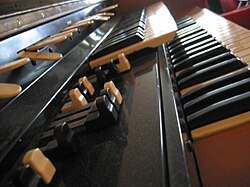
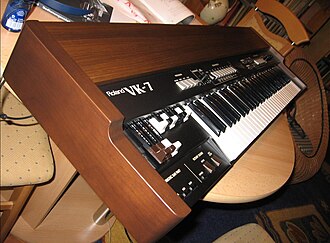
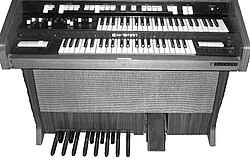
Keyboardists often use stage pianos—heavy-duty digital pianos with weighted keys designed for touring—or clonewheel organs, which are modern instruments designed to recreate the sound of vintage tonewheel organs like the Hammond.
Electric Guitars and Basses
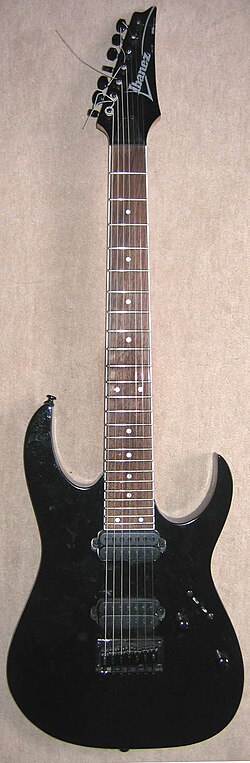
Electric instruments are often identified by their brand and model, such as the Stratocaster or the Telecaster. Bassists frequently use the P-bass (Precision bass) or J-bass (Jazz bass). Some genres require extended ranges, leading to the use of 7-string or 8-string guitars.
Amplification and Sound Reinforcement
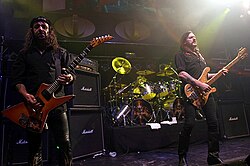
Sound reinforcement is the process of amplifying audio for a live audience. A central component is the cabinet (cab), a wooden or plastic enclosure for loudspeakers. These are often categorized by their configuration, such as a 4x12" cabinet commonly used in electric guitar systems.
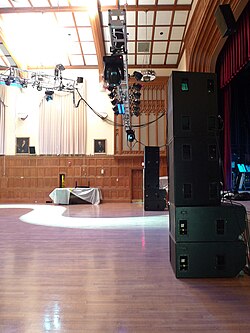
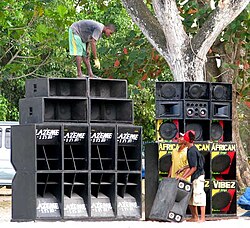
For the lowest frequencies, engineers use subwoofers (or "bass bins"), which reproduce sounds from 20 Hz to 200 Hz. These are essential for reggae, house music, and rave events where deep bass is required.
Signal Processing and Effects
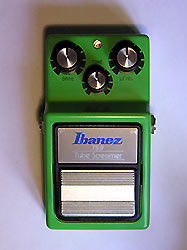
To shape the sound, musicians use effects units. A wah-wah pedal uses a rocking treadle to mimic the human voice, while overdrive pedals (like the Tube Screamer) add grit to the signal. Digital Signal Processing (DSP) allows modern mixers and amps to alter pitch and tone using digital algorithms.
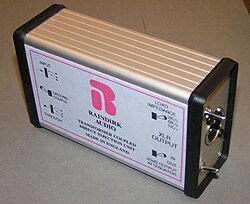
Another critical tool is the DI (Direct Injection) box. A passive DI box requires no external power, whereas an active DI box requires batteries or phantom power to convert a signal for a mixing console.
Recording and Production Techniques
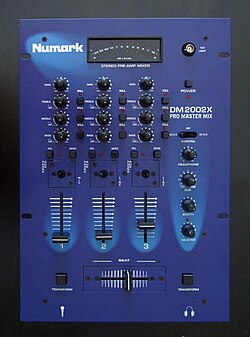
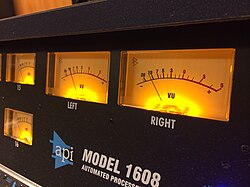
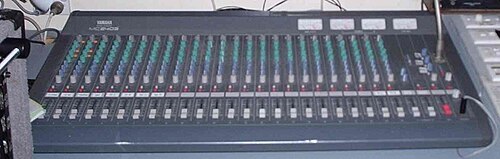
In the studio, the mixdown is the process of blending various tracks—vocals, guitars, and drums—into a final stereo output. To enhance a basic "bed track," producers may use sweetening, adding professional backup singers or orchestral strings to create a more polished sound.
Modern production often involves sampling, where a short snippet of a live performance or recording is reused in a new piece of music. This is a foundational technique in hip-hop and electronica.
Musical Theory and Performance Terms
Jazz and rock utilize specific terminology to describe harmony and rhythm. An altered dominant (alt dom) chord instructs musicians to use altered upper extensions, such as a sharp 11th or flat 13th. In avant-garde jazz, a soloist might be told to ignore changes, meaning they should improvise without following the rhythm section's chord progression.
Rhythmically, four on the floor refers to a bass drum pattern where every quarter note is struck, a hallmark of disco music. Meanwhile, syncopation involves displacing the beat to create a more rhythmic, engaging feel.
Performance Logistics
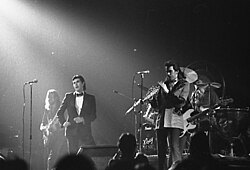
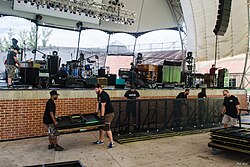
The physical setup of a show is handled by roadies, who carry gear and ready the stage. The front of house (FOH) refers to the main mixing area where the sound engineer manages the audio for the entire audience.
Summary of Common Equipment
| Equipment | Primary Function | Common Use Case |
|---|---|---|
| Subwoofer | Low-frequency reproduction (20-200 Hz) | Dance clubs, Reggae concerts |
| DI Box | Signal conversion for mixing consoles | Connecting instruments to PA systems |
| DSP | Digital alteration of tone and pitch | Modern mixers and keyboards |
| Wah-wah Pedal | Frequency filtering (voice-like effect) | 1970s Funk and Rock guitar |
| 4x12" Cabinet | Amplifying electric guitar signals | Hard rock and Metal stages |
Frequently Asked Questions
What is the difference between double-time and half-time feel?
Both are rhythmic illusions. In double-time feel, the rhythm section plays as if there are twice as many beats per bar, making the song feel faster without changing the actual tempo. In half-time feel, only beats one and three are played solidly, making the song feel slower while the actual duration remains the same.
What does "four on the floor" mean in music?
It is a studio and performance term describing a pattern where the bass drum (kick drum) is struck on every quarter note. This steady, driving beat is the defining characteristic of disco and much of modern electronic dance music.
What is a "mixdown" in recording?
A mixdown is the final stage of recording where all individual tracks (vocals, instruments, etc.) are blended and balanced into a two-channel stereo recording. A "remix" occurs when these same original tracks are given a new mixdown with different balances or effects.
What is the purpose of a DI box?
A Direct Injection (DI) box is used to connect a high-impedance instrument signal (like an electric guitar) to a low-impedance input (like a mixing console). Passive DI boxes operate without power, while active DI boxes require a power source.
What is "sweetening" in music production?
Sweetening is the addition of extra instruments or voices—such as orchestral strings or professional backup singers—to a basic "bed track" of drums, bass, and rhythm guitar to make the final recording sound more lush and polished.