Distortion and Overdrive: The Evolution of Gritty Tones in Music
In the world of music production, distortion and overdrive are essential signal processing techniques used to transform the clean sound of amplified instruments into something more aggressive. By increasing the gain—the input signal level—musicians create a "fuzzy," "growling," or "gritty" texture. While most famously associated with the electric guitar, these effects are also widely used with electric bass, synthesizers, Hammond organs, and electric pianos.
At its core, distortion occurs through a process called clipping. This happens when an audio signal is pushed beyond the maximum capacity of a circuit, effectively shearing off the peaks and troughs of the signal waves. This process adds sustain and introduces harmonic and inharmonic overtones, resulting in a compressed sound that can range from "warm" to "dirty." While the terms are often used interchangeably, distortion is generally considered a more extreme version of overdrive, while fuzz represents the most intense form of clipping.
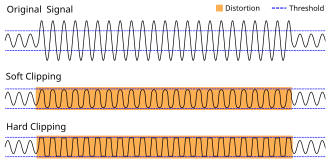
Key Facts
- Clipping is the technical process of shearing signal peaks to create distortion.
- Overdrive is a milder form of saturation, often associated with pushed vacuum tubes.
- Fuzz is an extreme distortion originally caused by faulty equipment.
- Valve (Tube) Amplifiers produce a "warm" sound due to the way they saturate.
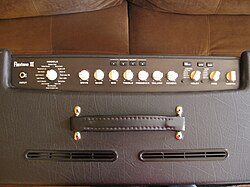
- Modern Emulation is achieved through digital amplifier modeling and software.
The History of Amplified Distortion
Early Accidental Discoveries
The earliest distorted tones were not intentional; they were the result of low-fidelity amplifiers being pushed beyond their design limits or sustaining damage. In 1935, Bob Dunn began experimenting with "dirty" tones, and by 1945, Junior Barnard used a rudimentary humbucker pick-up and small amp to achieve a "low-down and dirty" blues sound.
Many early blues guitarists, such as Elmore James and Buddy Guy, sought a rawness that mirrored the voices of singers like Muddy Waters. This often involved using powerful Valco "Chicagoan" pick-ups to achieve a fatter tone. By the early 1950s, musicians began "doctoring" their gear. For example, the 1951 recording of "Rocket 88" by Ike Turner and the Kings of Rhythm featured a distorted sound caused by a speaker cone damaged during transport.
The Pioneers of the "Dirty" Sound
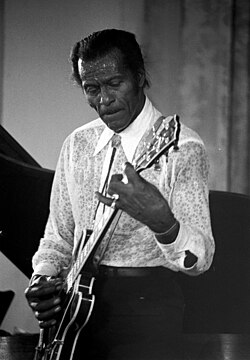
Willie Johnson and Guitar Slim further refined the use of overdriven overtones in the 1950s. Chuck Berry's 1955 hit "Maybellene" utilized a small valve amplifier to create warm overtones, while Pat Hare pushed his amplifier volume "all the way to the right" to create ferocious power chords.
In the late 1950s, Link Wray took experimentation further by manipulating vacuum tubes and poking holes in speaker cones with pencils. His influential 1958 tracks "Rumble" and "Rawhide" showcased a noisy, dirty sound combined with controlled feedback (the Larsen effect).
The Rise of Fuzz and Commercial Pedals
The Invention of Fuzz
The "fuzz" effect was discovered in 1961 by Grady Martin, who used a faulty preamplifier to record the song "Don't Worry." This accidental sound led engineers Glenn Snoddy and Revis V. Hobbs to create a dedicated circuit, which was sold to Gibson and released as the Maestro FZ-1 Fuzz-Tone in 1962.
Mainstream Adoption
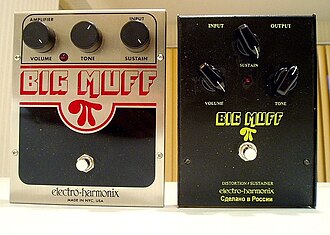
Fuzz became a cultural phenomenon in 1965 when Keith Richards used the Maestro FZ-1 for "(I Can't Get No) Satisfaction," causing the device to sell out globally. Other iconic pedals followed, including the Arbiter Group Fuzz Face and the Electro-Harmonix Big Muff Pi, used by Jimi Hendrix and Carlos Santana.
The Heavy Metal Foundation
By 1966, Jim Marshall began modifying amplifier circuitry to achieve louder, brighter sounds with fuller distortion. In the late 1960s and early 1970s, bands like Black Sabbath, Led Zeppelin, and Deep Purple combined high volumes with heavy distortion to forge the foundation of heavy metal.
Technical Approaches to Distortion
Valve Overdrive
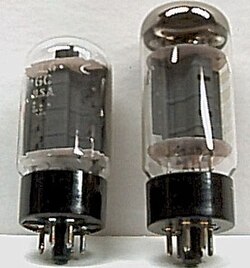
Valve (or tube) overdrive occurs when the vacuum tube enters the saturation region, where the plate current stops responding linearly to increases in grid voltage. This creates a smooth, compressed clipping effect.

Pre-amplifier vs. Power Amplifier Distortion
Distortion can be generated at different stages of the signal chain:
- Pre-amplifier Distortion: Common in modern amps with a "master volume" control. The preamp is pushed for distortion while the master volume keeps the overall output manageable.
- Power Amplifier Distortion: Created by overdriving the power valves. This produces a unique character and is often symmetric, generating odd-order harmonics. However, this method can potentially damage loudspeakers.
Modern Tools and Emulation
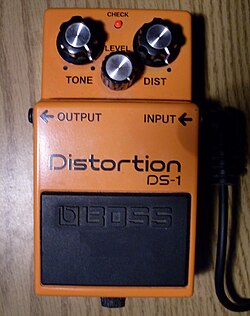
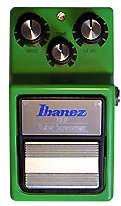
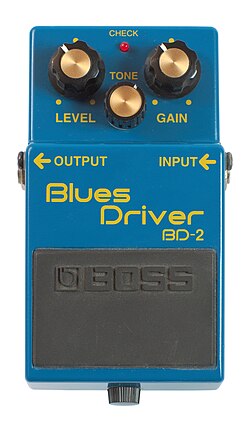
Today, musicians use a variety of tools to achieve these sounds, including overdrive pedals like the Ibanez TS9 Tube Screamer or the Boss BD-2 Blues Driver. Additionally, digital amplifier modeling allows users to emulate various classic amps and speakers via software or hardware.
Avoiding Unwanted Distortion
While distortion is a creative tool for instruments, it is often avoided in other contexts. Audio engineers use compression devices to prevent signal peaks from causing unwanted clipping, especially when amplifying vocals through PA systems.
| Effect Type | Intensity | Characteristic Sound | Common Source |
|---|---|---|---|
| Overdrive | Low to Medium | Warm, smooth, "tube-like" | Pushed preamp/power valves |
| Distortion | Medium to High | Gritty, aggressive, compressed | Clipping circuits/pedals |
| Fuzz | Extreme | Saturated, "square-wave," thick | Faulty gear/dedicated fuzzboxes |
Frequently Asked Questions
What is the difference between overdrive and distortion?
Overdrive is generally a milder form of clipping that mimics a tube amplifier being pushed to its limit, resulting in a warmer sound. Distortion is more extreme, providing a more aggressive and compressed tone.
How is "fuzz" different from standard distortion?
Fuzz is an extreme form of distortion that creates a very saturated, thick sound. It was originally discovered through faulty equipment, such as misaligned valves, and produces a more abrupt clipping of the waveform.
Can distortion damage my equipment?
While distortion pedals are safe, overdriving a power amplifier to extreme levels can potentially damage loudspeakers by pushing them beyond their physical limits.
What is clipping in audio terms?
Clipping occurs when an audio signal exceeds the maximum voltage a circuit can handle. This "clips" the tops and bottoms of the waveforms, transforming a smooth sine wave into something closer to a square wave, which creates the distorted sound.
What is amplifier modeling?
Amplifier modeling is a digital technology that uses software or hardware to emulate the electronic behavior and sonic characteristics of famous vacuum tube amplifiers and speakers.