Javanese Language: History, Dialects, and Cultural Significance
The Javanese language (Basa Jawa) is a rich and complex Austronesian language spoken primarily on the island of Java in Indonesia. With approximately 68 million speakers as of 2015, it is one of the most widely spoken regional languages in the world. Beyond Indonesia, the language has traveled across oceans, establishing presence in Suriname, the Netherlands, and New Caledonia.
Javanese is more than just a means of communication; it is a reflection of a deeply hierarchical society, featuring distinct speech levels that vary based on the social relationship between the speaker and the listener.

Key Facts
- Native Speakers: Approximately 68 million (2015).
- Language Family: Austronesian, specifically the Malayo-Polynesian branch.
- Official Status: Official language of the Special Region of Yogyakarta.
- Writing Systems: Latin script, traditional Javanese script, and Pegon (Arabic-based script).
- Standard Form: Surakartan Javanese is regarded as the modern standard.
Geographical Distribution
While centered in Central and Eastern Java, Javanese speakers are spread throughout the Indonesian archipelago. According to 1980 census data, the language was used daily in roughly 43% of Indonesian households.
| Indonesian Province | % of Provincial Population | Number of Speakers |
|---|---|---|
| Yogyakarta | 97.6% | 2,683,000 |
| Central Java | 96.9% | 24,579,000 |
| East Java | 74.5% | 21,720,000 |
| Lampung | 62.4% | 2,886,000 |
| North Sumatra | 21.0% | 1,757,000 |
Outside of Asia, a significant community exists in Suriname, where approximately 75,000 people speak a local variant known as Tyoro Jowo-Suriname. This variant has evolved through contact with Dutch, English, and Sranantongo.
Dialects and Linguistic Variations
Javanese is characterized by a wide array of dialects categorized by region. These include the Pesisir Lor (Northern Coast) dialects such as Tegal and Pekalongan, and the Ngapak dialects found in Banyumas and Cilacap.
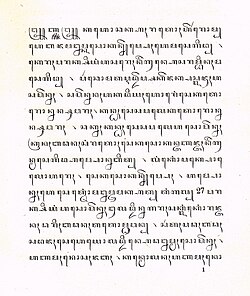
Standard and Refined Javanese
The dialect of Surakarta is widely considered the most refined and serves as the modern standard for the language. This version is often used in formal settings and traditional arts.
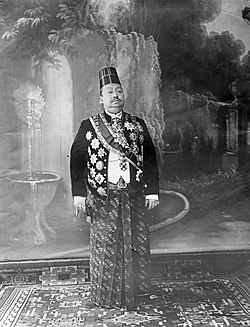
Regional Variations
- Western Java: Includes Banten and Cirebon dialects.
- Central Java: Encompasses the standard Surakarta/Solo and Yogyakarta forms, as well as the Ngapak variants.
- Eastern Java: Includes the Arekan (Surabaya/Malang) and Mataraman dialects, as well as the distinct Osing and Tengger languages.
Social Registers: Ngoko and Krama
One of the most striking features of Javanese is its system of speech registers. The language is divided into levels of formality to show respect and maintain social harmony.
- Ngoko: The informal register used between close friends, family members, or by a superior addressing an inferior.
- Krama: The formal register used to show respect to elders, strangers, or people of higher social status.
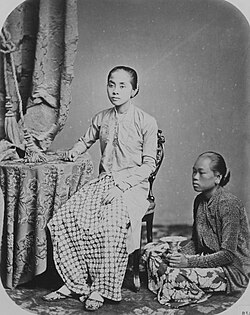
This linguistic duality extends to vocabulary. For example, the word for "eat" is mangan in Ngoko, but becomes nedha or dhahar in Krama.
Writing Systems
Javanese has been written in several scripts over the centuries. While the Latin alphabet is now common for daily use, the traditional Javanese script (Carakan) remains a vital part of cultural heritage.
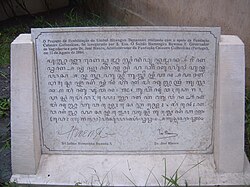
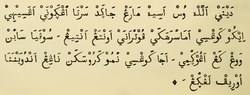
Additionally, the Pegon script—a variant of the Arabic script—is frequently used, particularly in religious contexts and Islamic boarding schools.
Frequently Asked Questions
Is Javanese the national language of Indonesia?
No, the national language is Indonesian. However, Javanese is a recognized regional language and is the official language of the Special Region of Yogyakarta.
What is the difference between Ngoko and Krama?
Ngoko is the informal level of speech used with peers or subordinates, while Krama is the formal level used to express respect to superiors or elders.
Where is Javanese spoken outside of Indonesia?
Javanese is spoken by descendant communities in Suriname, the Netherlands, and New Caledonia.
What are the primary writing systems used for Javanese?
Javanese is written using the Latin script, the traditional Javanese script, and the Pegon script (an Arabic-based variant).
Which dialect is considered the standard?
Surakartan Javanese, from the city of Surakarta, is regarded as the modern standard and the most refined dialect.