A Complex Legacy: The 2,000-Year History of Japan-Korea Relations
The relationship between Japan and the Korean peninsula is a profound tapestry of cultural exchange, economic trade, and intense military conflict. Spanning over two millennia, these interactions have shaped the geopolitical landscape of East Asia. While Korea has historically served as a vital conduit for transmitting continental Asian culture, technology, religion, and political ideas to Japan, the shared history is also marked by deep-seated tensions and scars from periods of colonial rule.
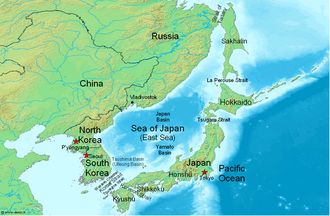
Key Facts
- Duration: Historical interactions have lasted for at least 2,000 years.
- Cultural Role: Korea acted as a primary channel for transmitting continental Asian culture and technology to Japan.
- Major Conflict: The Imjin War (1592–1598) remains a significant point of historical memory.
- Annexation: Japan officially annexed the Korean Empire in 1910.
- Modern Division: Post-WWII occupation led to the establishment of North and South Korea in 1945.
- Diplomatic Status: Japan and South Korea established relations in 1965, while Japan and North Korea lack formal diplomatic ties.
Pre-Modern and Early Modern Eras
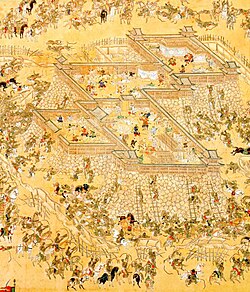
In the early centuries, the two regions engaged in various forms of contact. By the 16th century, relations were often defined by conflict, most notably during the Imjin War (1592–1598). This period of Japanese invasions remains a critical element in the historical consciousness of both nations.
The Tokugawa Era and Diplomatic Missions
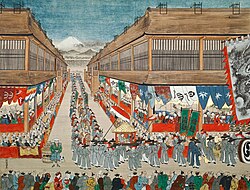
Following the wars, a period of stabilized relations emerged under the Tokugawa shogunate. In 1609, the Treaty of Giyu was concluded with the Sō clan of Tsushima Island, establishing a relationship of near equality. This era was characterized by Tsushinshi—official Korean diplomatic missions sent to Japan to pay homage to the shogun or celebrate significant events. Between 1607 and 1811, Korean missions were dispatched to the Tokugawa shogunate 11 times, serving as a means of mutual prestige.
The 19th Century: Modernization and Encroachment
The 19th century brought rapid shifts in power. As the authority of the Qing dynasty in China weakened, Korea sought to resist traditional subservience to China. Simultaneously, Japan was undergoing rapid modernization and feared that China or Russia might use the Korean peninsula to threaten Japanese interests.
The Japan–Korea Treaty of 1876 marked a turning point, allowing Japan to expand its settlements and acquire an enclave in Busan. Internal Korean politics were also volatile, characterized by power struggles between Heungseon Daewongun and Empress Myeongseong. Following Japan's victory in the First Sino-Japanese War (1895), the Treaty of Shimonoseki removed China's suzerainty over Korea, effectively recognizing it as an "independent" nation while Japan began increasing its influence.
In an attempt to assert sovereignty, Joseon was renamed the Korean Empire in 1897. However, the empire gravitated closer to Russia, with the King often ruling from the Russian legation to protect against rising Japanese power.
The 20th Century: Annexation and Colonial Rule
The transition from a protectorate to full annexation was marked by intense resistance. In 1907, Japan imposed a treaty that gave it full control over Korea's domestic affairs and disbanded the Korean army. Despite efforts by Emperor Gojong to denounce these terms at the Hague Peace Conference, Japan moved toward outright annexation.
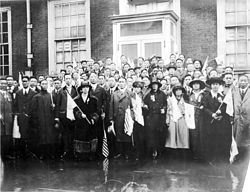
On August 22, 1910, the Japan-Korea Annexation Treaty was imposed, officially bringing Korea under Japanese rule. This period saw significant Korean resistance, including the independence movements led by figures like Kim Il Sung in the border regions of China and Russia, and the Provisional Government of the Republic of Korea, which coordinated armed resistance from locations such as Shanghai and Chongqing.
Wartime Service and Hardship
During the colonial period, more than 100,000 Koreans served in the Imperial Japanese Army through both voluntary and forced enlistment. This era was also marked by the profound suffering of "comfort women"—women sent to the war frontlines to serve the Imperial Japanese Army. The legacy of this period continues to influence modern diplomacy and historical interpretations.
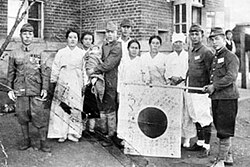
Post-War Realities and Modern Diplomacy
Following Japan's defeat in World War II, Korea was divided into Soviet and American occupation zones, leading to the creation of North and South Korea in 1945. The subsequent Korean War (1950–1953) further complicated the regional landscape.
Diplomatic relations between Japan and South Korea were formally established in 1965 via the Treaty on Basic Relations. However, several issues remain unresolved, including territorial disputes over the Liancourt Rocks and disagreements over wartime memory and history textbooks. In 2015, a significant attempt was made to address the "comfort women" issue through a 1 billion yen donation and apologies from Prime Minister Shinzō Abe, though the agreement faced domestic criticism in South Korea.
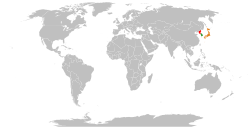
Today, relations continue to evolve. While Japan and South Korea work through complex historical grievances, Japan and North Korea remain without formal diplomatic relations, with tensions persisting over the abduction of Japanese citizens in the 1970s and 1980s.
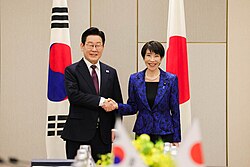
Summary of Historical Eras and Relations
| Period | Nature of Relationship | Key Events/Features |
|---|---|---|
| Pre-Modern | Cultural Exchange | Transmission of technology and religion via Korea. |
| 16th Century | Conflict | The Imjin War (1592–1598). |
| 17th–19th Century | Diplomatic/Trade | Tokugawa shogunate and Tsushinshi missions. |
| 1910–1945 | Colonial Rule | Annexation of the Korean Empire; independence movements. |
| Post-1945 | Divided/Diplomatic | Establishment of North/South Korea; 1965 treaty with South Korea. |
Frequently Asked Questions
What was the significance of the Tsushinshi?
Tsushinshi were official Korean diplomatic missions sent to Japan during the Tokugawa shogunate. They were used to celebrate major events, such as the birth of a shogun's heir, and served to demonstrate the prestige of both the Korean envoys and the Japanese shogunate.
How did the Korean Empire attempt to maintain independence?
The Korean Empire (1897–1910) attempted to affirm its sovereignty by renaming the state and seeking closer ties with Russia to counterbalance Japanese influence. Emperor Gojong also sent secret envoys to the 1907 Hague Peace Conference to protest Japanese control.
What is the current status of Japan-North Korea relations?
Japan and North Korea do not have formal diplomatic relations. Tensions remain high due to historical issues, specifically the abduction of Japanese citizens by North Korea during the 1970s and 1980s.
What remains a major point of contention in modern Japan-South Korea relations?
Modern relations are frequently affected by disputes over historical memory, including interpretations of the colonial period, the issue of "comfort women," disagreements over history textbooks, and territorial claims regarding the Liancourt Rocks.
Who led the Korean independence movement during the colonial period?
Independence movements were diverse; Kim Il Sung led guerrilla actions in the China-Russia border regions, while the Provisional Government of the Republic of Korea, involving figures like Syngman Rhee, coordinated resistance from cities like Shanghai and Chongqing.