James Lauritz Reveal: A Legacy of Botanical Taxonomy and Exploration
James Lauritz Reveal (1941–2015) was a distinguished American botanist whose career spanned decades of rigorous research, field exploration, and the systematic classification of plants. He is most recognized for his exhaustive work on the genus Eriogonum and his significant contributions to suprageneric names—the taxonomic ranks above the level of genus, such as family, order, and class.
Throughout his tenure in academia and research, Reveal bridged the gap between the historical records of early botanical expeditions and the modern era of molecular phylogenetics. His work ensured that the naming and categorization of North American flora remained accurate and scientifically sound.
Key Facts
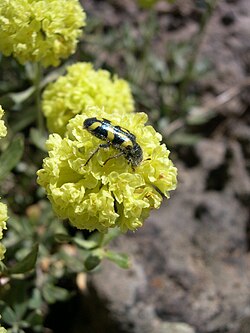
- Specialization: Expert in the Polygonaceae subfamily Eriogonoideae (wild buckwheats).
- Major Contributions: Co-author of the APG II and APG III classifications for flowering plants.
- Field Work: Collected over 9,000 plant specimens across North America, Central America, and China.
- Academic Leadership: Director of the Norton-Brown Herbarium at the University of Maryland (1979–1999).
- Conservation Impact: Helped add endangered plant species to the original Endangered Species Act.
- Publications: Authored over 500 scientific papers and the book Gentle Conquest: The Botanical Discovery of North America.
Early Life and Academic Foundation
Born on March 29, 1941, in Reno, Nevada, James Reveal was raised in an environment steeped in nature and scholarship; his father was a forester and botanist, and his mother was a librarian. This combination of scientific curiosity and archival skill defined his professional approach.
Reveal pursued his higher education at Utah State University, earning a B.S. in 1964 and an M.S. in 1966. He completed his Ph.D. at Brigham Young University in 1969, complemented by a post-doctoral fellowship at the Smithsonian Institution from 1967 to 1969.
Professional Career and Research
In 1969, Reveal joined the faculty at the University of Maryland. As the director of the Norton-Brown Herbarium for two decades, he developed one of the world's most comprehensive collections of Eriogonoideae. His research focused heavily on the American West, with a particular emphasis on threatened and endangered species.
Botanical Discoveries and Conservation
Reveal was a prolific discoverer, identifying over fifty plant varieties. Notable achievements include the identification of five new varieties at a Nevada nuclear testing site in 1968 and the 1981 discovery of the Shenandoah Wake Robin (Trillium pusillum var. monticulum), the first new plant discovery along the eastern U.S. seaboard since the 1940s.
His commitment to conservation was evident during his time on the Smithsonian Institution's Endangered Species Committee (1974–1982), where he played a pivotal role in expanding the protections offered by the Endangered Species Act to include plants.
Historical Botany and Literature
Reveal's passion for history led him to study the botanical discoveries of the Lewis and Clark Expedition and the colonial flora of Maryland. In 1992, he published Gentle Conquest: The Botanical Discovery of North America, a detailed account of New World botanical exploration from early settlement to the closing of the Western frontier.
Taxonomic Systems and the APG
Reveal was a central figure in the evolution of plant classification. He was a member of the Angiosperm Phylogeny Group (APG), a collaborative effort to modernize the classification of flowering plants based on molecular data. He contributed as an author to both the APG II (2003) and APG III (2009) systems.
While the APG system became the global standard, Reveal continued to develop his own taxonomic framework, known as the Reveal system. He also collaborated with Robert Thorne on an updated classification of the class Magnoliopsida in 2007. His website, PlantSystematics.org, served as a vital resource for researchers studying plant taxonomy and nomenclature.
Summary of Professional Milestones
| Period/Year | Role/Achievement | Key Focus |
|---|---|---|
| 1969–1999 | University of Maryland Faculty | Botany and Taxonomy |
| 1979–1999 | Director, Norton-Brown Herbarium | Eriogonoideae Collection |
| 1974–1982 | Smithsonian Endangered Species Committee | Endangered Species Act |
| 1992 | Author of Gentle Conquest | Botanical History of North America |
| 2003 & 2009 | APG II and APG III Author | Angiosperm Classification |
| 2009 | Edgar T. Wherry Award | Contributions to Eriogonum |
Legacy and Honors
Following his retirement in 1999, Reveal remained an active scholar as an Honorary Curator of the New York Botanical Garden and an adjunct professor at Cornell University. He continued to contribute to the Intermountain Flora project and the Discovering Lewis & Clark initiative until his death on January 9, 2015.
His legacy is immortalized in the names of several plant species dedicated to him, including Castilleja revealii, Montanoa revealii, and the genus Revealia.
Frequently Asked Questions
What was James Reveal's primary botanical specialty?
James Reveal was a leading expert on the genus Eriogonum (wild buckwheats) and the broader Eriogonoideae subfamily of the Polygonaceae family.
What is the APG system in which Reveal participated?
The Angiosperm Phylogeny Group (APG) is a modern system of plant classification that uses molecular phylogenetics (DNA analysis) to determine the evolutionary relationships between flowering plants.
How did Reveal contribute to plant conservation?
Through his work with the Smithsonian Institution's Endangered Species Committee, he was instrumental in ensuring that endangered plant species were included in the protections of the original Endangered Species Act.
What was the significance of the Shenandoah Wake Robin discovery?
Identified by Reveal and Norlyn James Bodkin in 1981, the Shenandoah Wake Robin (Trillium pusillum var. monticulum) was the first new plant variety discovered along the eastern U.S. seaboard since the 1940s.
What is the "Reveal system"?
The Reveal system is a personal taxonomic classification scheme developed by James Reveal for flowering plants, which he continued to refine alongside his work with the consensus APG systems.