James I of Scotland: The Captive King and His Ruthless Reign
The life of James I was defined by a dramatic arc of captivity, sudden power, and a violent end. Born into the House of Stewart, James spent a significant portion of his youth as a prisoner in England, an experience that shaped his approach to governance. Upon his return to Scotland, he sought to centralize royal authority, often through ruthless means, pitting himself against the powerful nobility and the Church.
Key Facts
![The lands held in regality by Prince James[20]](/images/fc/71/fc71ee90671971546466d33fc26f6e54dd6d2200deaba53e5902de85b5001e72.png)
- Reign: 4 April 1406 – 21 February 1437.
- Captivity: Held in England for nearly 18 years before his release in 1424.
- Coronation: Crowned at Scone Abbey on 21 May 1424.
- Spouse: Married Joan Beaufort in February 1424.
- Death: Assassinated at the Blackfriars monastery in Perth.
Early Life and the Struggle for Succession
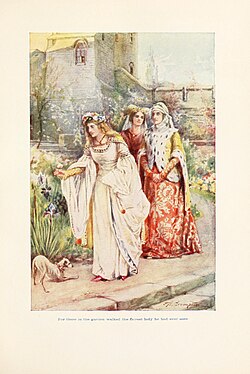
James was likely born in July 1394 at Dunfermline Abbey to Robert III and Annabella Drummond. His early childhood was marked by instability; his mother died in 1401, and his elder brother, David, Duke of Rothesay, was likely murdered in 1402 by their uncle, Robert Stewart, Duke of Albany. As the sole remaining heir, James became a target for those wishing to shift the royal line to the Albany Stewarts.
To ensure his safety, a decision was made during the winter of 1405–1406 to send the young prince to France. However, this move led to a prolonged period of English captivity.
The King in Captivity
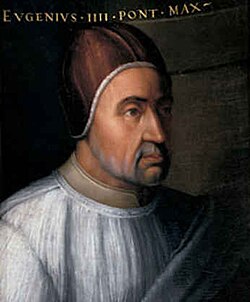
While in England, James received a high-quality education under Henry IV. By 1420, he was regarded as a guest at the English court and accompanied Henry V on military campaigns in France. However, his freedom was not absolute; he spent time in the Tower of London and Windsor Castle, sometimes alongside his cousin Murdoch Stewart.
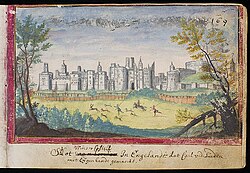
Throughout his captivity, James maintained a connection to his kingdom through letters and visits from Scottish nobles. In August 1423, the Scottish council finally agreed to begin negotiations for his release.
Return to Power and Personal Rule
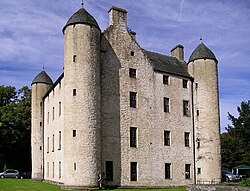
James returned to Scotland in 1424, marrying Joan Beaufort shortly before his coronation at Scone Abbey on 21 May. His return marked the beginning of a concerted effort to reclaim royal authority from the nobility.
The Purge of the Albany Stewarts
James acted swiftly against his near relatives, the Albany Stewarts. In 1425, he destroyed the family and forfeited their lands to the Crown, resulting in the execution of Duke Murdoch and his sons. This pre-emptive strike was designed to secure his position and eliminate rivals to the throne.
Conflict with the Nobility and Church
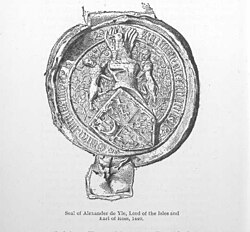
The King's rule was characterized by an acquisitive nature. He sought to restrict the influence of the prelacy (high-ranking clergy) and the Church with the agreement of Parliament between 1425 and 1427. He also attempted to bring the Lordship of the Isles under direct royal control by force between 1428 and 1431, though this effort failed.
Foreign Policy and Financial Strain
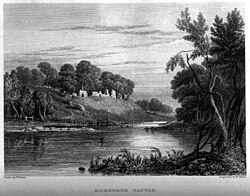
James's foreign policy saw mixed results. In 1436, he led an attack against the English enclave at Roxburgh Castle, but the siege failed, drawing significant criticism. Financially, James stopped all ransom payments to England by 1429, diverting the funds toward grandiose projects, including the construction of Linlithgow Palace.
Assassination and Aftermath
The King's aggressive tactics created deep-seated resentment among the nobility. A conspiracy was formed, led by his uncle, Walter Stewart, Earl of Atholl, and Sir Robert Graham. On the night of 20/21 February 1437, while staying at the Blackfriars monastery in Perth, James was attacked.
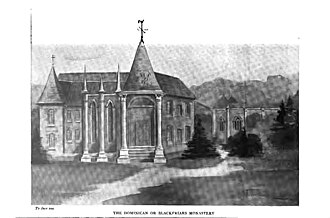
James attempted to escape through a sewer tunnel, but the exit had been blocked to prevent tennis balls from being lost. Trapped, he was murdered by the conspirators. Queen Joan was wounded during the attack but managed to escape to Edinburgh Castle to reach their son, the future James II.
Following the regicide, the conspirators were hunted down. The Earl of Atholl was arrested, tried, and executed on 26 March 1437.
Summary of James I's Life
| Category | Details |
|---|---|
| House | Stewart |
| Parents | Robert III and Annabella Drummond |
| Key Conflict | Albany Stewarts and Lordship of the Isles |
| Major Project | Linlithgow Palace |
| Cause of Death | Assassination by Walter Stewart and Robert Graham |
Frequently Asked Questions
Why was James I sent to England?
James was sent to France and subsequently ended up in England for safe-keeping during a period of political instability in Scotland, specifically to protect him from the ambitions of the Albany Stewarts.
How did James I treat the ransom hostages?
James largely ignored the plight of the ransom hostages held in England. By 1429, he ceased making payments to redeem them, leading to the deaths of at least fifteen hostages in captivity.
Who was Joan Beaufort?
Joan Beaufort was the wife of James I, married in 1424. She survived the assassination attempt on her husband and ensured their son, James II, ascended to the throne.
What led to the assassination of James I?
The assassination was the result of a coup led by the Earl of Atholl and Sir Robert Graham, fueled by the King's ruthless treatment of the nobility and his attempts to centralize power.
Where was James I buried?
James I was buried at the Perth Charterhouse following his assassination in 1437.