Macbeth: The Real History of the Red King of Alba
Most people recognize the name Macbeth as the protagonist of a Shakespearean tragedy—a guilt-ridden usurper driven by prophecy and ambition. However, the historical Macbeth, known in Gaelic as Mac Beathad Mac Fhindlaích, was a real figure who ruled the Kingdom of Alba (the early name for Scotland) during the 11th century. Far from the murderous tyrant of fiction, the historical record suggests a reign characterized by stability and legitimacy.
Known as the "Red King" (Rí Deircc), Macbeth's life was defined by the complex politics of the Mormaer—a title for the Earls who governed semi-autonomous provinces in early Scotland. His rise to power was not a sudden act of betrayal, but the result of long-standing regional tensions and dynastic struggles.
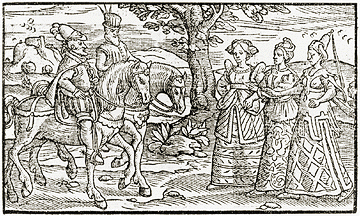
Key Facts
- Reign: King of Alba from August 14, 1040, to August 15, 1057.
- Title: Served as Mormaer (Earl) of Moray from 1032 until his death.
- Nickname: The Red King (Rí Deircc).
- Succession: Succeeded Duncan I and was followed by his stepson, Lulach.
- Death: Killed at the Battle of Lumphanan in 1057.
- Burial: Interred on the island of Iona.
Rise to Power in Moray
Macbeth was the son of Findláech of Moray and likely the grandson of King Malcolm II through his mother, Donada. In 1032, he became the Mormaer of Moray. His ascension to this position was likely violent, as he is believed to have been responsible for the death of the previous mormaer, Gille Coemgáin, who had previously killed Macbeth's father.
Following this, Macbeth married Gille Coemgáin's widow, Gruoch. This marriage may have been a strategic move to consolidate power in Moray or to strengthen his claim to the Scottish throne, as Gruoch was potentially a granddaughter of either Kenneth II or Kenneth III.
The Conflict with Duncan I
The historical King Duncan I was not the elderly, frail man depicted in literature. In 1034, Duncan was a young man who ascended the throne as the tánaise ríg (the designated king-in-waiting). While his early years were stable, his later reign was marked by failure, including a disastrous retaliatory raid against Durham.
In 1040, Duncan led a punitive expedition into Macbeth's domain of Moray. The campaign ended in disaster for the king; Duncan was killed in action at the Battle of Bothnagowan by Macbeth's forces on August 14, 1040. Following Duncan's death, Macbeth succeeded him as King of Alba with seemingly little opposition.
The Reign of the Red King
Macbeth's 17-year reign was largely peaceful. He was a recognized leader who even made a pilgrimage to Rome in 1050, where he was noted for his generosity toward the poor. However, his rule was not without external pressure. In 1052, he became entangled in English politics by granting asylum to Norman exiles fleeing Edward the Confessor.
This tension culminated in 1054 when Siward, Earl of Northumbria, led a massive English invasion of Scotland. This resulted in a bloody clash at Dunsinane. While the invasion restored a ruler to the kingdom of Strathclyde, Macbeth managed to retain his crown for several more years.
The Fall of Macbeth
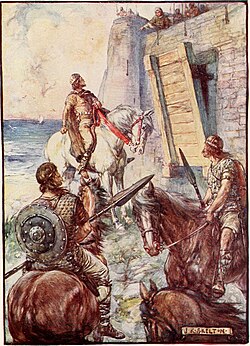
Macbeth's reign ended in 1057. He was defeated and killed at the Battle of Lumphanan by forces loyal to Malcolm III (the son of Duncan I). Some sources suggest he was wounded in battle and died later at Scone. He was succeeded briefly by his stepson, Lulach, before Malcolm III eventually took the throne, establishing a dynasty that would rule Scotland until the late 13th century.
| Year | Event | Significance |
|---|---|---|
| 1032 | Became Mormaer of Moray | Established regional power in a semi-autonomous province. |
| 1040 | Battle of Bothnagowan | Duncan I killed; Macbeth becomes King of Alba. |
| 1050 | Pilgrimage to Rome | Demonstrated international standing and piety. |
| 1054 | Battle of Dunsinane | Large-scale English invasion led by Earl Siward. |
| 1057 | Battle of Lumphanan | Death of Macbeth; end of his 17-year reign. |
From History to Legend
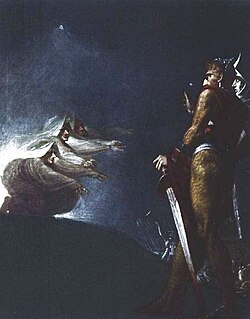
The gap between the real Macbeth and the fictional character is vast. William Shakespeare's play, written around 1606, relied on Holinshed's Chronicles (1577), which were not historically accurate. The play depicts Macbeth as a loyal general who becomes a murderous tyrant after being manipulated by three witches and his wife, Lady Macbeth.
Historians suggest this unflattering portrayal may have been intentional to please King James VI and I, who claimed descent from Malcolm III. Because Macbeth's own line ended with Lulach, the historical narrative was easily reshaped by later chroniclers to favor the House of Stewart and the House of Bruce.
Frequently Asked Questions
Did the real Macbeth kill King Duncan in his sleep?
No. Historical records indicate that Duncan I was killed in action during a battle in Moray (the Battle of Bothnagowan) by Macbeth's troops, not through a clandestine assassination.
Was Macbeth a tyrant?
There is little evidence to suggest he was a tyrant. His 17-year reign is described as mostly peaceful, and he was respected enough to make a high-profile pilgrimage to Rome.
Who was the real Lady Macbeth?
The real Gruoch was the wife of Macbeth and the widow of Gille Coemgáin. While she may have had her own claim to the throne, there is no historical evidence that she plotted murders or manipulated Macbeth into usurping the crown.
How did the real Macbeth die?
Macbeth died in 1057 at the Battle of Lumphanan, where he was defeated by the forces of the future Malcolm III.
What was the Kingdom of Alba?
Alba is the Gaelic name used to refer to the Kingdom of Scotland during the early medieval period, specifically during the time of Macbeth's reign.